If one fixture says mid-century, it's the globe light. The clean glowing sphere is the shape people picture when they picture the era. And it has endured for a simple reason: a sphere is a pure, timeless form that never really dates. Here's why the globe defines the style, and how to use one well in a warm modern home.
Why the Globe Became an Icon
Mid-century design loved pure geometric form and honest materials, and nothing is purer than a sphere. In the optimistic post-war years, a glowing glass globe read as modern, clean, and forward-looking. The opposite of the ornate fixtures it replaced. It worked in glass or metal, hung singly or in clusters, and suited the clean horizontal lines of the architecture. Seventy years later it still looks right, which is the truest test of good design.
Opal vs. Clear Glass
The biggest choice is the glass. Opal, or milk, glass diffuses the bulb into a soft, even glow and hides the filament, which suits most living spaces and gives that warm, cozy mid-century feel. You can see the range in the milk glass pendant collection. Clear glass shows the bulb and throws sharper light, so it wants a decorative or frosted bulb inside and reads a touch more industrial. For warmth, I reach for opal almost every time.
Where to Use One
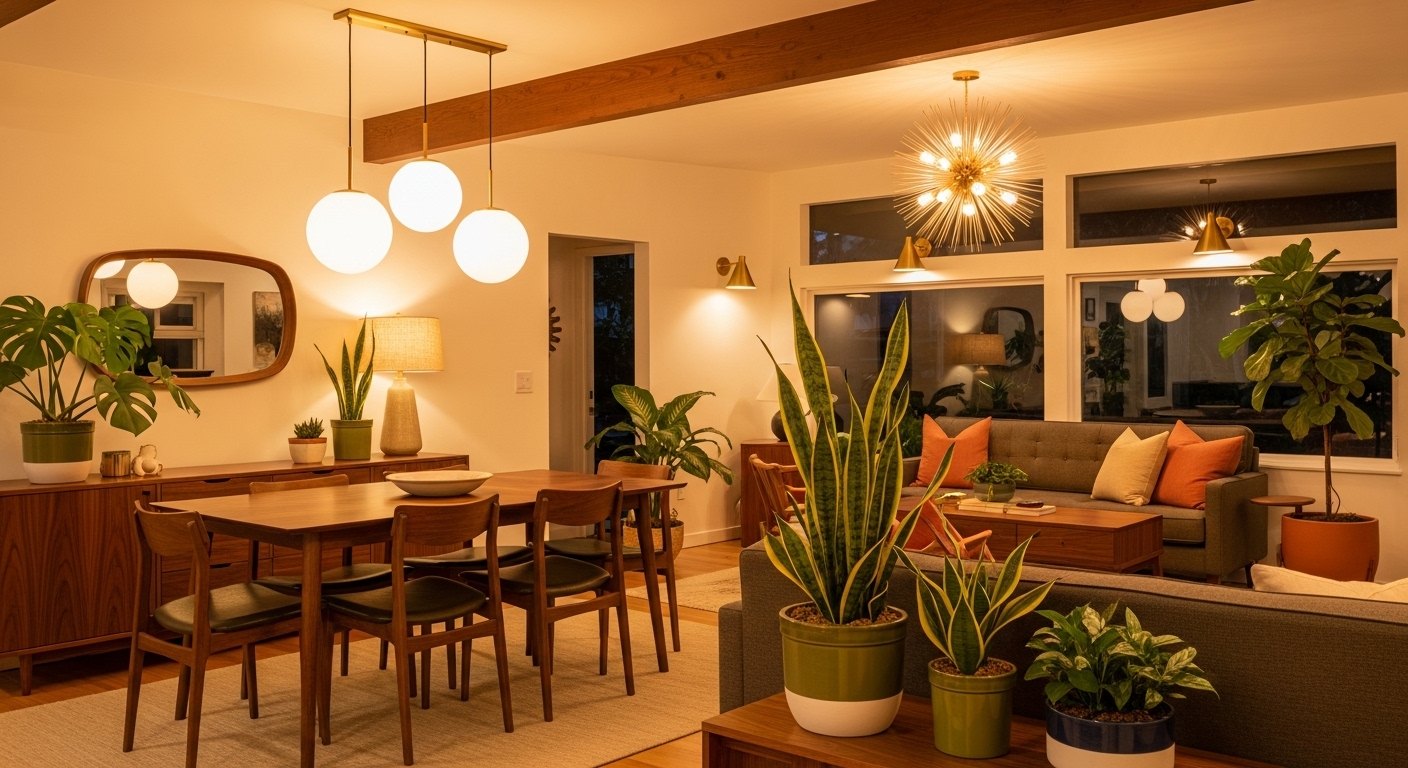
A globe earns its place where it can be a focal point, over a dining table, a kitchen island, in an entry, or as a single statement in a living room. I use glass globe pendants throughout our house precisely because repeating the shape ties the open plan together. The globe in the kitchen rhymes with the one in the living room, and the eye reads it all as one warm, considered whole.
Sizing a Globe
The most common mistake is going too small. Over furniture, size the globe to half or two-thirds the width of the table or island. As a single room fixture, add the room's length and width in feet and use that number in inches as a starting diameter. When you're between two sizes, go up, an undersized globe floats near the ceiling and looks tentative, especially in a room with the tall ceilings mid-century homes often have.
Hanging Height
Over a table, hang the bottom 30 to 34 inches above the surface; over an island, 30 to 36 inches above the counter; in a walkway, keep at least seven feet of clearance underneath. The height is what makes a globe read as intentional rather than accidental, so it's worth measuring rather than eyeballing.
Warm Bulbs Inside
A globe is only as warm as the bulb inside it. I use 2700K warm white, and in an opal globe a soft frosted bulb glows evenly with no hot spot. A cool bulb in a beautiful globe undoes everything. It turns a warm, golden fixture into a cold one. The ENERGY STAR bulb guide is a clear primer on the color-temperature numbers.
Beyond Mid-Century
The lovely thing about the globe is that it isn't trapped in its era. Because the sphere is such a pure form, a globe pendant reads clean and contemporary in almost any modern home. If your taste runs more Scandinavian than mid-century, my friend Dana over at Light & Linen uses soft glass globes to really nice, pared-back effect, same shape, different mood.
Globe Lights Room by Room
A globe earns its place differently in each room: a statement over the dining table, a pair over a kitchen island, a single welcome in an entry, a soft glow in a bedroom. Repeating the shape across rooms ties an open plan together. Browse the globe pendant range and notice how the same simple sphere reads right almost everywhere.
Common Globe-Light Mistakes
The frequent errors: buying too small so the globe floats and looks lost; choosing clear glass with a harsh bare bulb that glares; and pairing it with a cool bulb that kills the warmth. Size up, soften clear glass with a frosted bulb, and always use warm 2700K inside.
Clusters and Pairs
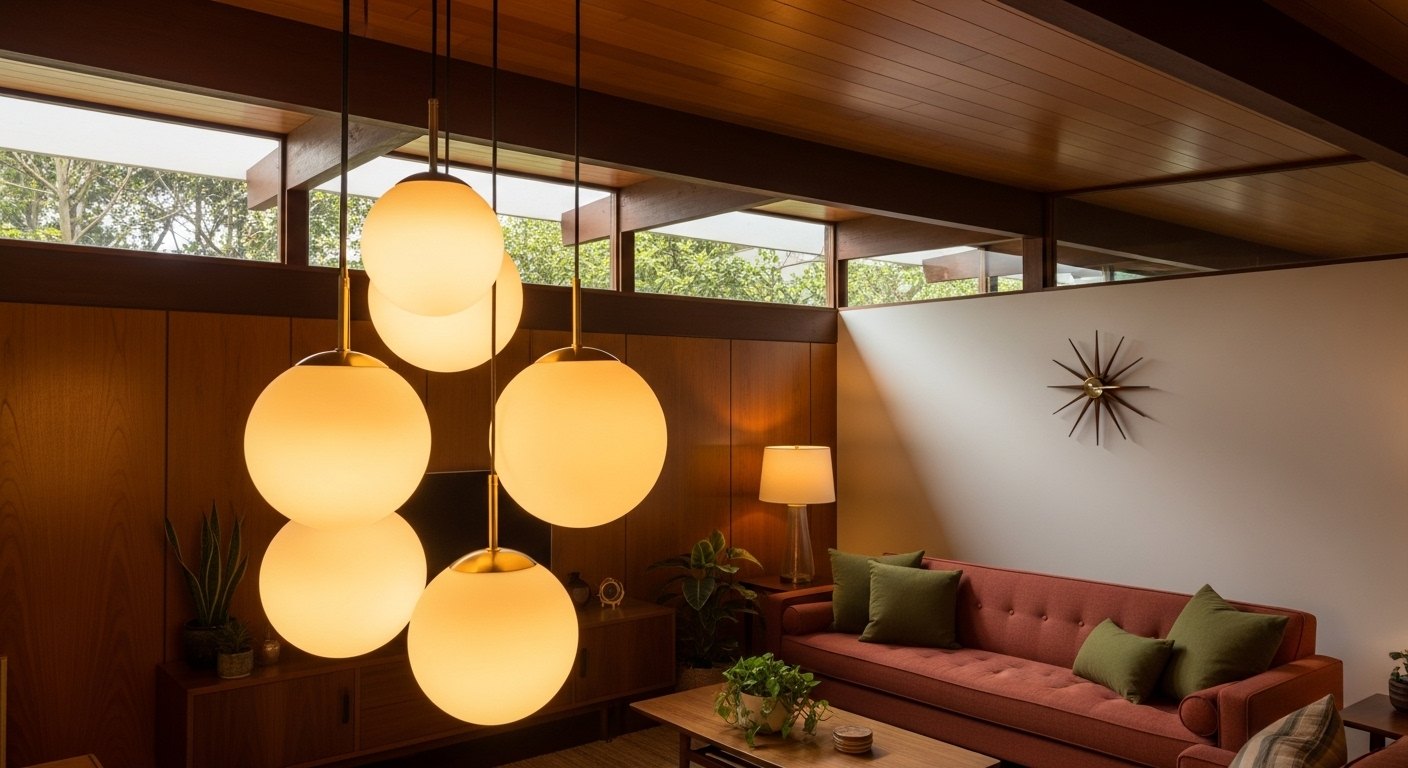
Beyond a single pendant, globes look wonderful in pairs over an island or clustered at staggered heights in a stairwell or entry. A cluster of three globes at different drops is a classic mid-century move that turns a plain ceiling into sculpture. Keep the bulbs consistent so the cluster reads as one composed gesture.
Shop this post: glass globe pendants and milk glass pendant lights