The sunburst is the most dramatic mid-century fixture there is, arms radiating from a central point like a stylized sun or an atom, pure atomic-age optimism rendered in brass and glass. Used well, a sunburst light is a thrilling focal point; used carelessly, it overwhelms a room. Here's how to get the drama without the chaos.
Where the Sunburst Came From
The sunburst, or starburst, belongs to the atomic age, a period fascinated by space, science, and energy radiating outward. Designers translated that optimism into fixtures whose arms burst from a central hub, from grand sputnik chandeliers to subtler wall pieces. The shape is unmistakably mid-century because it's tied to a clear, confident idea about the future, and that's exactly why it still reads as iconic rather than dated.
Make It the Star
A sunburst is visually busy by design, so the cardinal rule is to let it be the only loud thing in the room. Keep the surrounding walls, furniture, and other lighting calm and restrained so the fixture can command attention without a fight. A sunburst over a simple table against a plain wall sings; the same fixture in a busy, patterned room becomes noise.
Scale to the Room
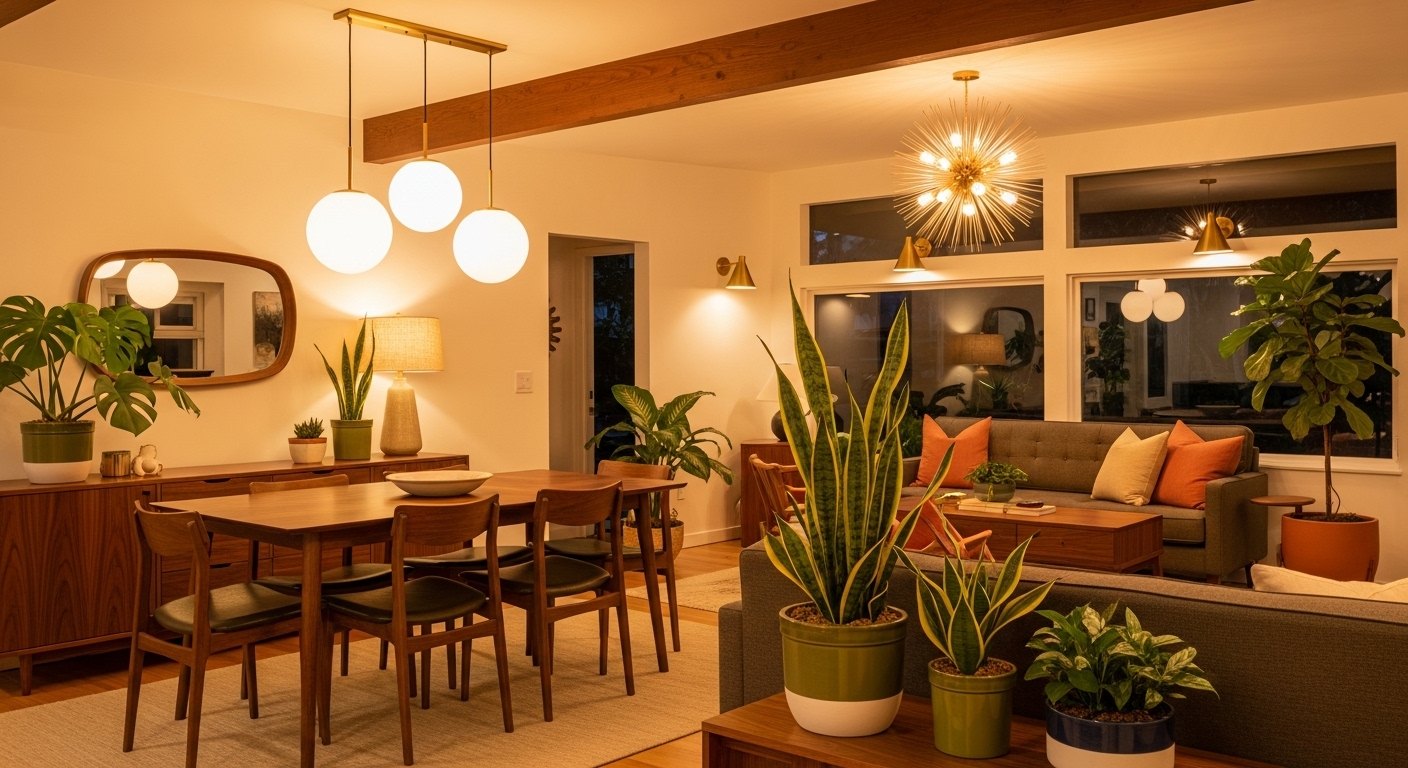
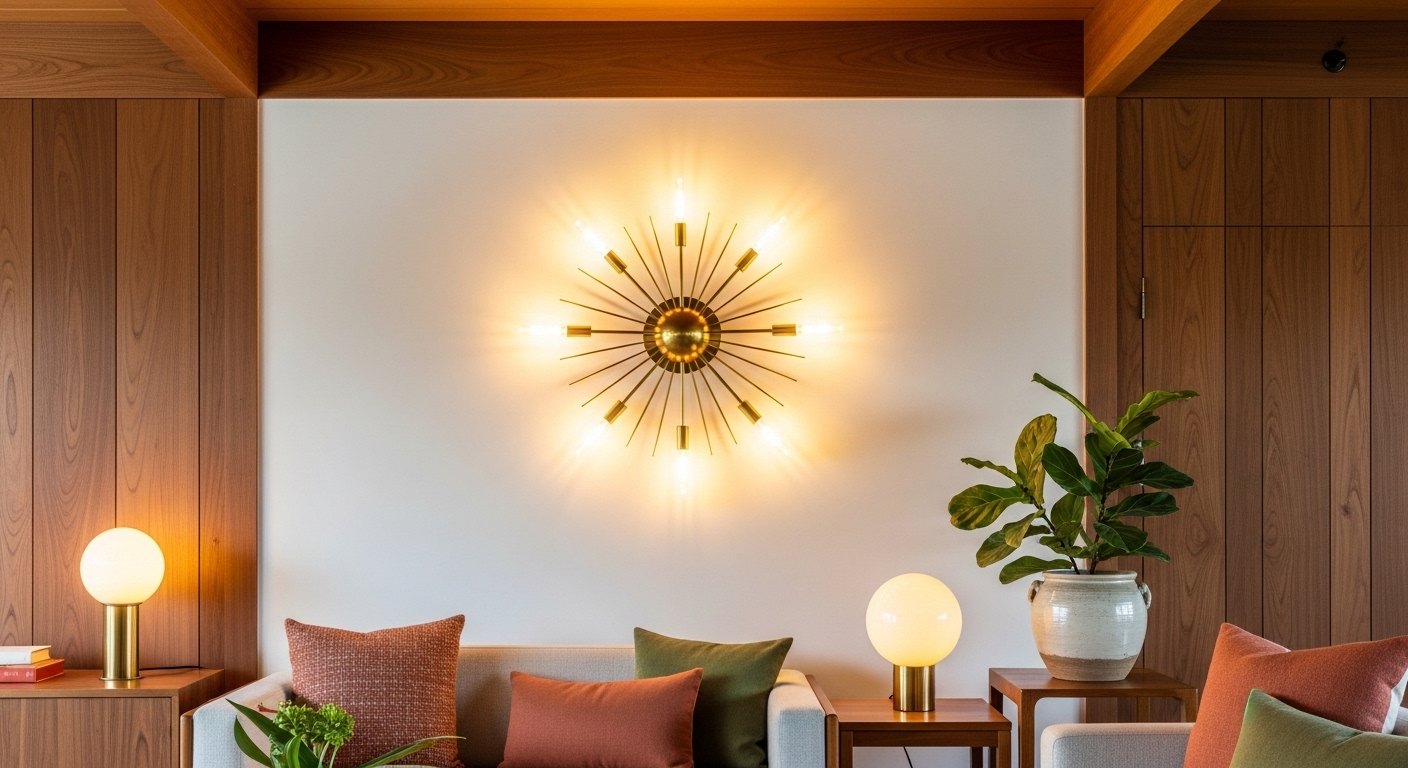
A dramatic sputnik chandelier suits a generous dining room or entry with the ceiling height to carry it. In a more modest room, a wall-mounted sunburst delivers the same period character at a friendlier scale. The Majlis glass sunburst wall light is a beautiful way to get the icon without committing to a ceiling full of arms. It works as a piece of lit sculpture on a feature wall.
Where It Works
Sunbursts shine over a dining table, in an entry, or on a feature wall where they can be the focal point. I'd avoid putting one in a room that already has a lot going on, a sunburst wants negative space around it. Think of it the way you'd think of a bold piece of art: it needs a quiet wall to land against.
Put It on a Dimmer
A sunburst on full brightness is a statement; dimmed low in the evening, it recedes into a warm, glittering glow. A dimmer lets the same fixture be dramatic for a dinner party and soft for a quiet night, which is exactly the flexibility a statement light needs. Pair it with warm 2700K bulbs so it never reads stark.
Mind the Bulbs
On a multi-arm fixture, bulb consistency is everything, one cooler bulb among warm ones is glaring across all those exposed sockets. Use the same warm bulb in every socket, and if the bulbs show, choose a soft frosted or decorative warm bulb that looks intentional. For a subtler take on warm wall lighting, the modern wall sconce collection has plenty of less-dramatic options.
A Confident Choice
A sunburst isn't a fixture for the timid, and that's the point. It's a confident, joyful nod to the optimism of mid-century design, and in the right spot, quiet backdrop, generous scale, warm dimmable bulbs. It becomes the piece everyone remembers about the room. Used with restraint, it's not dated at all; it's timeless period character.
Where a Sunburst Earns Its Place
A sunburst is a focal point, so it belongs where it can command attention against a quiet backdrop, over a dining table, in an entry, on a feature wall. It's the wrong choice for a busy, patterned room. Give it negative space the way you'd give a bold piece of art a quiet wall, and it sings.
Sizing and Restraint
Match the sunburst's scale to the room, a dramatic sputnik for a generous space, a wall-mounted sunburst for a modest one. And let it be the only loud element; keep the surrounding walls, furniture, and lighting calm so the fixture isn't competing for attention.
Keeping It From Dating
A sunburst reads as timeless period character when it's used with restraint and warm light, and as a dated novelty when it's crowded or harshly lit. Put it on a dimmer so it can recede in the evening, use warm bulbs across every socket. And let it be a confident single statement rather than one of many bold elements.
Shop this post: the Majlis glass sunburst light and modern wall sconces