Brass and copper are the warm metals that make mid-century lighting glow. Where a cool chrome fixture reads contemporary and a little clinical, a warm brass or copper one reads cozy, optimistic, and of-the-era. Used well, warm metals are the finishing note that pulls a mid-century room together. Here's how to use them without it tipping into a theme.
Why Warm Metals Suit the Era
Mid-century interiors were built on warmth, walnut, teak, terracotta, golden light. And the metals followed suit. Brass, copper, and bronze share that warm undertone and sit beautifully against wood and warm glass, where cool chrome and nickel fight the palette. Reach for a warm metal and you're already halfway to the right mood.
Brass: The Workhorse
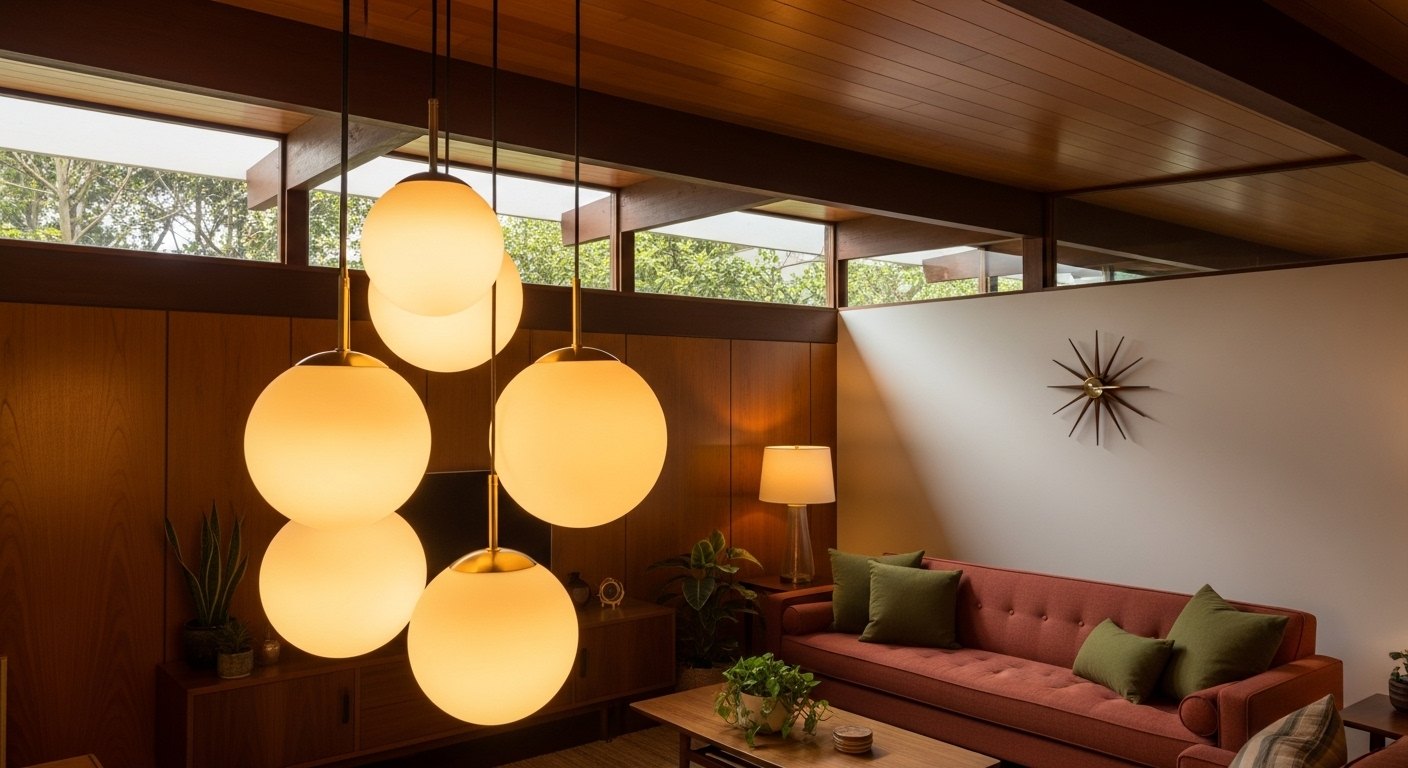
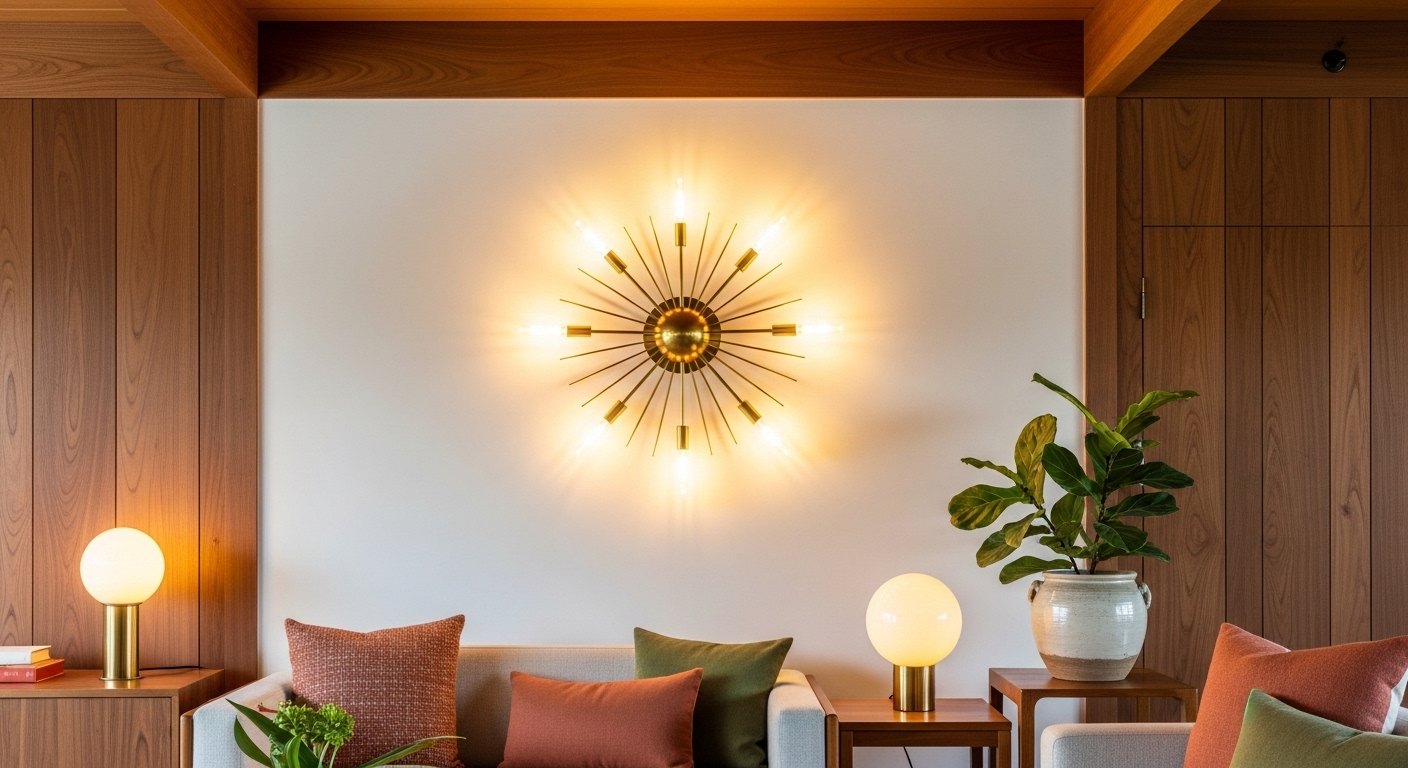
Brass is the most versatile warm metal in mid-century lighting. It suits sconces, pendants, and lamp bases, and it pairs with nearly any warm palette. I use it throughout the house, from the brass wall sconces in the living room to the hardware in the kitchen. Its golden tone catches warm bulb light and seems to glow from within.
Copper: The Warmer Cousin
Copper is brass's warmer, pinker cousin, and it brings a richer, more enveloping glow. A copper fixture like the Jonna copper pendant reads slightly more dramatic than brass and looks great against walnut and terracotta. I use copper as an accent rather than the dominant metal, so it stays special.
Mixing Warm Metals
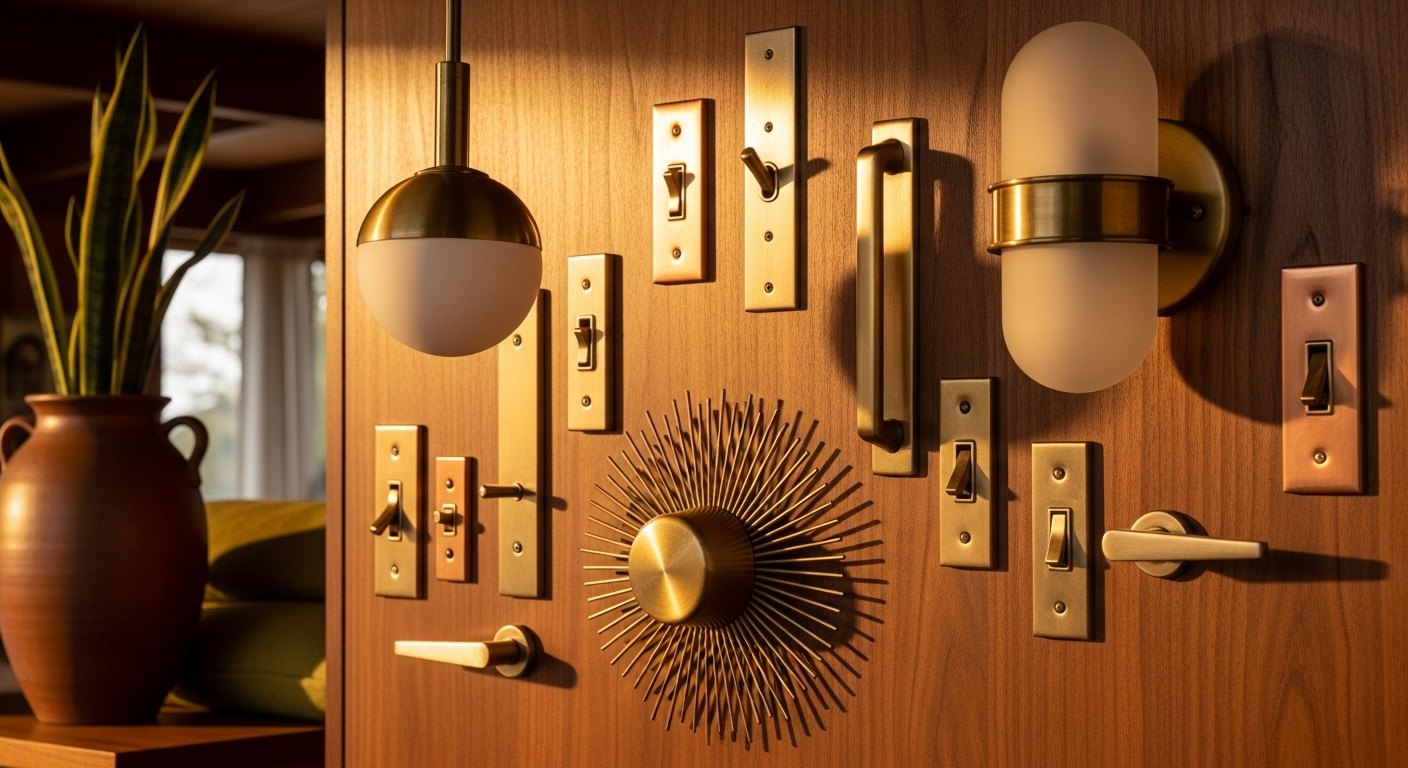
You can mix warm metals, brass with copper, say, because they share an undertone and read as a family. The trick is to let one dominate and use the other as an occasional accent rather than splitting the room evenly between them. Mixing warm and cool metals (brass with chrome) is far trickier and best done very deliberately, if at all.
Go Unlacquered if You Can
Unlacquered brass and copper develop a living patina over time, darkening with age and handling, and in a mid-century home that aging is the whole appeal. Coated finishes stay frozen-shiny; unlacquered ones age into the room and look authentic. The only upkeep is deciding how polished or aged you want them, use them and let them mellow, or polish them back to bright now and then.
Why Warm Metal Never Dates
Warm brass has been central to both authentic mid-century rooms and today's warm-modern interiors, which is the best evidence that it reads as timeless rather than trendy. Cool, high-shine chrome dates a room far faster. A softly finished warm metal is one of the safest long-term choices you can make in lighting.
Let It Catch the Light
The real magic of warm metal happens with warm bulbs. A brass sconce under a 2700K bulb glows golden; the same fixture under cool light looks grey and lifeless. Warm metal and warm light are a pairing, choose one and you really need the other. Together, they're the quiet reason a mid-century room feels rich rather than flat.
Where Each Metal Works Best
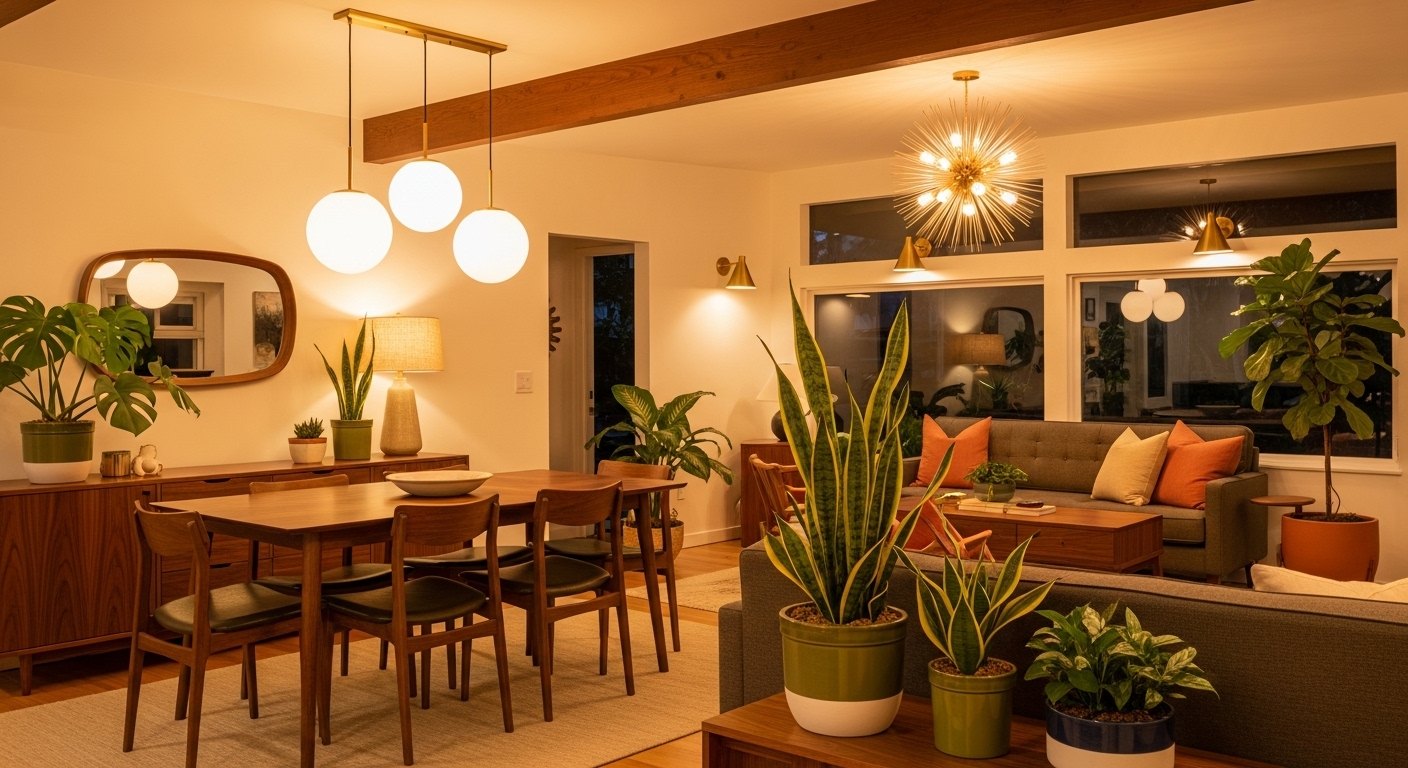
Use brass as the workhorse, sconces, pendants, hardware, lamp bases. And copper as a richer accent where you want drama, like a single copper pendant. Let one warm metal dominate a room and use the other sparingly so each stays special and the scheme reads intentional rather than busy.
Common Warm-Metal Mistakes
The pitfalls: mixing warm and cool metals (brass with chrome) without a plan, splitting a room evenly between two metals so neither dominates. And pairing warm metal with cool bulbs that make it look grey. Let one metal lead, and always pair warm metal with warm light so it glows.
Caring for Brass and Copper
Lacquered metal just needs dusting; unlacquered develops a patina you can either embrace or polish back. In a mid-century home the aging is the appeal. The metal mellows into the room. The only real decision is how polished or aged you want it, and that's a matter of taste, not maintenance.
Shop this post: the Jonna copper pendant and gold wall sconces