Open-plan mid-century homes are lovely and hard to light. When the kitchen, dining, and living areas all flow together with no walls to break them up, a single overhead fixture leaves the whole space flat and cavernous. The answer is layering. And in an open plan, layering does double duty, lighting the space and quietly defining its zones.
Why Open Plans Need Layers Most
In a walled house, each room can get away with its own ceiling light. In an open plan there are no walls to contain the light or define the spaces. So a single bright overhead just washes everything evenly and kills all the depth. Layered light at different heights is what restores dimension and, crucially, tells your eye where the dining area ends and the living area begins.
Layer One: Ambient
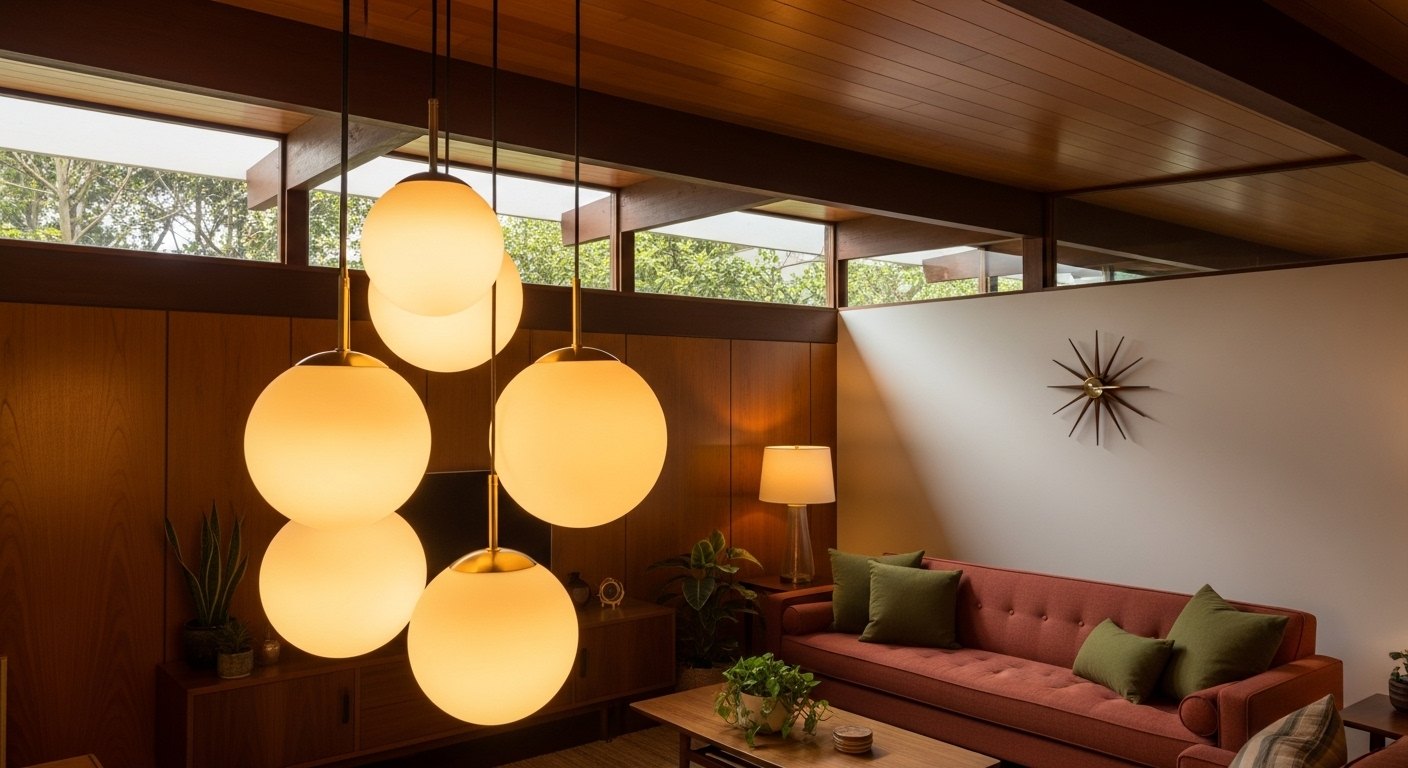
The ambient layer is your general light, usually pendants hung over the key zones. Think of it as the base coat, not the finished wall. In our open plan, globe pendants over the island and a sculptural pendant over the dining table provide the ambient fill, each glowing softly rather than blazing.
Layer Two: Task
Task light is focused light for doing things, under-cabinet strips in the kitchen, a reading lamp by a chair, a desk light. It's directional and bright where you need it, dark where you don't. In the open plan, task light also helps define a working zone (the kitchen) against a lounging zone (the living area).
Layer Three: Accent
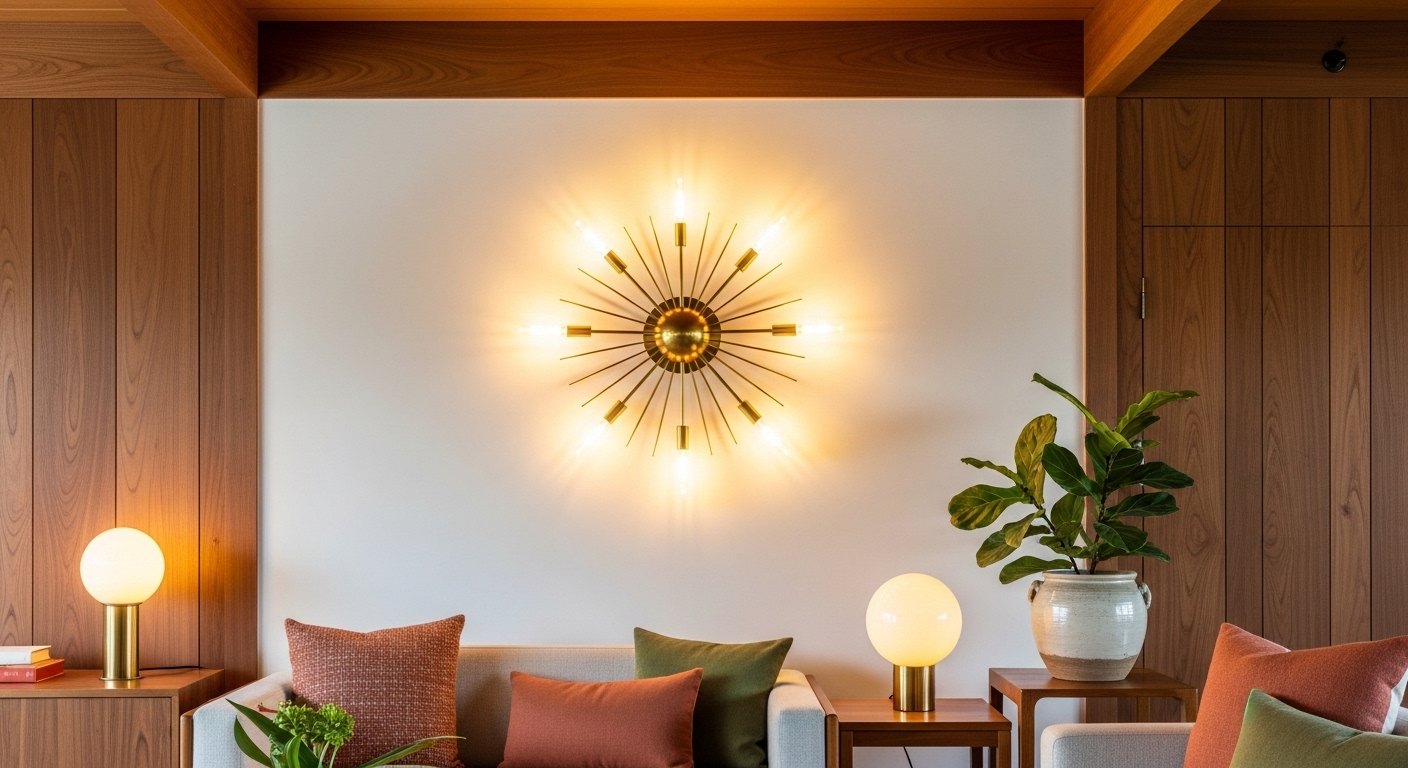
Accent light is the mood layer, wall sconces washing a wall, a low table lamp glowing in a corner, a picture light on art. This is the layer that makes an open plan feel finished and warm in the evening, and it's the one people most often skip. Accent light is what separates a lit space from a beautiful one.
Light Defines the Zones
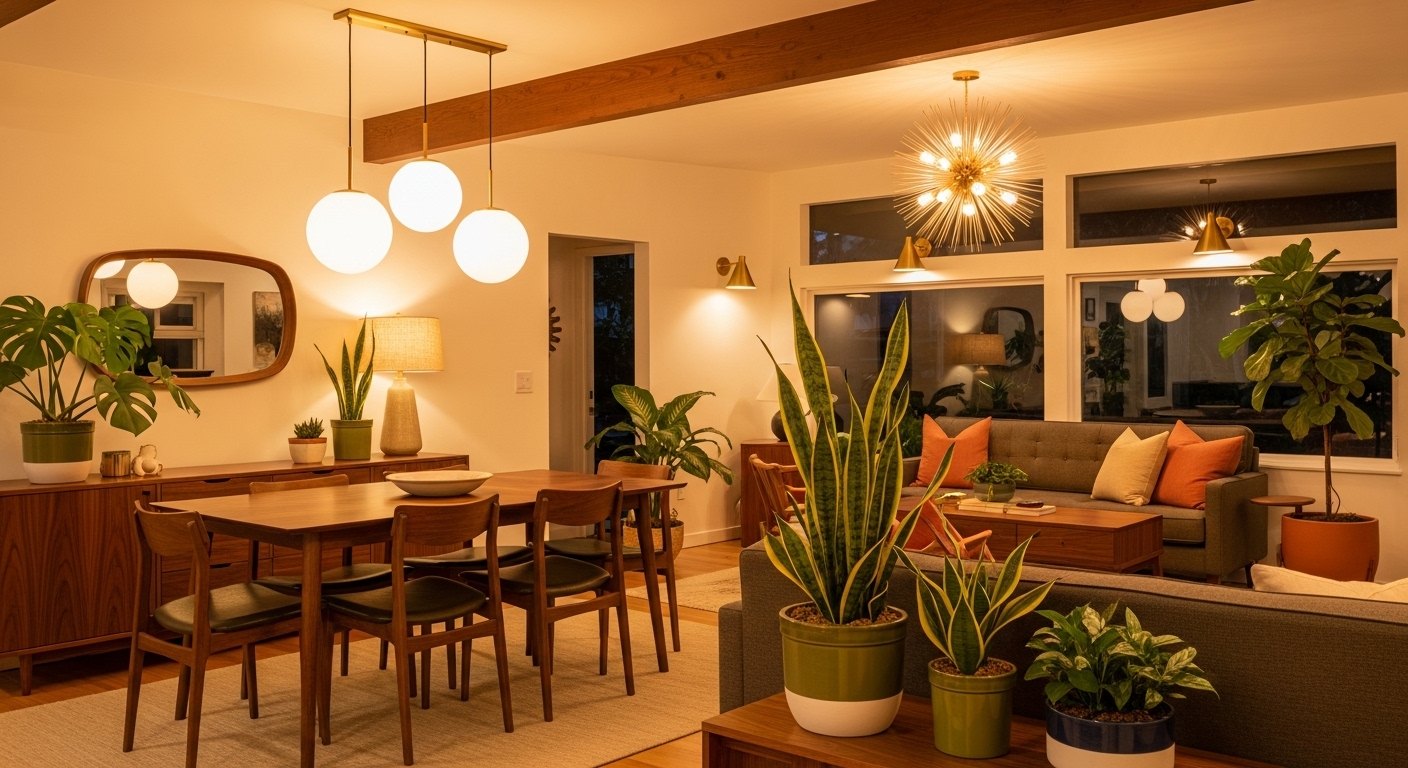
The real trick in an open plan is using light to create rooms without walls. A pendant centered over the dining table makes that spot feel like a dining room; lamps and sconces clustered around the seating make a living room. Each pool of warm light is a quiet boundary, so the open space feels intimate and organized rather than like one big undifferentiated hall.
Keep the Bulbs Consistent
Because you can see every fixture at once in an open plan, bulb consistency is non-negotiable. Every source should be the same warm 2700K, or the space reads as a jumble of mismatched lights. Consistent warm color is what makes a dozen different fixtures read as one connected, golden-lit whole.
How Many Sources?
Our open plan has somewhere between eight and twelve light sources across the whole space, which sounds excessive until you realize they're almost never all on at once. The point is control: bright and even for a dinner party, a few warm pools for a quiet evening. Layered low light always feels warmer and more inviting than a couple of bright fixtures trying to do everything.
Tie It Together With a Shape
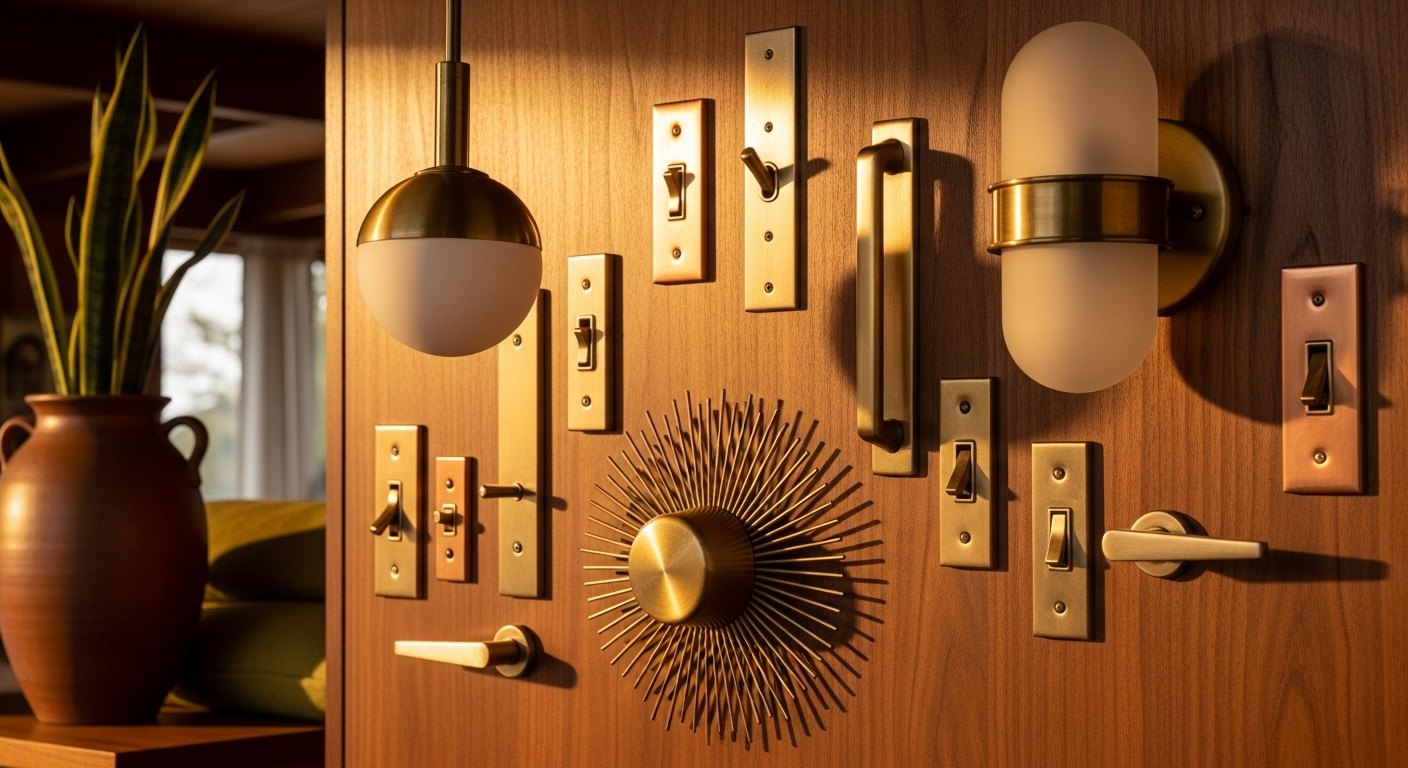
The fixtures don't all match, but they relate. They share warm metals, clean mid-century lines, and a repeated globe shape that echoes from the kitchen to the living room. Repeating one motif across zones is the simplest way to make a varied open plan read as one cohesive, considered space rather than a collection of unrelated lights.
A Layering Plan You Can Copy
For any open plan, start with this: a pendant over each key zone for ambient fill, sconces at eye level for warmth, and lamps for accent. Put the overheads on dimmers, keep every bulb at 2700K, and you have a flowing space with several moods built in. Copy the structure and swap the fixtures to suit your home.
Common Open-Plan Mistakes
The errors are predictable: lighting the whole space from one or two bright overheads, lighting everything to the same brightness so there's no zone definition. And mixing bulb temperatures so one fixture looks off. Build layers at different heights, vary the brightness by zone, and keep every bulb the same warm color.
Lighting Without Rewiring
You can build every layer from plug-in sources where wiring is awkward, a floor lamp for ambient, a plug-in sconce for eye-level warmth, a table lamp for accent. Put a couple on a smart plug so they come on together at dusk, and an open plan is fully layered with no electrician.
Shop this post: pendant lights and wall sconces