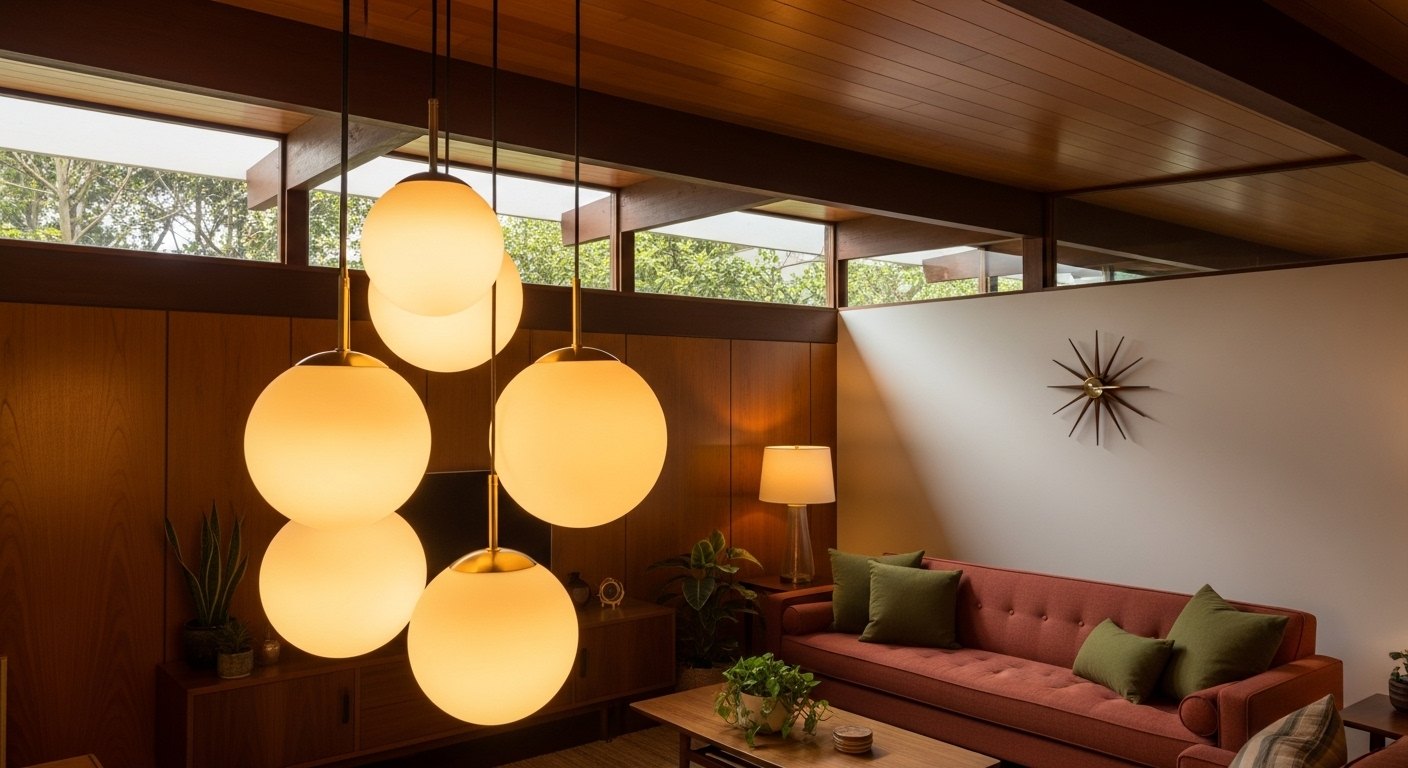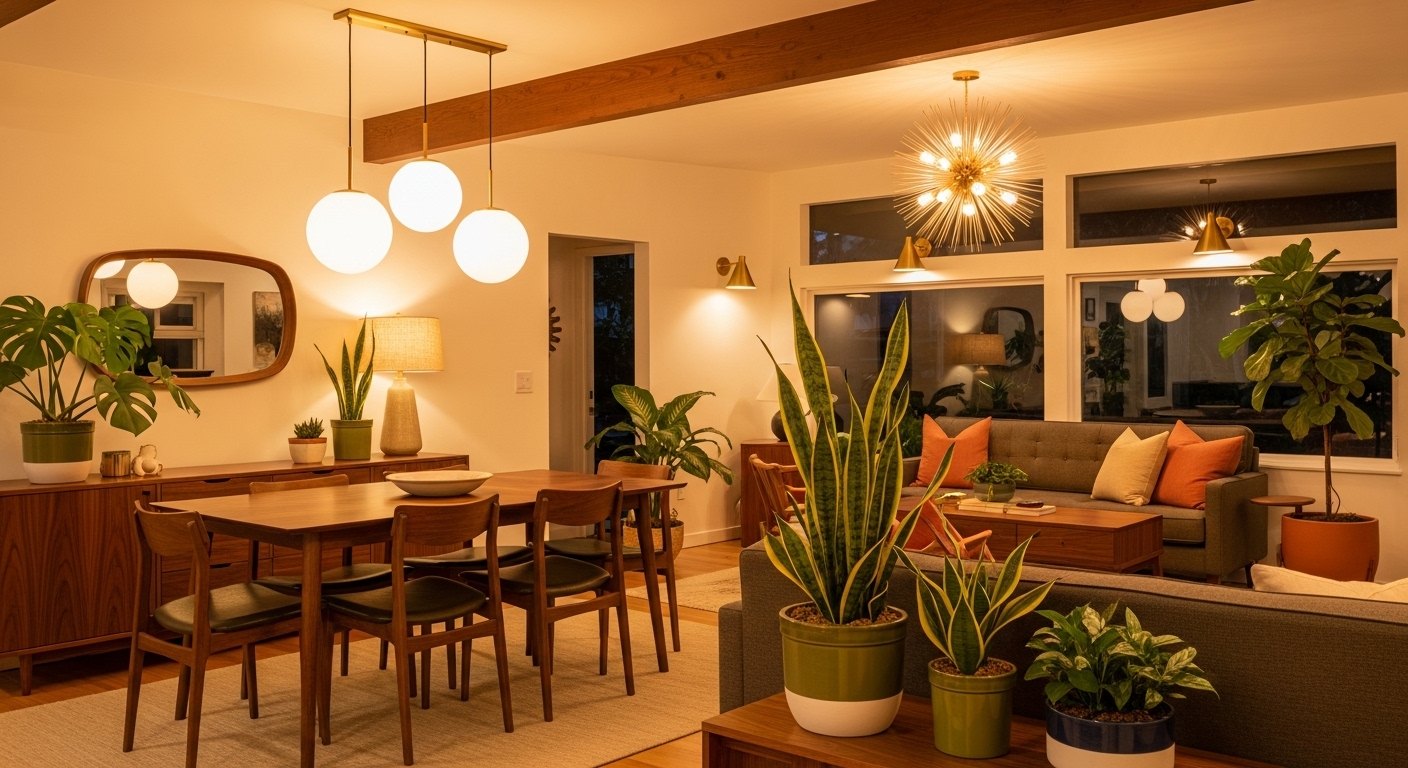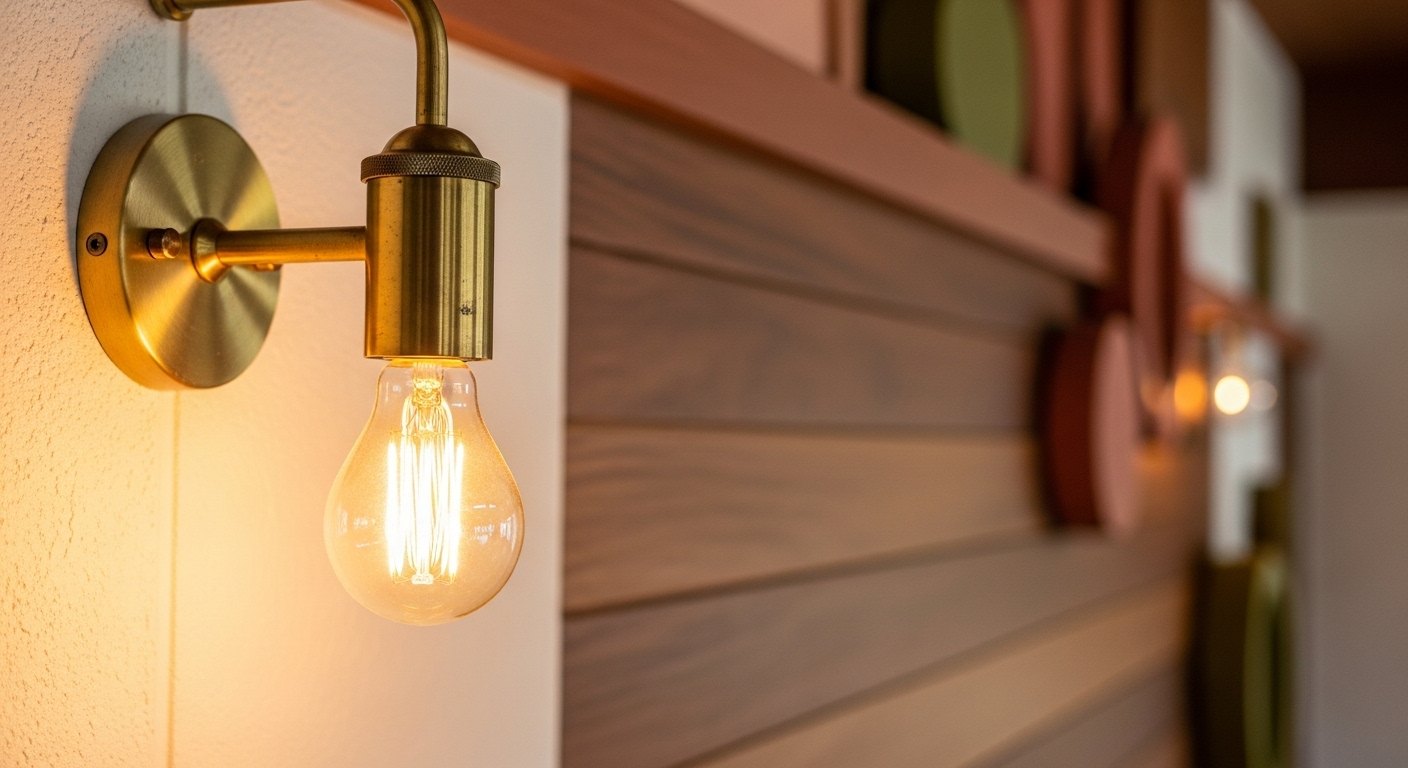
The secret to a warm mid-century home isn't the fixtures, it's the bulbs. You can hang the most beautiful brass-and-glass globe in the world and completely ruin its glow with a harsh, blue-white bulb. Mid-century light has a color, and that color is warm. Here's the bulb knowledge that makes a room glow.
The Number That Matters: 2700K
Bulbs are labeled with a Kelvin number that tells you their color temperature, and lower is warmer. For a mid-century home I use 2700K almost everywhere. It has the golden quality of late-afternoon sun and makes walnut, brass, and warm palettes glow. Cool 'daylight' bulbs make those same materials look grey and clinical. The ENERGY STAR bulb guide lays out the numbers clearly if you want to understand the box.
Why Warm Reads as Cozy
Warm light signals rest. It's the color of sunset, of a fire, of the long golden afternoons mid-century California homes were designed to catch. Your body relaxes in it. Cool light signals daytime and alertness, which is great in a workshop and terrible in a living room at nine at night. A mid-century home is meant to glow, and warm light is how you get there.
Don't Forget CRI
Beyond color temperature, there's CRI, color rendering index, which measures how truthfully a bulb shows colors. A bulb at 90 or above makes walnut read rich, brass read golden. And terracotta read true; a cheap low-CRI bulb makes the same warm room look grey and lifeless. CRI rarely appears on the front of the box, so check the fine print and favor 90-plus for living spaces.
Match Bulbs Across a Room
One overlooked detail: keep the bulb color consistent within a room. A warm sconce next to a cool-white pendant reads as a mistake even if you can't name why. Pick a temperature, 2700K. And commit to it in every socket in the room. Consistency is what separates a coordinated, expensive-feeling space from one that looks accidental.
Check the Base
The base is the part that screws in. The standard medium screw base in the U.S. is E26, and many warm modern and mid-century fixtures use it, often with the right bulb included. Always check the fixture's spec before buying replacements, because the bulb simply won't fit if the base is wrong.
Buy Dimmable by Default
If there's any chance a fixture goes on a dimmer, buy bulbs labeled dimmable, non-dimmable LEDs flicker and buzz when dimmed. I buy dimmable warm bulbs by default now, because a fixture that can go from bright to candle-low is worth it almost everywhere in a home built around warm, golden light.
The Cheapest Upgrade There Is
Bulbs cost a few dollars. Swapping every bulb in a room to warm, high-CRI, dimmable 2700K is the single most cost-effective thing you can do to make a space feel warm, mid-century, and expensive. Do this before you buy a single new fixture. It's the secret hiding in plain sight.
A Whole-House Bulb Plan
The simplest version: 2700K warm white at 90-plus CRI in every living space, kept consistent within each room, dimmable wherever there's a dimmer. Step slightly cooler only in task spaces like a garage. Put the main fixture in each room on a dimmer. That one page of guidance covers most homes.
Common Bulb Mistakes
People grab cool 'daylight' bulbs that make walnut read grey, low-CRI bulbs that dull every color, and non-dimmable LEDs that buzz on a dimmer. The fixes are three label checks: 2700K, 90-plus CRI, and 'dimmable' if the fixture is or might be dimmed. Confirm the base too, or the bulb won't fit.
Why Warm Light Reads Expensive
Warm, layered light flatters wood, brass, skin, and earthy color the way cool light never can, and it signals rest the way evening light does. A room full of cool overhead light reads institutional no matter the furniture; the same room in warm, layered light from several sources reads calm and considered.
Shop this post: pendant lights and wall sconces