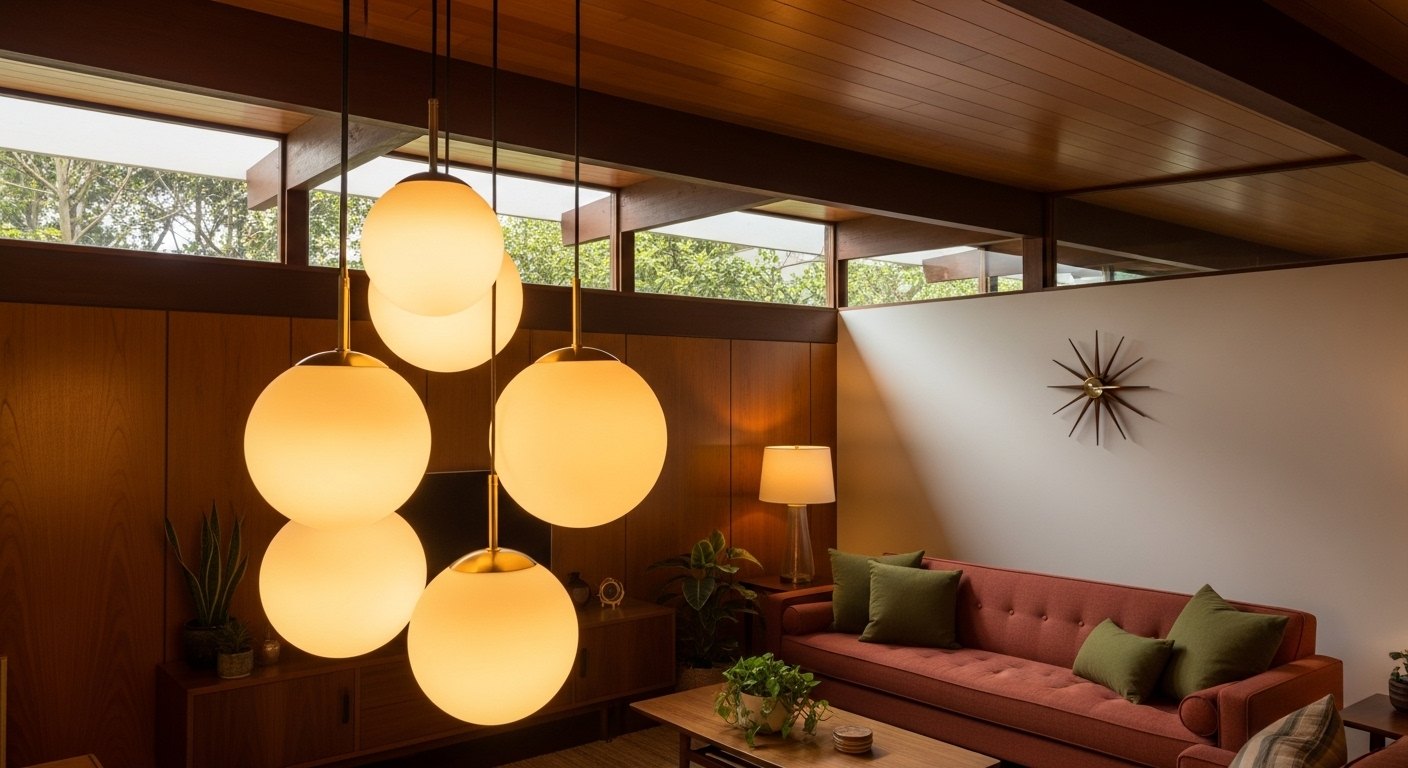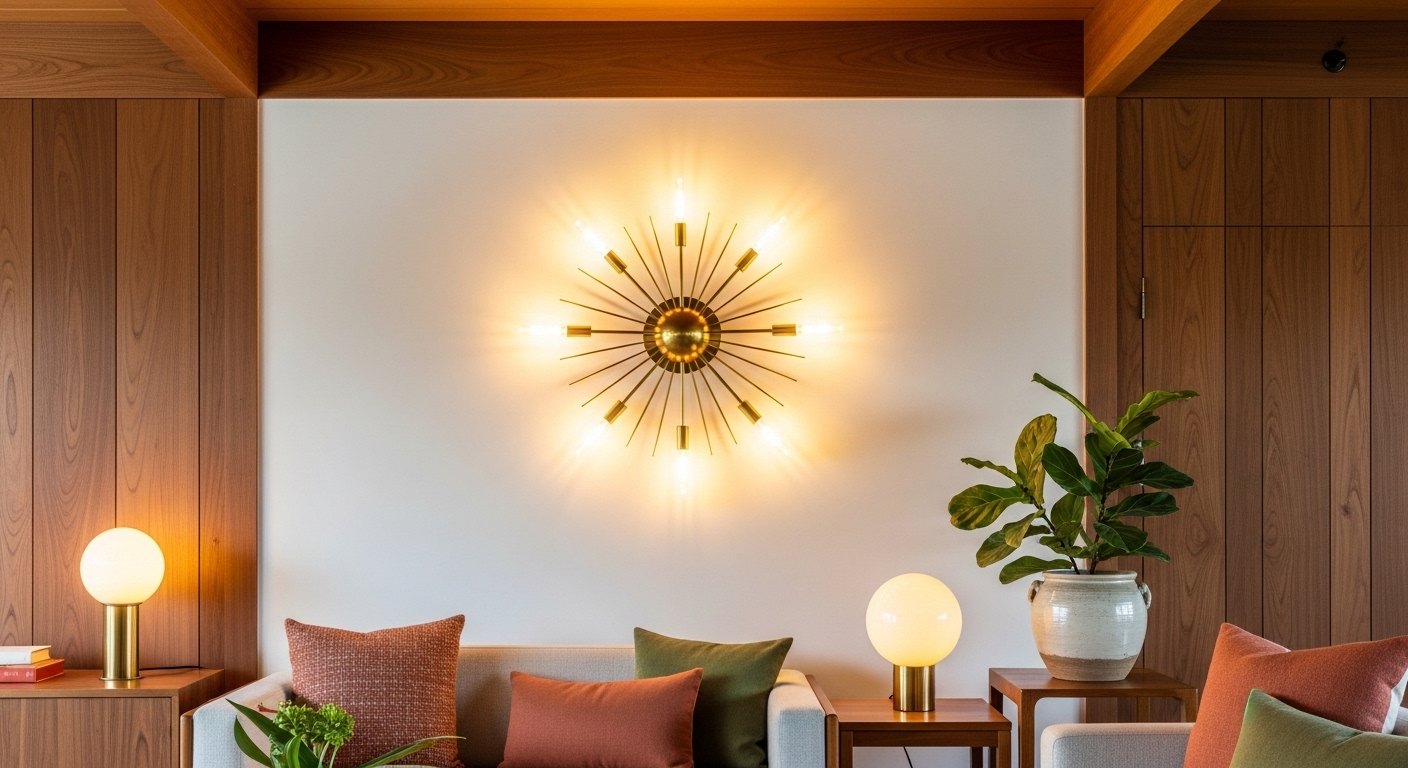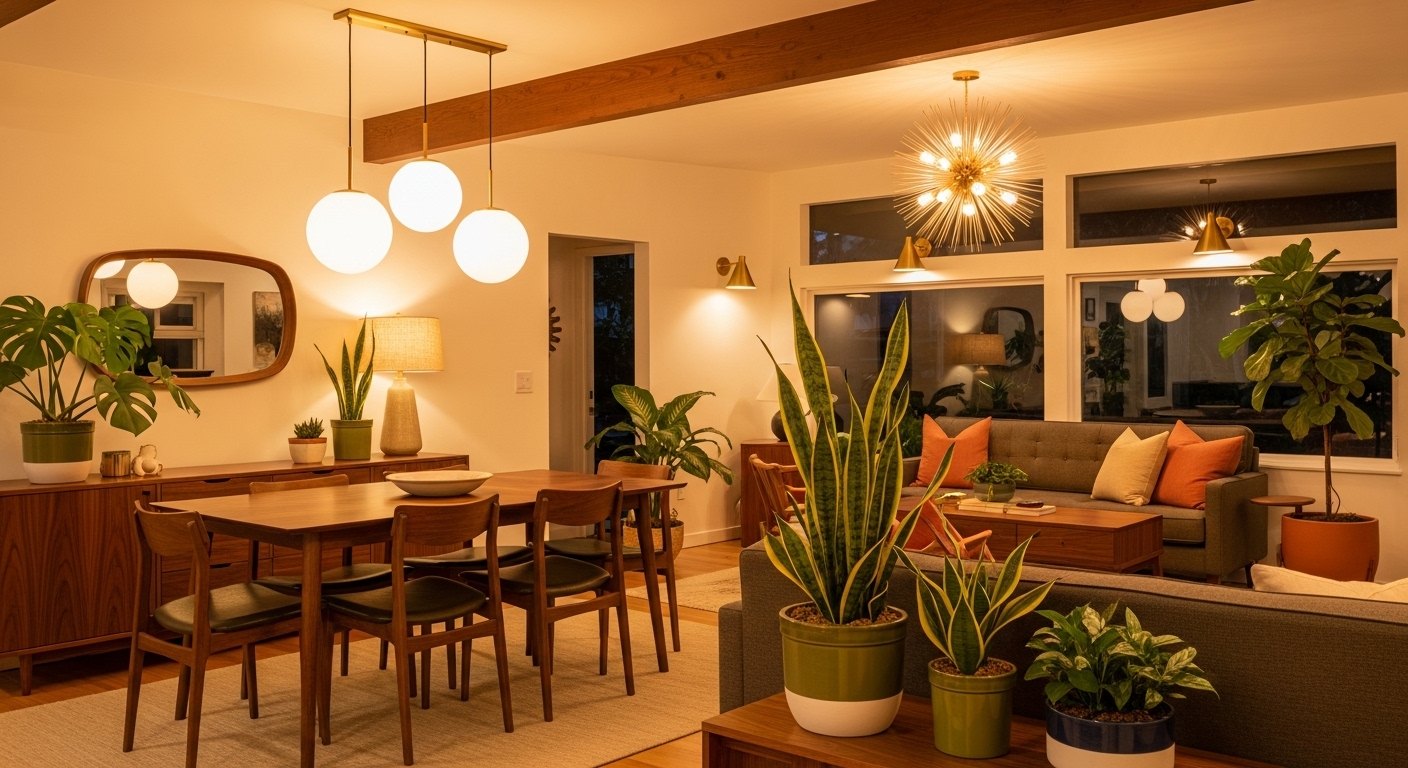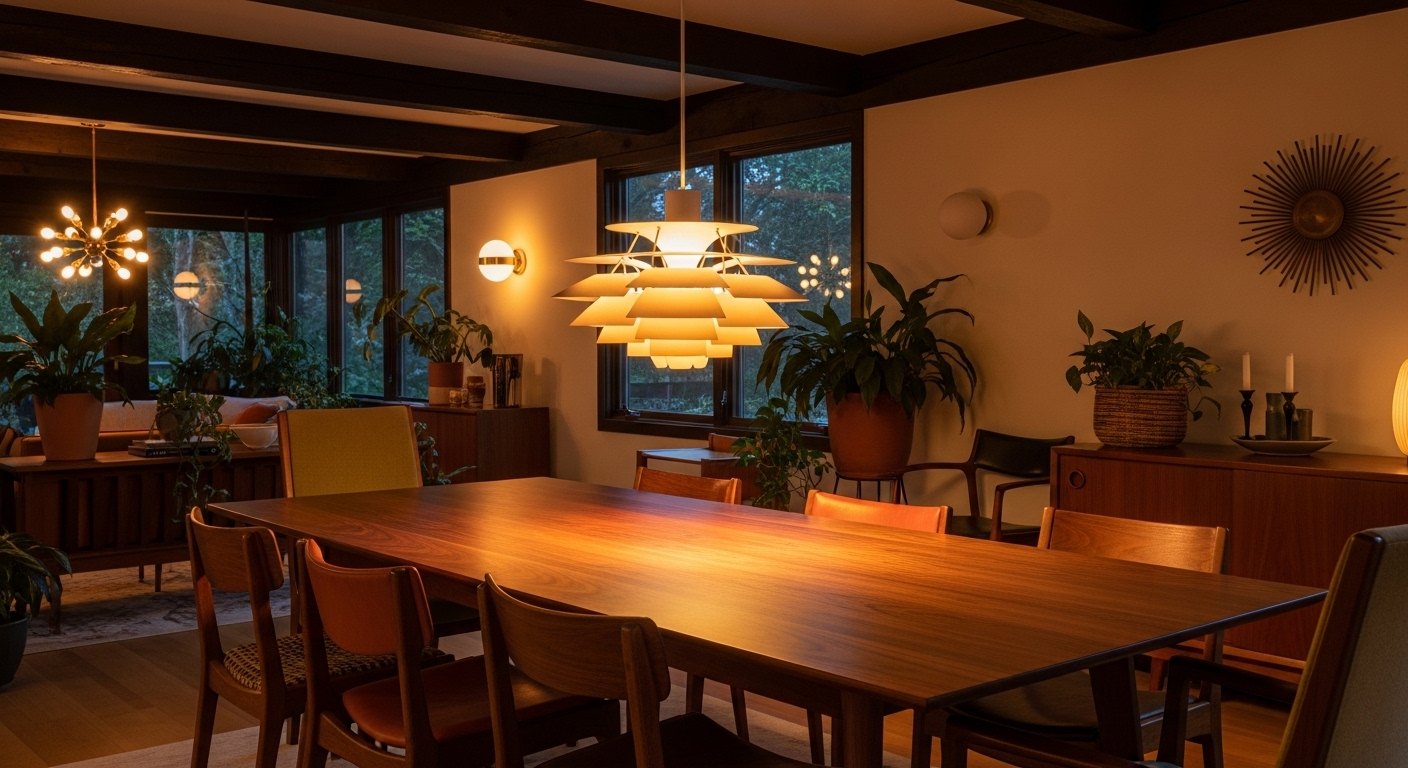
The dining pendant is the statement light of a mid-century home. The fixture that anchors the room and sets the mood for every meal under it. Choosing one well comes down to a few specific decisions about size, height, shape. And bulb, and getting them right is what separates a dining room that feels considered from one that feels accidental.
Size It Generously
The most common dining-light mistake is going too small. Aim for a fixture roughly half to two-thirds the width of your table, a generous pendant anchors the table, while an undersized one floats and looks lost. When you're caught between two sizes, choose the larger. You can see how the proportions play out across the dining lighting collection.
Hang It Low
Because no one walks under a dining fixture, it can hang lower than anywhere else in the house, 30 to 34 inches above the tabletop. I settled on 32 after testing. Low pools the light warmly on the table and faces; higher starts to read as general room lighting and loses the intimacy that makes a dining room special at night. Raise it an inch or two for taller ceilings, but resist floating it.
Choose a Sculptural Shape
Mid-century dining pendants lean sculptural and clean, a globe, a sputnik, a dome, or a distinctive silhouette like the Eydis flowerpot pendant, whose clean form is pure period confidence. The fixture should read as a focal point, so give it a restrained backdrop and let its shape carry the room. Avoid anything fussy; the era's strength is confident simplicity.
Center It on the Table
Center the pendant on the table, not the room. The two are rarely the same, especially in an open plan. The fixture's job is to anchor the table, even if that puts it slightly off-center relative to the walls. Hang it over where people actually sit and eat, and the room reads right.
Put It on a Dimmer
If you do one thing, put the dining pendant on a dimmer. A bright overhead is for homework and folding laundry; a dimmed one is for lingering over a long dinner. Dropping the pendant low in the evening also makes a warm bulb glow even more golden. The exact register a dining room wants after dark.
Warm Bulbs, Always
Whatever fixture you choose, put a warm 2700K bulb in it. Warm light flatters faces and food and makes people want to linger; cool light makes a dining room feel like a cafeteria. If the bulb is visible through the shade, a soft frosted warm bulb glows evenly with no hot spot.
One Pendant, One Room
A single well-chosen dining pendant, sized generously and hung low over the table on a dimmer, will do more for a mid-century dining room than any other single decision. It's the fixture guests notice and the light every meal happens under, worth getting exactly right.
Sizing and Height in One Place
Two numbers do most of the work: size the pendant to half or two-thirds the table width, and hang the bottom 30-34 inches above the tabletop. Get those right and almost any sculptural mid-century shape will read intentional. When between sizes, go up, undersized dining pendants are the most common mistake.
Common Dining-Pendant Mistakes
Beyond sizing and height: centering the fixture on the room instead of the table, skipping the dimmer, and using a cool bulb that makes food and faces look grey. Center on the table, dim it, and keep the bulb warm at 2700K for a fixture that flatters every meal.
Matching the Pendant to the Room
Let the dining pendant relate to the rest of the house, repeat a metal tone or a globe shape so it reads as part of the whole. In an open plan especially, a dining pendant that rhymes with the kitchen and living fixtures ties the space together rather than standing apart.
Shop this post: dining room lighting ideas and the Eydis Bauhaus pendant