Wall sconces are the most underused fixture in most homes, and eye-level light does more to warm a room than any ceiling fixture I've hung. In a mid-century home, the right sconce is also a small sculptural object, a slim brass arm and a soft globe that reads pure period charm. Here's what makes a sconce feel mid-century, and where to put them.
What Makes a Sconce Mid-Century
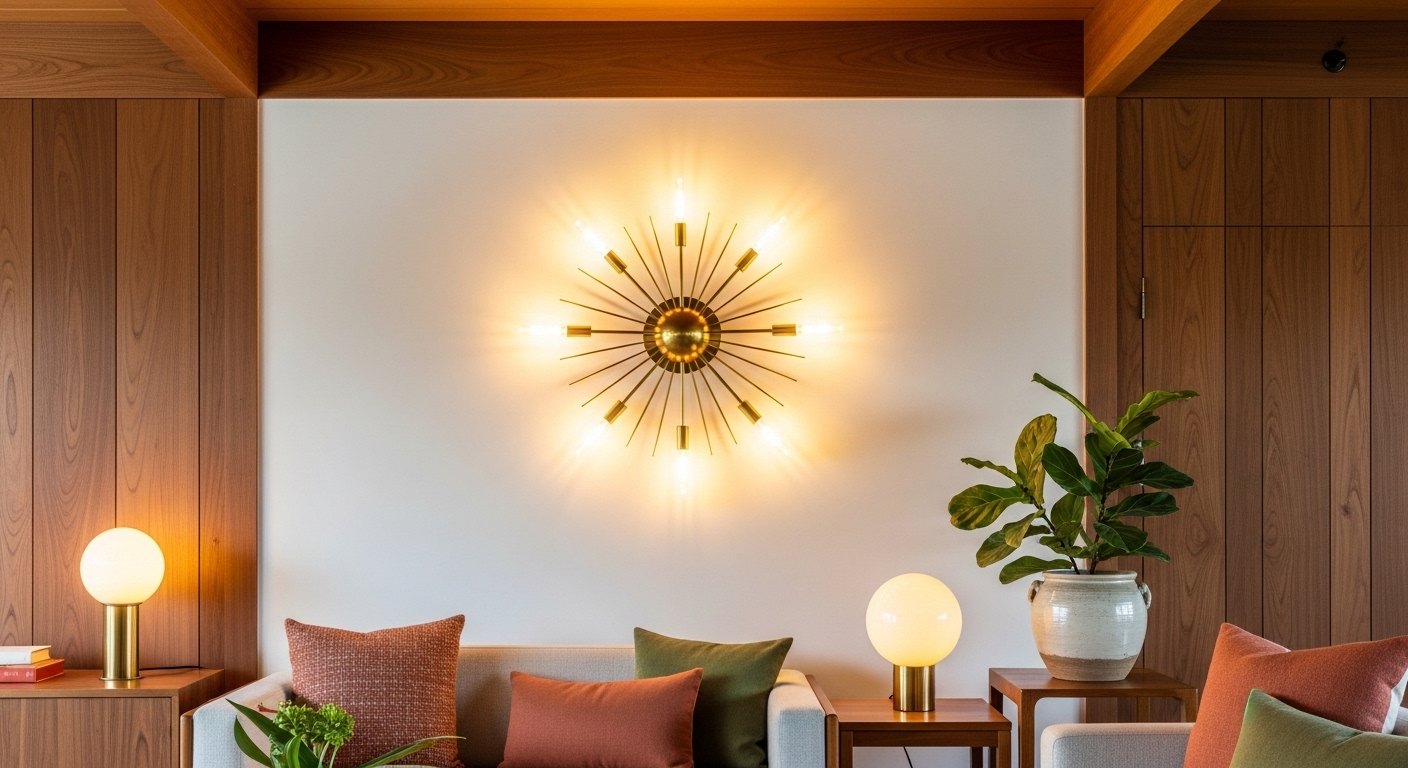
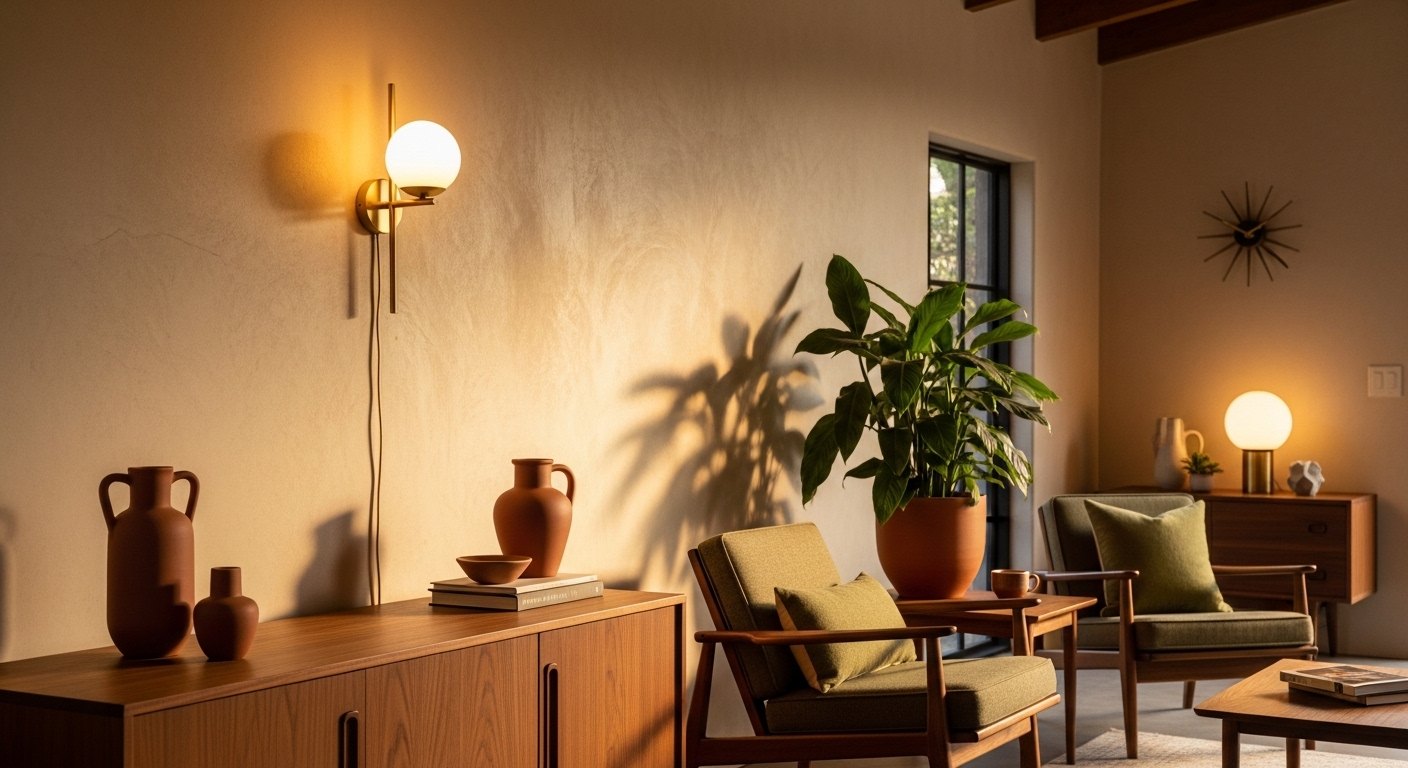
A mid-century sconce reads warm and uncluttered: a slim brass or copper arm, a clean globe or cone shade in opal glass, simple geometric or gently organic forms. The Gunnar cigar sconce is a perfect example, a slim brass arm with a tidy shade, confident and simple. Avoid ornate traditional detailing or cool industrial cages; the era is about warm, confident restraint.
Eye-Level Light Is Flattering Light
Overhead light casts shadows down, under your eyes, your nose, your chin. Sconces put light at eye level, where it fills those shadows in. It's the same reason candlelight and lamplight have always made people look their best. A room lit only from above feels harsh; a room with sconces feels soft and warm.
They Save Surfaces
A sconce frees the nightstand, the side table, the floor. In a mid-century room that prizes clean, uncluttered surfaces, that reclaimed space matters, no lamp base, no cord pooling, just warm light on the wall. It's the rare fixture that improves a room by what it removes as much as what it adds.
Where to Use Them
Beside the bed for reading. Flanking a bathroom mirror for shadow-free light. Along a hallway for warmth and rhythm. Beside a reading chair. On either side of a fireplace, a mirror, or a piece of art. Anywhere you want warm light at eye level without surrendering a surface, a sconce earns its place. Symmetrical pairs flanking a focal point almost always look intentional.
Mounting Heights
Heights vary by job: bedside sconces around 58 to 62 inches, vanity sconces 60 to 66, hallway and accent sconces 66 to 72. The unifying idea is eye level for the room's use, where the warm wash is most flattering. When you flank an object, keep the pair symmetrical around its centerline for a composed look.
No Electrician Required
Plug-in sconces give you the whole look with zero wiring, mount, plug in, run the cord down in a painted cover. And it reads almost exactly like a hardwired fixture from a few feet away. On a smart plug they even get switch-like control. In an older home or a rental, there's no reason not to have more sconces.
The Most Underrated Fixture
If I could give one lighting tip, it would be this: add more sconces. Eye-level warm light transforms a room more than almost anything, and a mid-century sconce does it while adding a small piece of sculpture to the wall. They're the most underrated fixture in the house, and the one I reach for first.
Sconces Room by Room
Sconces earn their place all over: beside the bed for reading, flanking a mirror or fireplace, along a hallway for rhythm, beside a reading chair. Anywhere you want warm eye-level light without surrendering a surface, a sconce works. Pairs flanking a focal point almost always look intentional.
Common Sconce Mistakes
The errors: mounting at the wrong height so the light glares or misses, using a lone sconce where a pair was needed. And running a plug-in cord diagonally so it draws the eye. Mount at eye level for the room's use, flank focal points symmetrically, and run cords straight down then across in a painted cover.
Putting Plug-Ins on a Switch
A plug-in sconce's one drawback, no wall switch, is solved with a smart plug, controlled by app, voice, or schedule, with a stick-on smart button for a true switch feel. It behaves exactly like built-in lighting with none of the wiring, which is ideal in an older home or a rental.
Shop this post: wall sconces and the Gunnar mid-century cigar sconce
My friend Clara at The Elmwood Home makes the case for sconces in every room from a coastal angle, proof the eye-level-light gospel crosses every style.