Clerestory and high windows are a gift by day. They flood a mid-century home with daylight and a sense of soaring height. At night they're a problem: those same windows become black mirrors that contribute no light at all. And a room that glowed at noon can feel cold and cavernous after dark. Here's how we light our tall, glassy rooms once the canyon sun is gone.
The Clerestory Gift and Problem
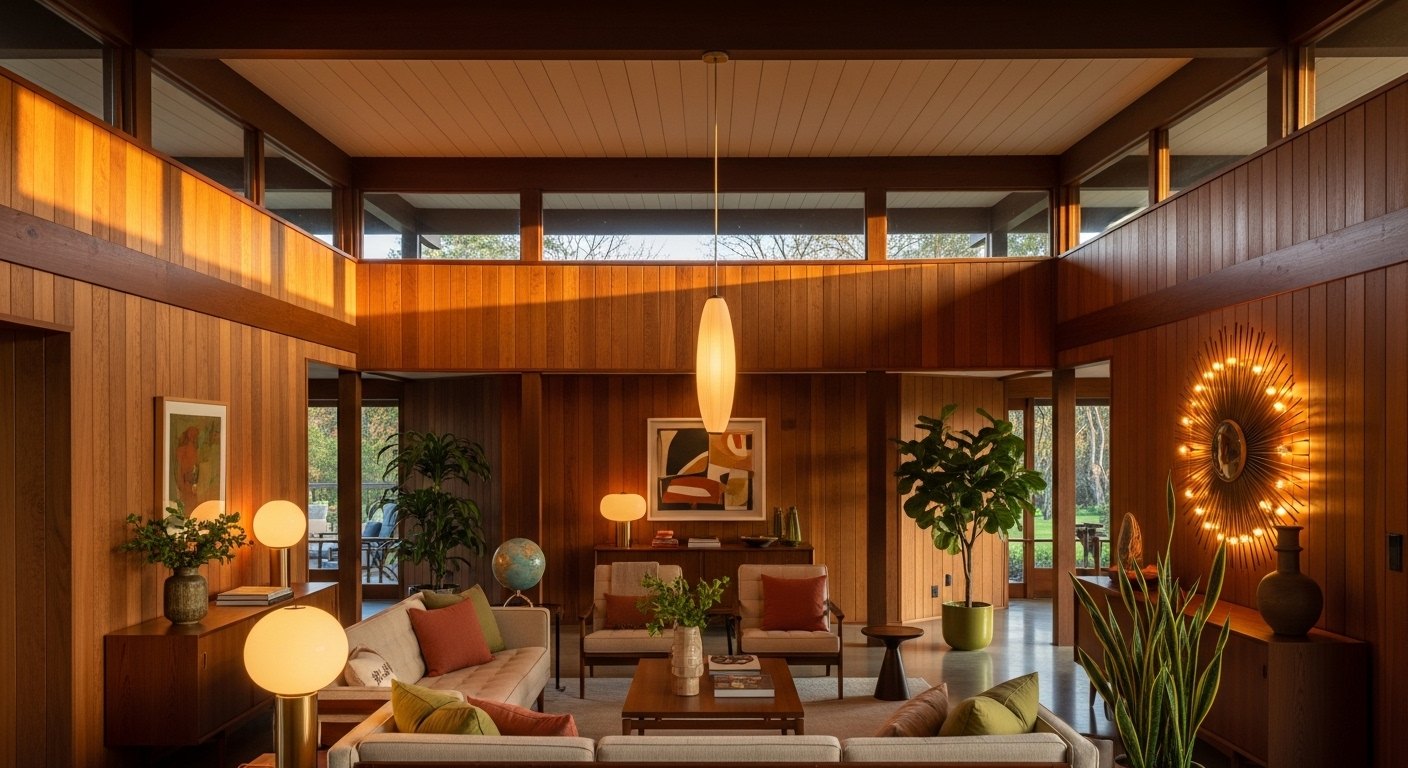
Clerestory windows. That row of glass high on the wall near the roofline, are one of the best things about mid-century architecture. They bring in abundant daylight while keeping the wall below private and usable. But they do nothing after sunset, so a clerestory room lives or dies on its artificial lighting in the evening. Understanding that day-night split is the whole key.
Light at Human Height
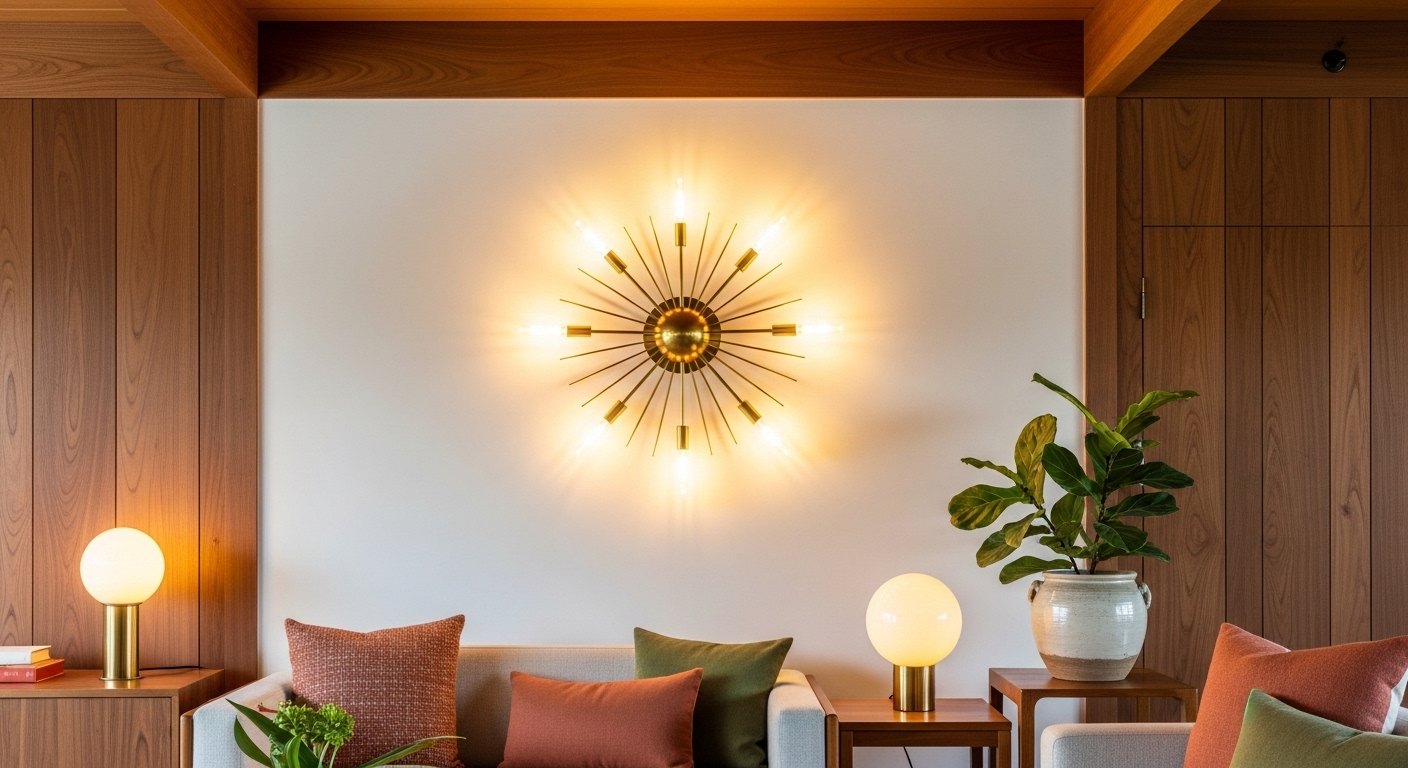
The instinct in a tall room is to light it from the ceiling, but that leaves the living level dim and the room feeling cold. The fix is to light where people actually are, at human height. Wall sconces at eye level and lamps on low surfaces do far more for a tall room at night than any ceiling fixture, because they put warm light down where you sit.
Hang Pendants Low
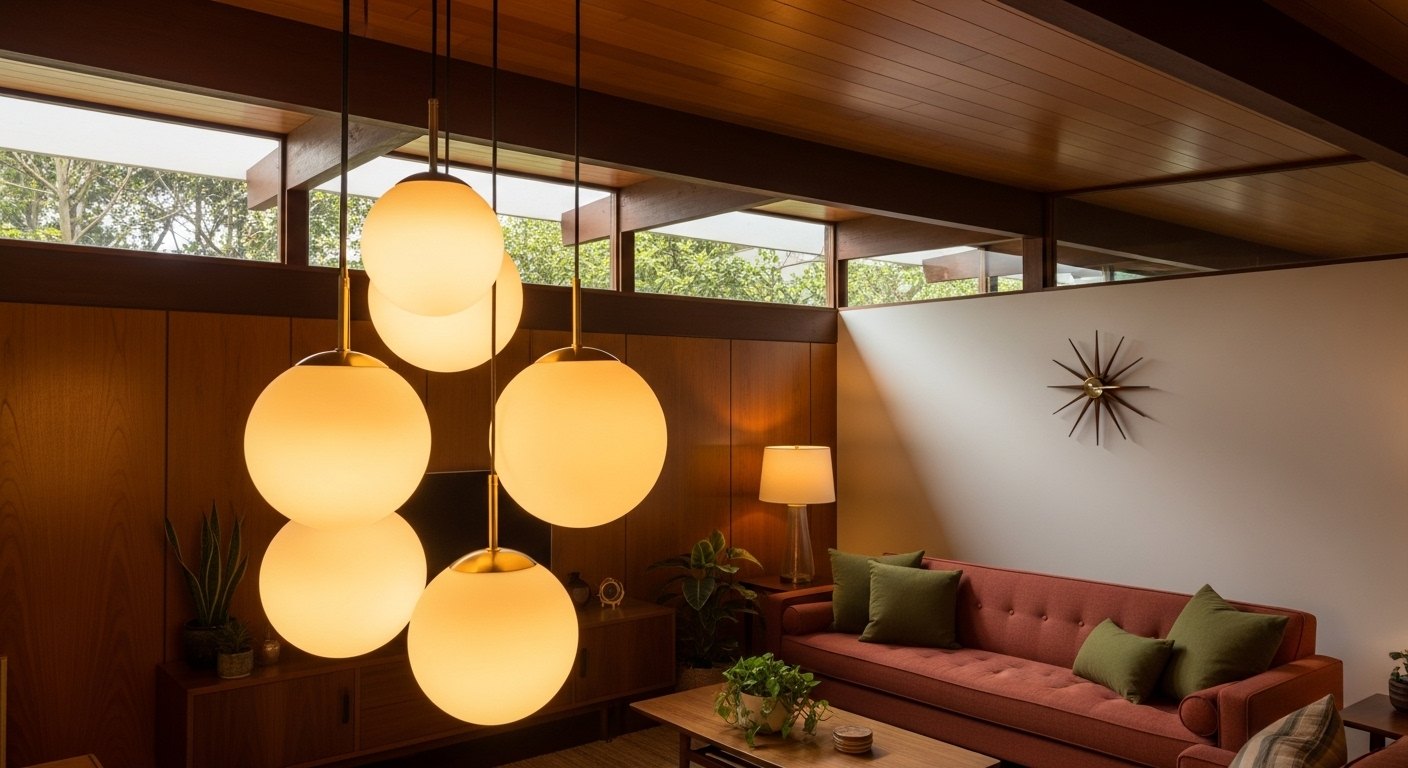
If you use a pendant in a tall room, hang it lower than instinct suggests. Dropping the fixture down into the room, while keeping at least seven feet of clearance in walkways, brings both the scale and the warm light down to the living level, rather than stranding a tiny glowing dot near the roofline. A long-drop pendant is a classic mid-century move precisely because tall rooms can carry it.
Why the Glass Goes Dark
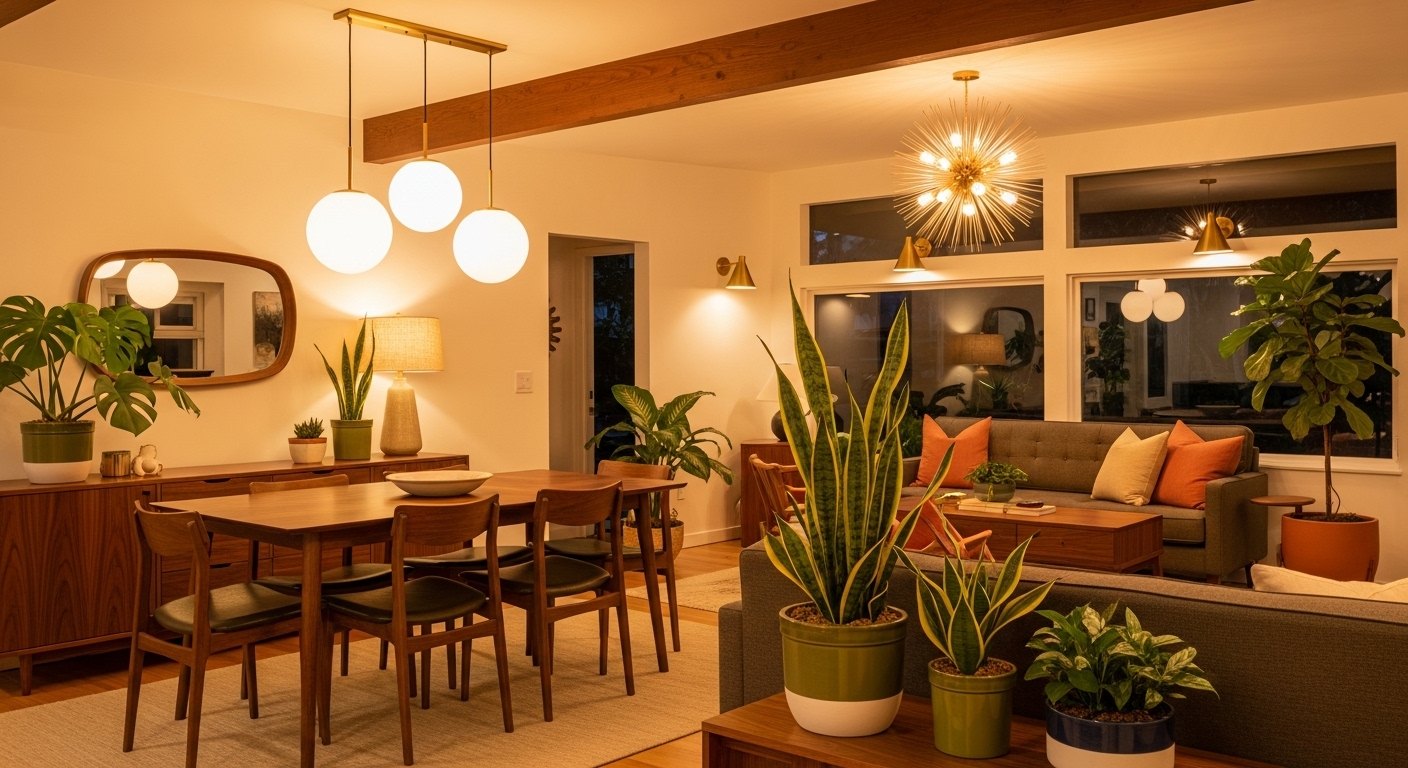
The reason a glassy room feels dim at night isn't a lack of fixtures. It's that all that glass reflects the interior back instead of contributing light, and the eye expects the brightness it had by day. The only cure is enough warm light at lower heights to fill the room, so it glows from within rather than echoing into dark glass.
Keep the Architecture Alive at Night
One lovely trick: a subtle warm uplight or grazing light on a textured feature wall keeps some of the daytime architectural drama going after dark. It won't replace the clerestory light, but it gives the eye something beyond black glass to land on. And it preserves the sculptural quality of the space into the evening.
Warm and Layered
As everywhere in a mid-century home, the fixtures should be warm 2700K and layered at different heights, ideally on dimmers. A tall, glassy room needs more warm sources than a low-ceilinged one, not fewer, precisely because it loses all that daylight at dusk. Layer generously and warmly, and the room stays inviting from golden hour straight through the evening.
Test It After Dark
Because clerestory rooms transform so completely from day to night, test your lighting in the evening before finalizing. A scheme that looks balanced in the flood of midday daylight can fall flat once the windows go black. Dim everything, sit in the room at night, and add warm light until it glows the way the daytime did.
A Tall-Room Lighting Recipe
Light a clerestory room at human height: pendants hung low enough to bring light down into the room, plus sconces and lamps at eye level. Warm 2700K, on dimmers, more sources than a low room needs. The architecture gives you daylight by day; you supply warmth at human level by night.
Common Mistakes in Tall Rooms
People light tall, glassy rooms only from the ceiling, leaving the living level dim and cold; they hang pendants too high so the light strands near the roofline; and they under-light, forgetting the glass goes black at night. Light low, hang pendants lower than instinct, and layer generously.
Keeping the Drama at Night
A subtle warm uplight or grazing light on a feature wall keeps some of the daytime architectural drama alive after dark, giving the eye something beyond black glass. It won't replace the clerestory light, but it preserves the sculptural quality of the space into the evening.
Shop this post: pendant lights and wall sconces