A sunken conversation pit is one of the most rewarding mid-century features you can have, and one of the trickiest to light. A bright overhead aimed straight down into a sunken seating area is merciless. It flattens faces and kills the cozy intimacy that's the whole point. The secret is to light a pit low, warm, and from the edges.
Why Overhead Light Fails Here
A pit sits below the main floor, so a ceiling fixture is even farther from the seating and throws a harsh downward wash onto everyone's heads. It creates glare, erases the soft shadow that makes a space intimate, and turns a cozy nook into a brightly lit hole. Understanding why top-down light fails is the key to lighting a pit well. You want light coming from the sides and from lower down.
Light From the Edges
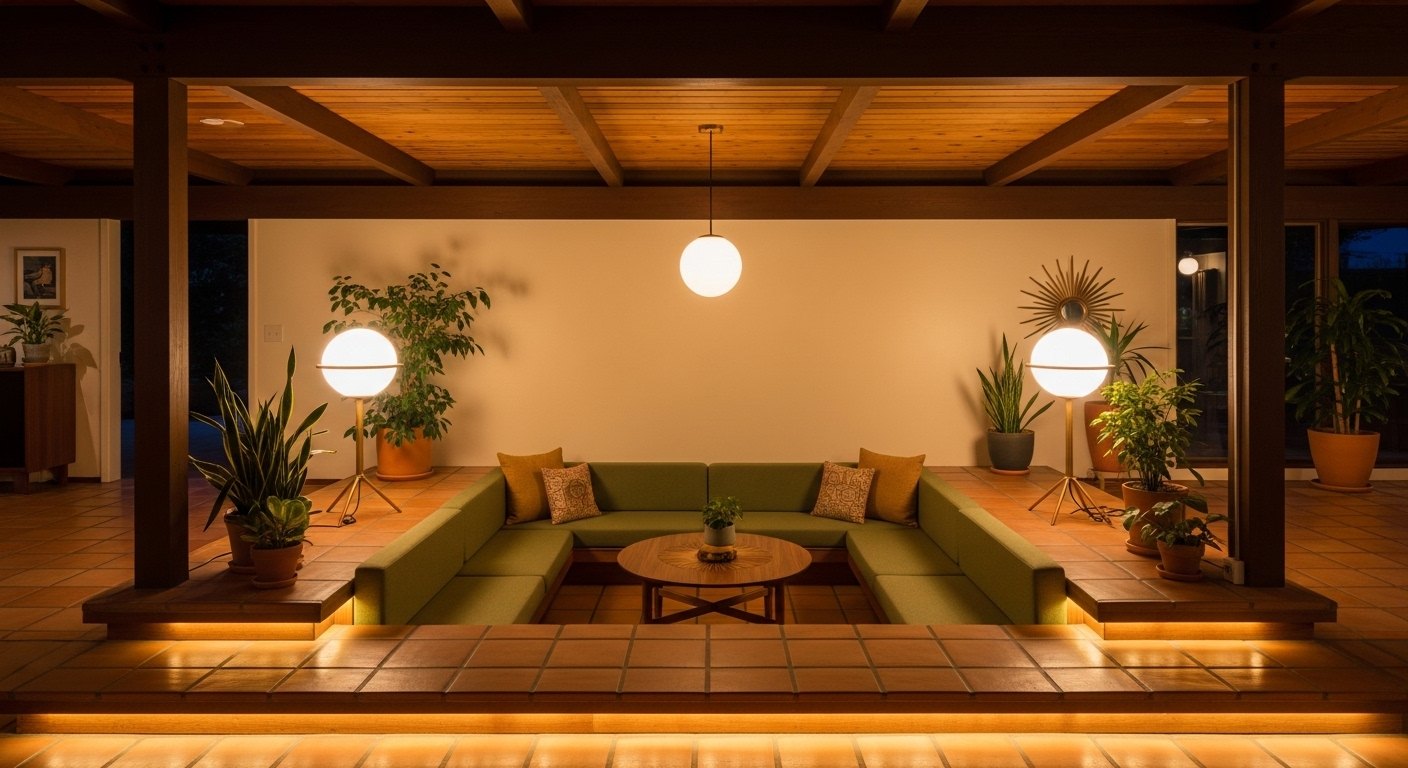
The most effective approach is to ring the pit with light at seating height. Floor lamps at the perimeter and sconces on any adjacent walls cast warm light across the seating from the sides, creating an enveloping glow rather than a glaring wash. Edge lighting alone often lights a pit more beautifully than any overhead, and it preserves the intimate, gathered feeling.
A Soft Pendant, Hung Low
If you do want a central fixture, choose a soft pendant and hang it low over the center, on a dimmer, so it pools gentle light over the table rather than blasting the seating. Keep it well above head height for anyone standing in the pit, but lower than you'd hang a normal room fixture. The pit's lower floor gives you the room. The effect should be a warm cone of light, not a spotlight.
Don't Forget the Step
The one important safety detail is the change in level. Subtle warm step lighting at the edge of the pit keeps it visible at night without breaking the mood, a low LED strip under the lip, recessed step lights, or a perimeter floor lamp positioned to catch the step. A conversation pit should be intimate, not a stubbed toe waiting to happen, and a little light at the level change is what makes it safe.
Warm and Dimmable
Everything in and around the pit should be warm 2700K and on a dimmer. A pit is an evening space, for long talks, a glass of wine, a record on. So the light wants to be soft and golden, not bright and even. Dimming warm bulbs makes them glow even warmer, deepening the cozy register a sunken space is built for.
Layered, Not Bright
The goal in a pit is never maximum brightness; it's a layered, intimate glow you can dial up for a board game and down for conversation. Several low warm sources at the edges, a soft central pendant if you want one. And warm step light add up to a space that feels like the coziest room in the house after dark.
Test It at Night
One practical tip: test your pit lighting after dark, sitting in the pit, before you finalize anything. What looks balanced at noon can glare or fall flat at night, and the pit is fundamentally an evening space. Sit in it, dim everything, and adjust until it glows the way you want to live in it.
A Pit Lighting Recipe
Here's the plan: warm floor lamps and sconces at the perimeter for an enveloping glow, an optional soft pendant hung low over the center on a dimmer, and subtle warm step lighting at the level change. Everything warm 2700K and dimmable. Edge light plus warm step light is the safe, intimate combination.
Mistakes That Ruin a Pit
The cardinal sin is a bright overhead aimed straight down, which flattens faces and kills intimacy. Other errors: no safety light at the step, and lighting it too brightly so it never feels cozy. Light from the edges, keep it low and warm, and always mark the step.
Test It at Night
A pit is fundamentally an evening space, so test the lighting after dark, sitting in the pit, before finalizing. What looks balanced at noon can glare or fall flat at night. Dim everything, sit down, and adjust until it glows the way you want to live in it.
Shop this post: pendant lights and staircase and step lighting