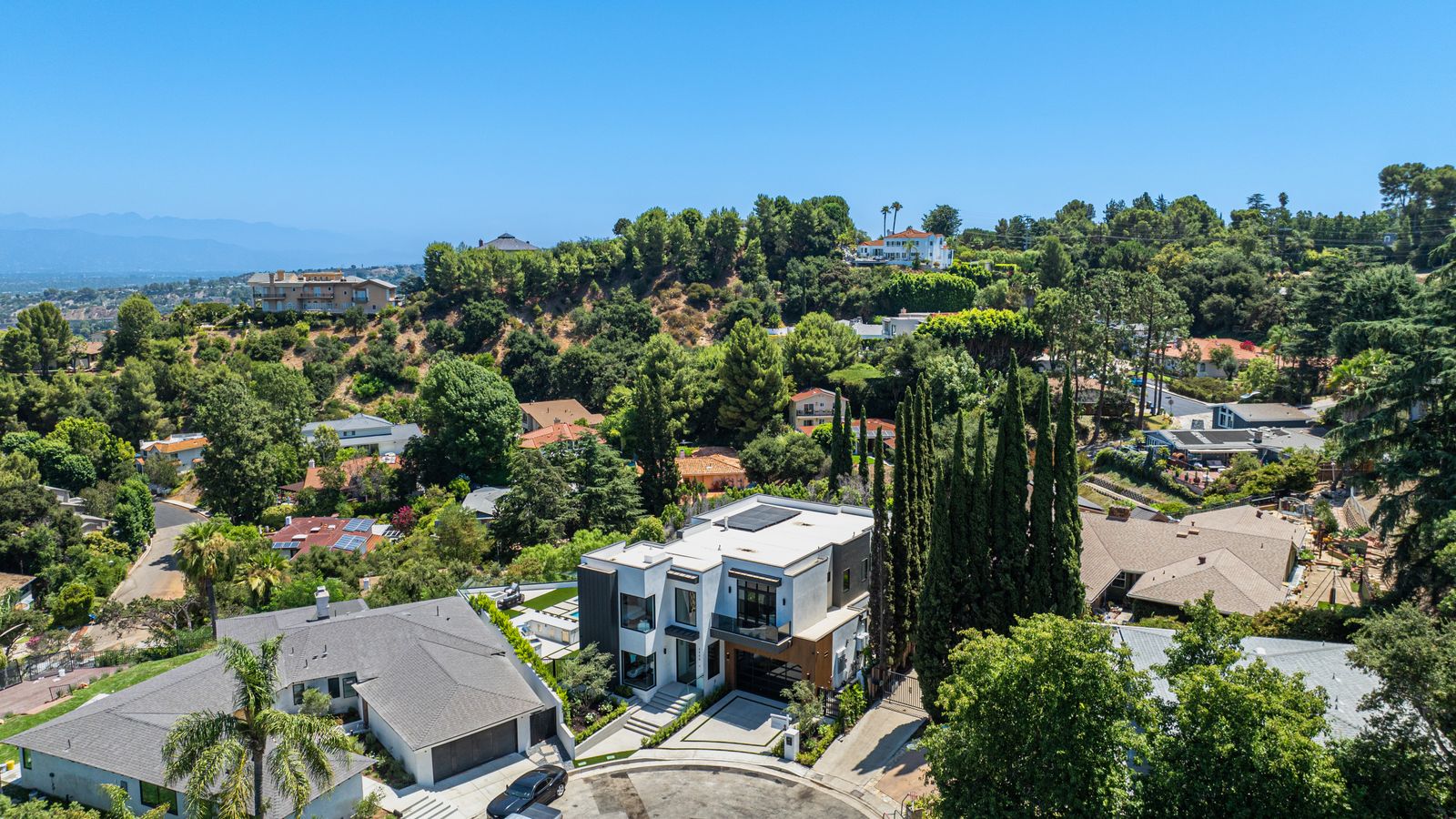
Laurel Canyon homes are hillside houses in the fold of the Santa Monica Mountains between Hollywood and Studio City, strung along one twisting boulevard and a web of one-lane streets that were laid out for horses. Most were built between the 1920s and the 1960s. They sit on stilts, on cut pads, on retaining walls, and on hope. They have no sidewalks, patchy cell service, a coyote population that considers your yard a corridor, and some of the best afternoon light in Los Angeles. We've lived in one for seven years. This is what nobody tells you before you buy.
I'm not going to do the music history. You can read about Joni Mitchell's house and the Canyon Country Store anywhere, and yes, the store is still there, and yes, the sandwiches are fine. I want to write about the houses as houses: what they're made of, why they're shaped the way they are, what the canyon does to daylight, and the practical stuff about fire, insurance, and parking that the real estate listings leave out.
What kind of houses are in Laurel Canyon?
Four kinds, roughly, layered by decade. The oldest are the 1920s cabins, originally weekend places for people from the flats, small, wood-framed, often with stone chimneys and a porch. Some have been added onto six times. Then the 1930s and 40s Spanish and storybook cottages, stucco and tile, on the lower streets near the boulevard. Then the post-war stretch, late 1940s to mid-1960s, which is when the post-and-beams and the glassy modern boxes went up on the steeper lots that earlier builders had skipped. And finally the 1970s to now, which is everything else: stucco boxes, a few serious architect houses, and the occasional thing on stilts that makes you hold your breath driving under it.
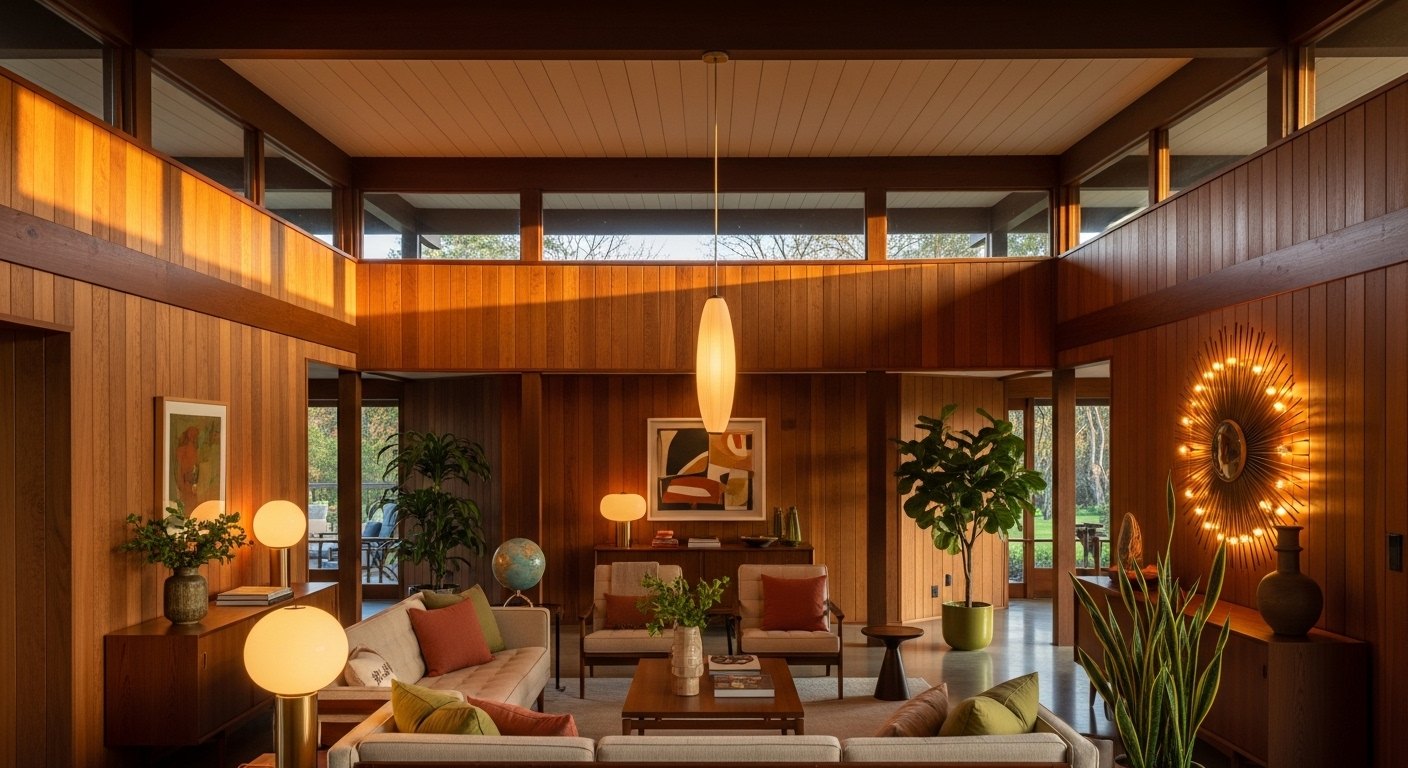
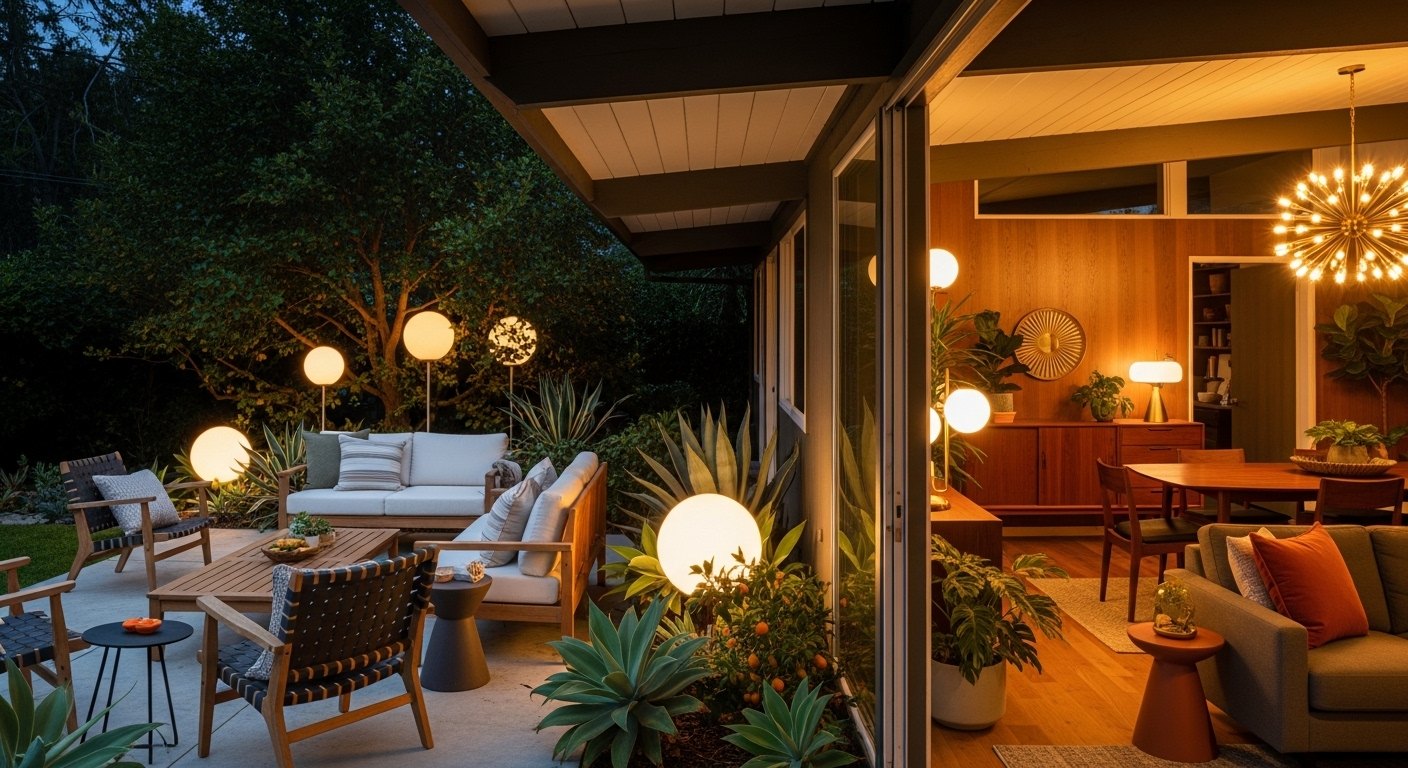
Ours is from the third group, a 1961 post-and-beam on a south-facing slope. I've written about most of its rooms, from the living room to the backyard under the eaves. What I haven't written about is the canyon itself, and the canyon is half of why the house works.
What the canyon does to the light
This is the thing I'd want to know if I were house-hunting here, and nobody mentions it. A canyon house gets a shorter day than a house on the flats. The ridge to the east blocks the sunrise, the ridge to the west swallows the sunset, and depending on which slope you're on, the difference is hours.
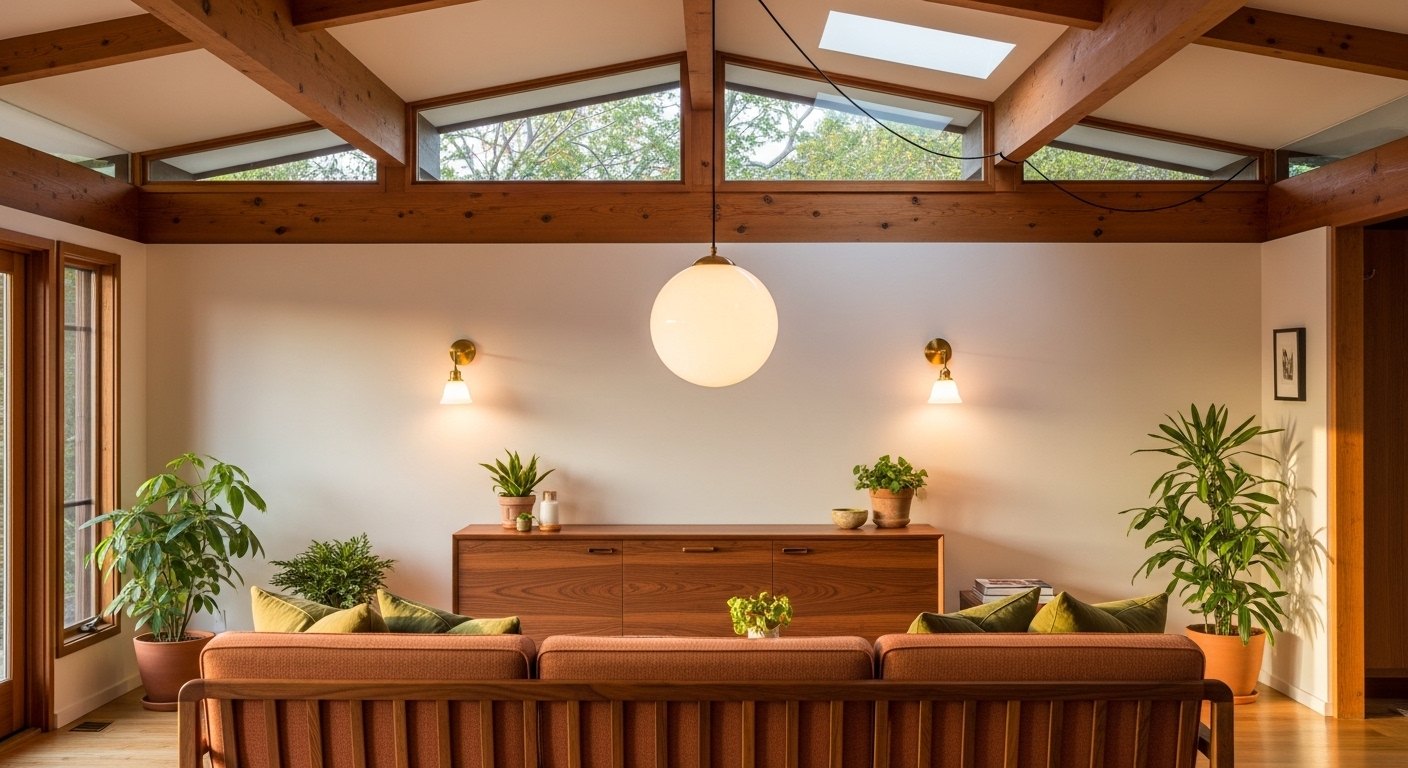
A south-facing lot, like ours, gets sun from about eight in the morning until the western ridge takes it around five in summer, three-thirty in December. The light comes in low and gold across the whole afternoon, which is exactly what a house with a glass wall and clerestory windows was built for, and it's why I bought the place. I covered lighting the clerestory after dark, because after dark comes early here.
A north-facing lot gets almost no direct sun in winter. I have friends across the canyon whose living room doesn't see the sun from November to February. Their house is a good one and cool in August and they run lamps all day in January. If you're looking at a north-slope house, look at it at two in the afternoon in December, not at noon in June when the listing photos were taken.
East and west slopes split the difference: morning light or evening light, not both. West is the one to want if you can only have one. Nobody's ever wished for less golden hour.
Why are Laurel Canyon houses built the way they are?
Because the lots are terrible, in the most useful sense. A flat lot lets you build anything. A 40-degree slope with a creek at the bottom and a road at the top lets you build one thing, and the house is the answer to the question the lot asked.
That's why so many canyon houses enter from the top. You park at street level, walk in at the top floor, and the bedrooms are below you, dug into the hill. It's backwards from a normal house and it's why so many have the living room on the "upper" floor with the view. It's also why the post-and-beam style took off here in the fifties: a post-and-beam can stand on a few concrete piers driven into the slope, where a conventional house needs a whole foundation and a lot of grading nobody could afford.
Ours stands on eight piers. The back half of the house hangs over the slope by about twelve feet. When we had the piers inspected before buying, the engineer, a patient man named Dennis who has looked under half the houses on our street, said "these are good, but don't plant anything heavy on that deck." We didn't. The people before us had a hot tub out there. Dennis had thoughts.
What Laurel Canyon homes cost, and what you get
Less than the Bird Streets and Beverly Hills side of the hill, more than Studio City below. In practice, as I write this, a small 1920s cabin that needs everything starts around a million and a bit; a livable mid-century on a decent slope runs from about $1.6 million to $3 million depending on the view and whether the retaining walls are original; and the architect houses on the ridge go for whatever the ridge is going for that year. We paid in the middle of that range in 2019 for 1,650 square feet, three bedrooms, one carport, and a deck that hangs over the slope.
What you get for the money that you don't get in the flats: quiet, absurdly, ten minutes from Sunset. Trees, real ones, live oaks and sycamores, not the palm-and-lawn version. Neighbors who've been here forty years and will tell you which contractor to avoid. And the houses themselves, which were mostly built by people who cared about the site, because the site gave them no choice.
What you don't get: a garage, usually. A yard, in the flat sense. A second bathroom, in the older ones. Parking for guests. Straight walls. Ours has a floor that drops an inch and a half across the living room, which the inspector called "consistent with age" and which I call the reason every lamp in the house has a felt shim under one foot.
The fire question, answered straight
Every house in Laurel Canyon is in what the state calls a Very High Fire Hazard Severity Zone. That's not a warning, it's a designation with legal weight. It means you're required to keep 100 feet of defensible space around the house, which on a canyon lot usually means all of your lot and some of your neighbor's, and the fire department inspects. It means certain roofing and vent types are required when you rebuild. And it means, since about 2019, that insurance has become the single hardest part of owning here.
Our insurer dropped us in 2022, not for anything we did, but because they dropped the whole zip code. We're on the California FAIR Plan now, which is the state's insurer of last resort, plus a separate wraparound policy for everything FAIR doesn't cover. Together they cost about $7,400 a year for a house that was insured for $2,100 in 2019. I'm not telling you this to scare you off. I'm telling you because the listing won't, and it's the number that changes whether the house is affordable.
What we do about it, practically: brush clearance twice a year, about $900 each time for a crew of three for a day. Ember-resistant vents, which we replaced ourselves. Nothing wooden touching the house within five feet, which meant losing a lovely, stupid redwood trellis. A go-bag by the door from June to November. And an honest relationship with the fact that we chose to live in a place that burns.
Parking, deliveries, and the roads
There are no sidewalks. The streets off the boulevard are mostly one lane with pullouts, and two cars meeting means one of them reverses. Most houses have one parking spot, some have none and you park on a curb three houses down. Ours has a carport for one car and a pad for a second that requires a nine-point turn my husband has perfected and I have not.
Deliveries are a coin toss. Large furniture arrives at the boulevard and then a conversation happens. Our walnut dining table came up the hill on a hand truck pushed by two men who I tipped very well. Get the measurements of your access path before you buy anything big. I learned this with a sofa, which is a story I've told in the thrifting post.
The roads themselves are a subject. Laurel Canyon Boulevard is the only way through, and when it closes, for a slide, a fire, a filming permit, a water main, you go around by Coldwater or Cahuenga and add forty minutes. It closed four times last winter. The side streets were laid out before cars and have never been widened because there's nowhere to widen them to; the hill is on one side and someone's house is on the other. Trash pickup is a small truck that comes up backwards. The mail carrier walks. You learn to reverse a hundred feet without thinking about it, and you learn which neighbors' driveways you're allowed to use to let someone pass. There's an etiquette. Nobody explains it. You'll get a wave when you get it right.
Cell service comes and goes with the fold of the hill. Ours is fine on the deck and gone in the kitchen. The house came with a landline jack and we have, unironically, considered it.
The wildlife
Coyotes, nightly. Ours have a route that crosses the top of the driveway at about ten. They are not interested in you; they are very interested in a cat left out, and the canyon has a lot of "missing cat" signs stapled to poles. Deer on the upper streets. Raccoons in every trash bin not strapped shut. A great horned owl that lives somewhere above us and has been calling every night for seven years. Hawks. The occasional bobcat, once, on the deck, looking at me through the glass with total indifference before walking off. It's the most alive place I've ever lived, ten minutes from Sunset Boulevard.
What canyon houses need that flatland houses don't
Retaining walls, and someone who knows how to read them. A crack in a retaining wall here is not cosmetic. Get a geotechnical report before you buy, not just a home inspection. Ours cost $1,800 and told us more than the inspection did.
Drainage. The canyon funnels rain, and a house on a slope is either shedding water or collecting it. After the winter of 2023, when we got a season's rain in three weeks, half the street had water in the lower level. We didn't, because the previous owner had put in French drains in 2015 and I will bless her name forever.
Lighting that works when the sun leaves early. This is the part I care most about and the part the canyon makes urgent. When the ridge takes the sun at three-thirty in December, you have six hours of evening in a house built around daylight. Every room needs its own warm lamps, and the switch from day to lamps needs to feel like a choice rather than a loss. I've written about that switch more than any other thing on this blog, in the dimmers post and elsewhere, and the canyon is why.
Would I buy here again?
Yes, and I'd do three things differently. I'd get the geotechnical report before falling in love with the house rather than after. I'd budget for FAIR Plan insurance from the start instead of finding out in year three. And I'd stand in every room at three in the afternoon in December before I signed anything, because the light is the reason to live here, and the ridge decides how much of it you get.
The rest, the roads, the coyotes, the nine-point turn, the owl, I'd take exactly as it is. There's a moment most evenings when the sun drops behind the western ridge and the whole slope across from us goes from gold to blue in about four minutes, and the lamps come on in the houses one by one, and you can see every one of them because there are no streetlights. That's Laurel Canyon. The listings can't photograph it. You have to sit there.
The lamps that come on at dusk in our house: living room table lamps on the credenza and wall sconces along the paneled hall, all 2700K, all on dimmers, all on before the ridge takes the sun.