Warm mid-century modern is more than teak and tapered legs. The phrase makes some people picture a cold, museum-like room full of hard surfaces and cool light, beautiful in a magazine, chilly to live in. To me, warm mid-century means keeping the era's clean lines and iconic shapes while leaning all the way into warmth. Here's what that actually means.
The Bones Are Mid-Century
The foundation is classic mid-century: clean-lined, low furniture, organic and geometric shapes, a connection to the outdoors, and the era's confident, uncluttered sensibility. Tapered legs, flat-front cabinets, globe and sunburst lighting. The recognizable vocabulary of the style. Warm mid-century doesn't abandon any of that; it just executes it with a cozier hand.
The Feeling Is Warm
Where a cold mid-century room is all glass, chrome, and cool light, a warm one leans on rich walnut and teak, earthy color, soft textiles, plants, and golden lighting. The difference is emphasis, not bones. The same clean-lined room can feel like a gallery or like a hug depending on the materials and the light. I'm always chasing the hug.
Walnut Over Everything
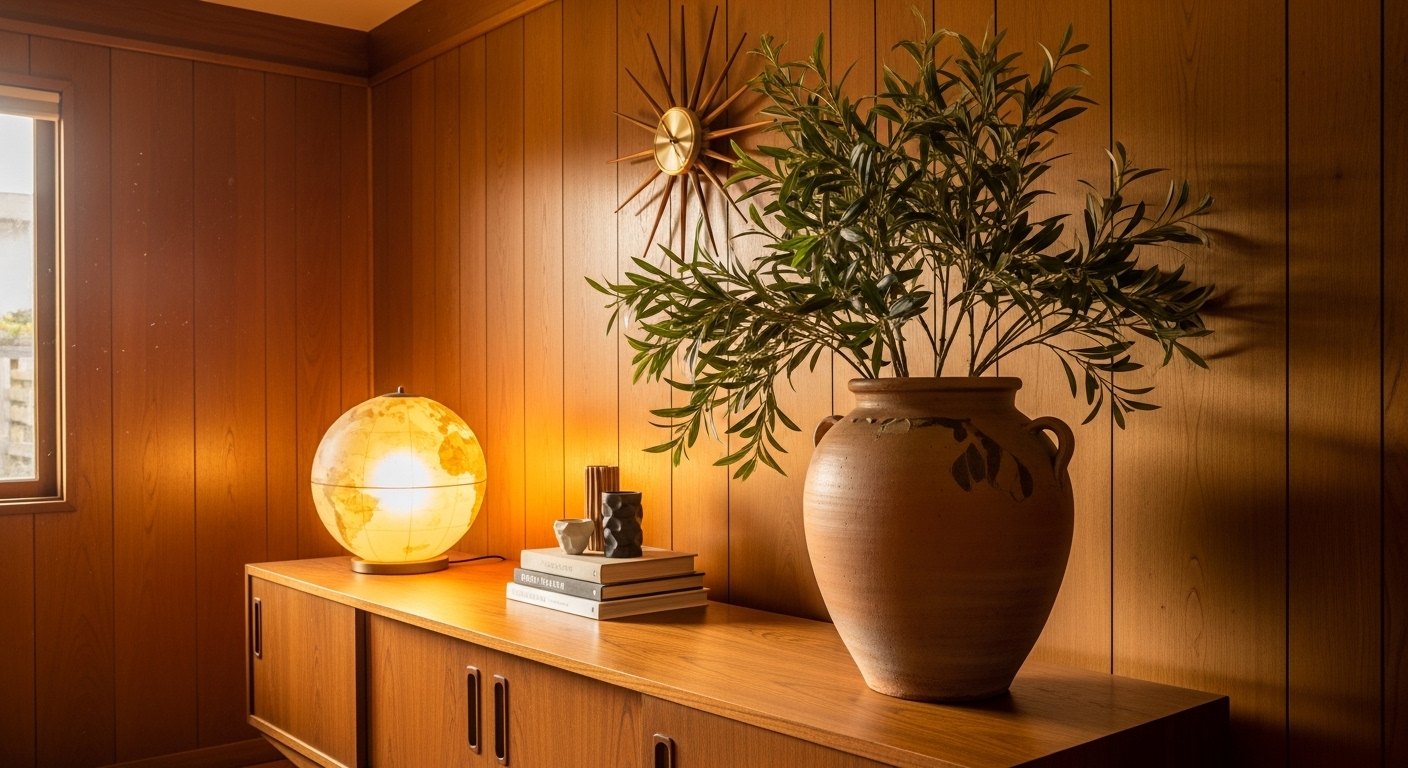
Warm wood is the backbone. Walnut and teak bring the rich, warm tones that make a room feel cozy rather than clinical, and they age beautifully. A single dominant warm wood. I lean on walnut, anchors a room and gives every other choice something warm to play against.
An Earthy Palette
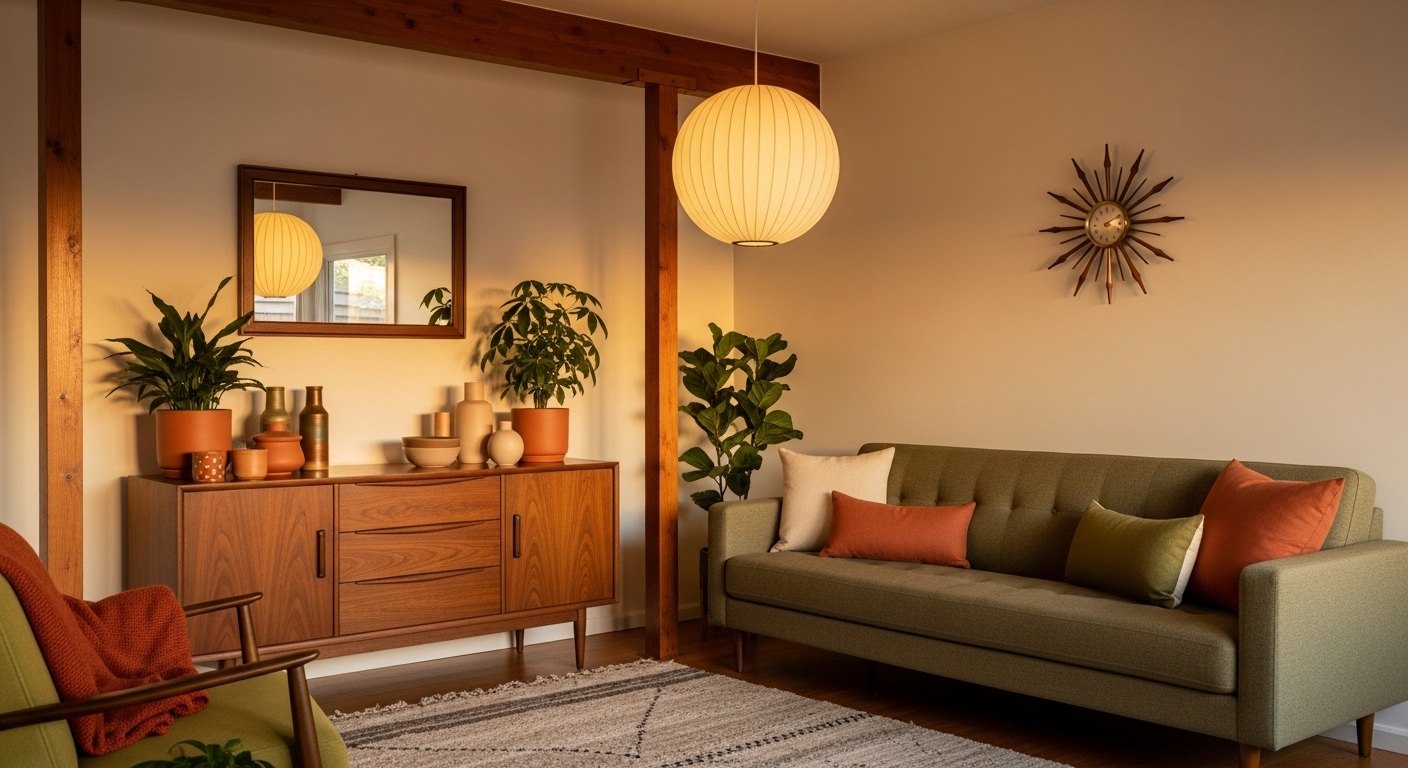
The color story is warm and drawn from nature: a base of cream and oat, walnut tones, and earthy saturated accents, terracotta, olive, mustard, burnt orange. Used as accents against the warm neutral backdrop, these colors give the style its cozy, optimistic feeling. The minimal home edit is a good nudge toward the restraint that keeps the palette from getting loud.
Warm Light Is the Heart
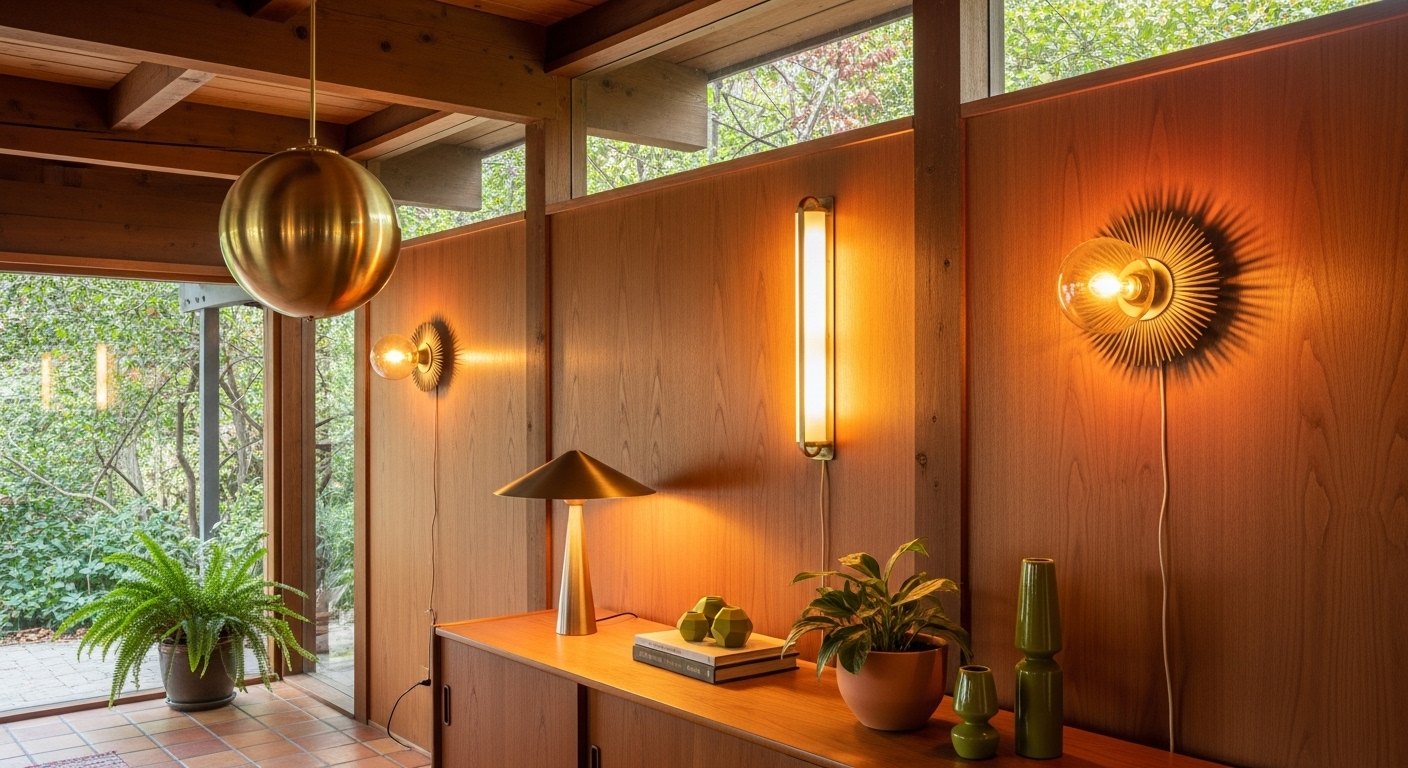
If there's one non-negotiable, it's the light. Warm mid-century rooms glow. They feel like late afternoon all day long. Globe and sculptural fixtures, warm 2700K bulbs, layered low sources, and dimmers everywhere are doing as much work as any walnut credenza. Get the light wrong and no amount of teak will save the feeling.
Plants and Life
Mid-century design grew up alongside indoor-outdoor California living, so greenery is part of the look, not an afterthought. A few sculptural plants, a wall vase of clippings, a fiddle-leaf in the light. They soften the clean lines and bring the warmth of living things into the room. A warm mid-century home should feel alive.
Not a Museum
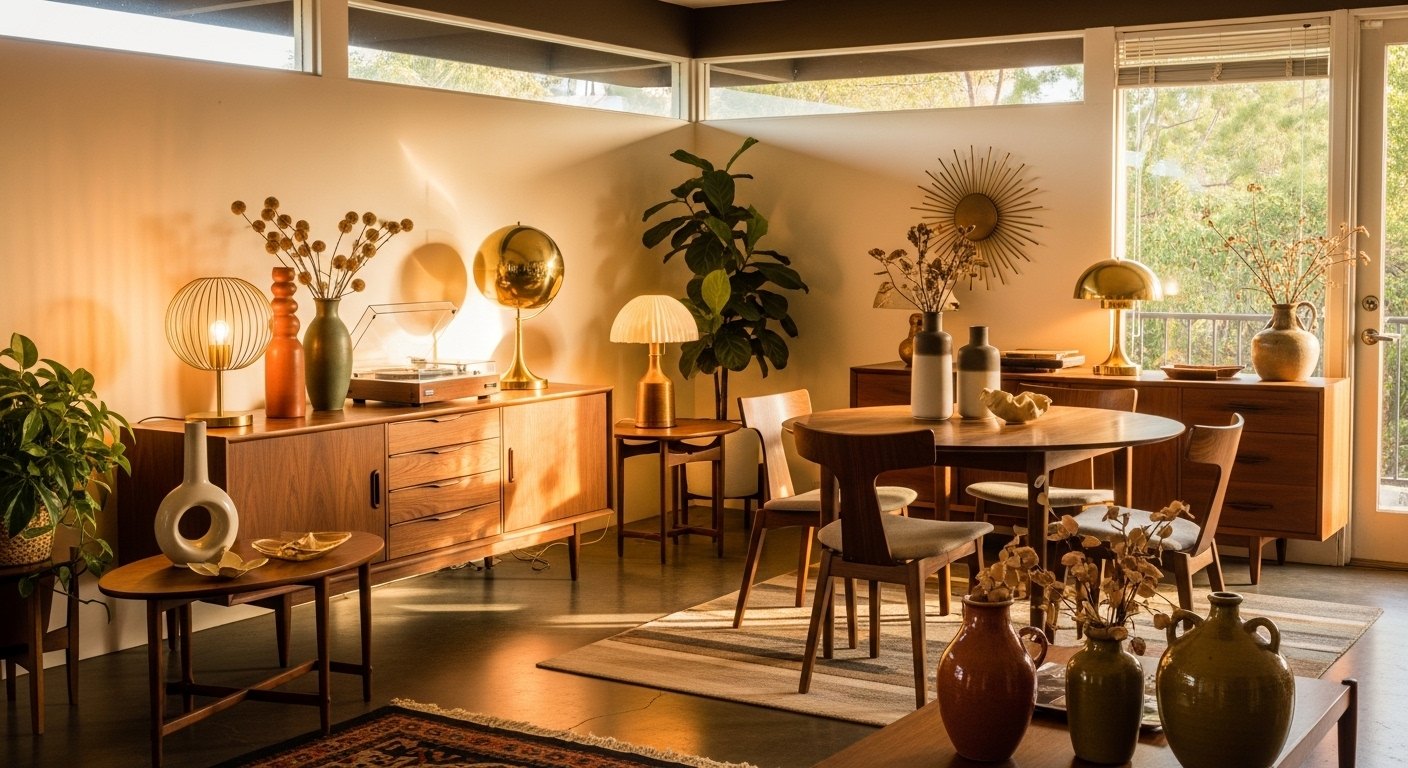
The whole point of warm mid-century is that it's a style you live in, not one you rope off and admire. Real vintage mixed with a few new pieces, personal objects on the shelves, a record on, warm light glowing, that's the look. It's the cozy, human side of a style too often rendered cold, and it's the only version I'm interested in.
Starting From What You Own
The most warm-mid-century thing you can do is shop your own house first. Edit toward calm, swap cool bulbs for warm, add one warm wood piece and a few earthy accents. The look is built on restraint and warmth, so subtraction does as much as any purchase. The minimal home edit is a good nudge toward that restraint.
Common Misreadings
People over-correct two ways: they go cold and gallery-like with hard surfaces and cool light, or they go full 1970s costume with saturated color everywhere. Warm mid-century lives in between, clean lines, warm materials, earthy accents, golden light. If a room feels chilly or like a theme, you've drifted out of it.
Layering In the Warmth
To build it, lead with warm wood, layer warm light from several low sources, use earthy color as accents against a warm neutral base, and add plants. That's the whole recipe: warm materials, warm light, a few saturated touches, and living things. The cozy, human side of mid-century.
Shop this post: the minimal home edit and wall vases and pots