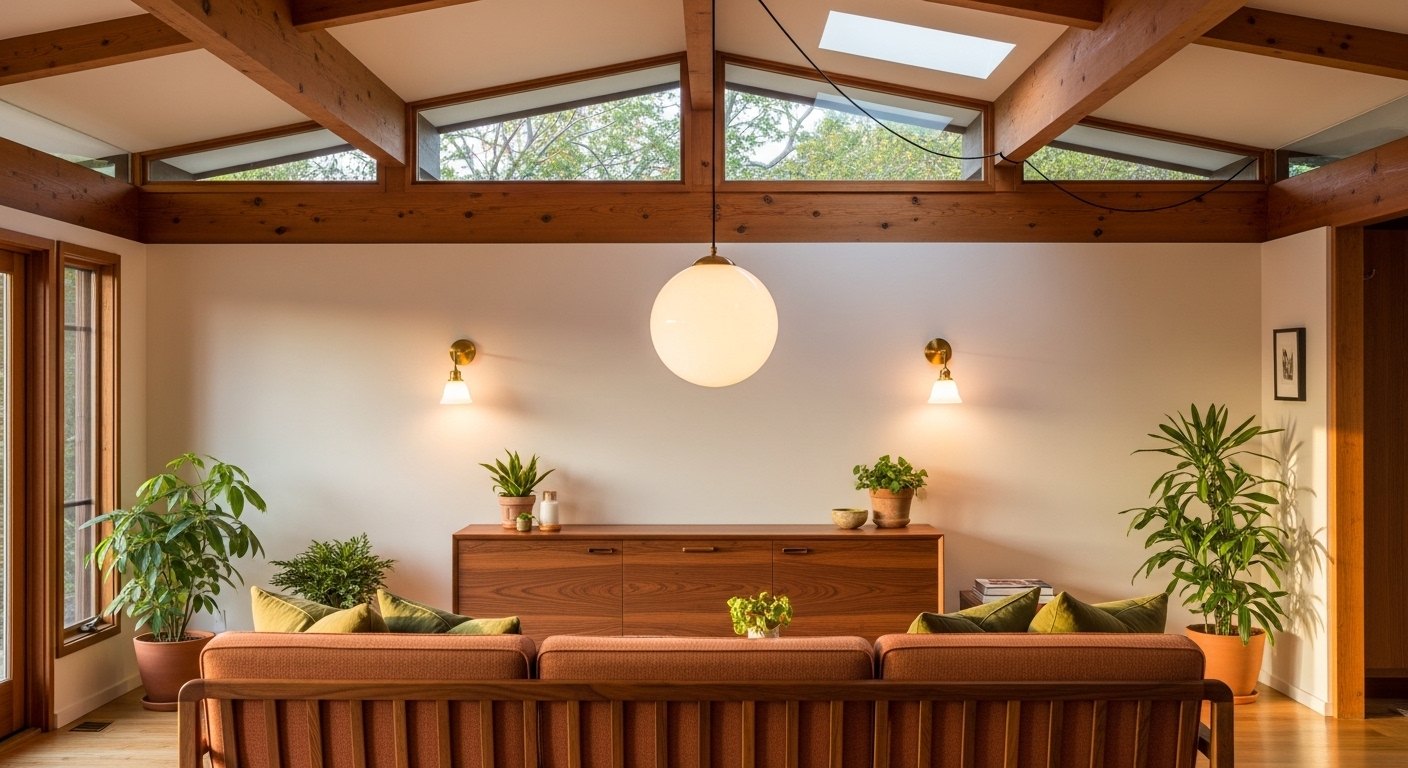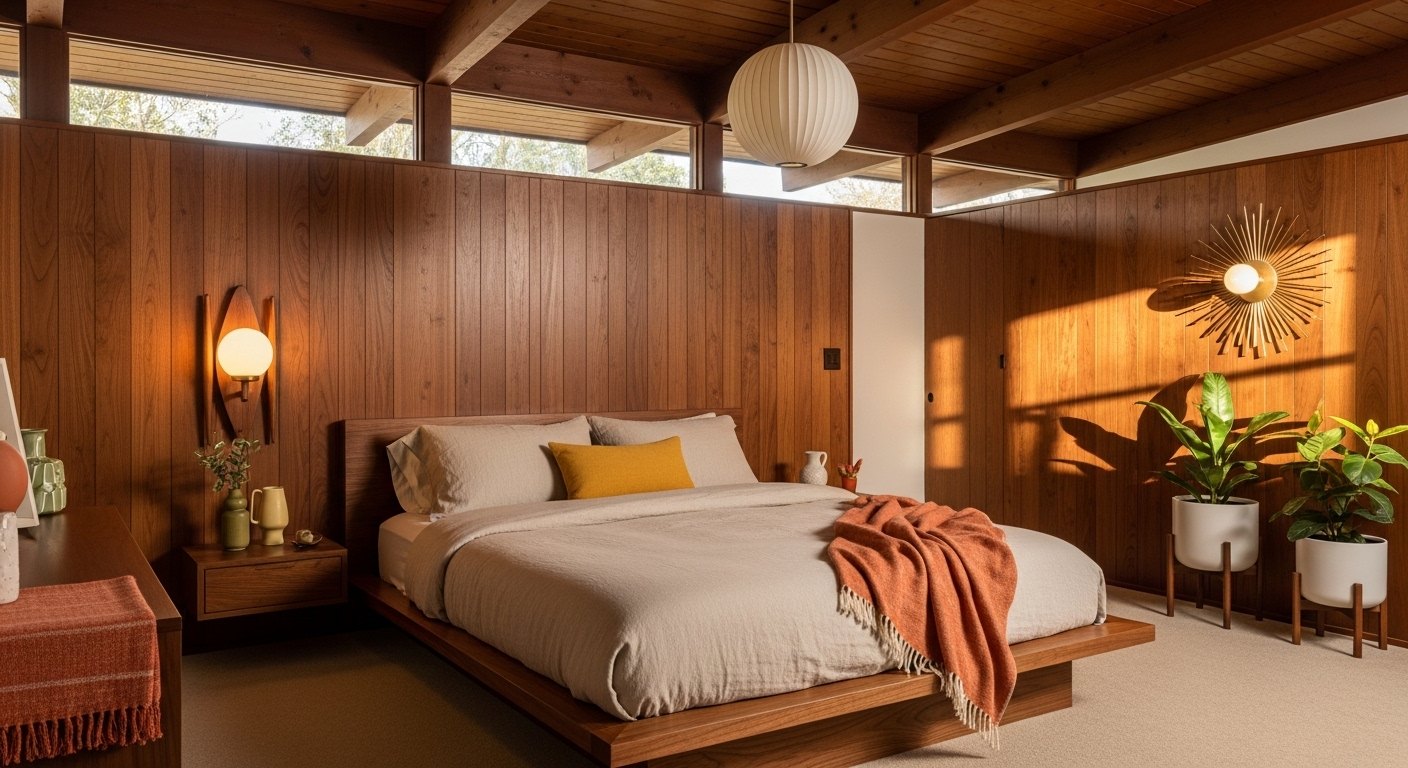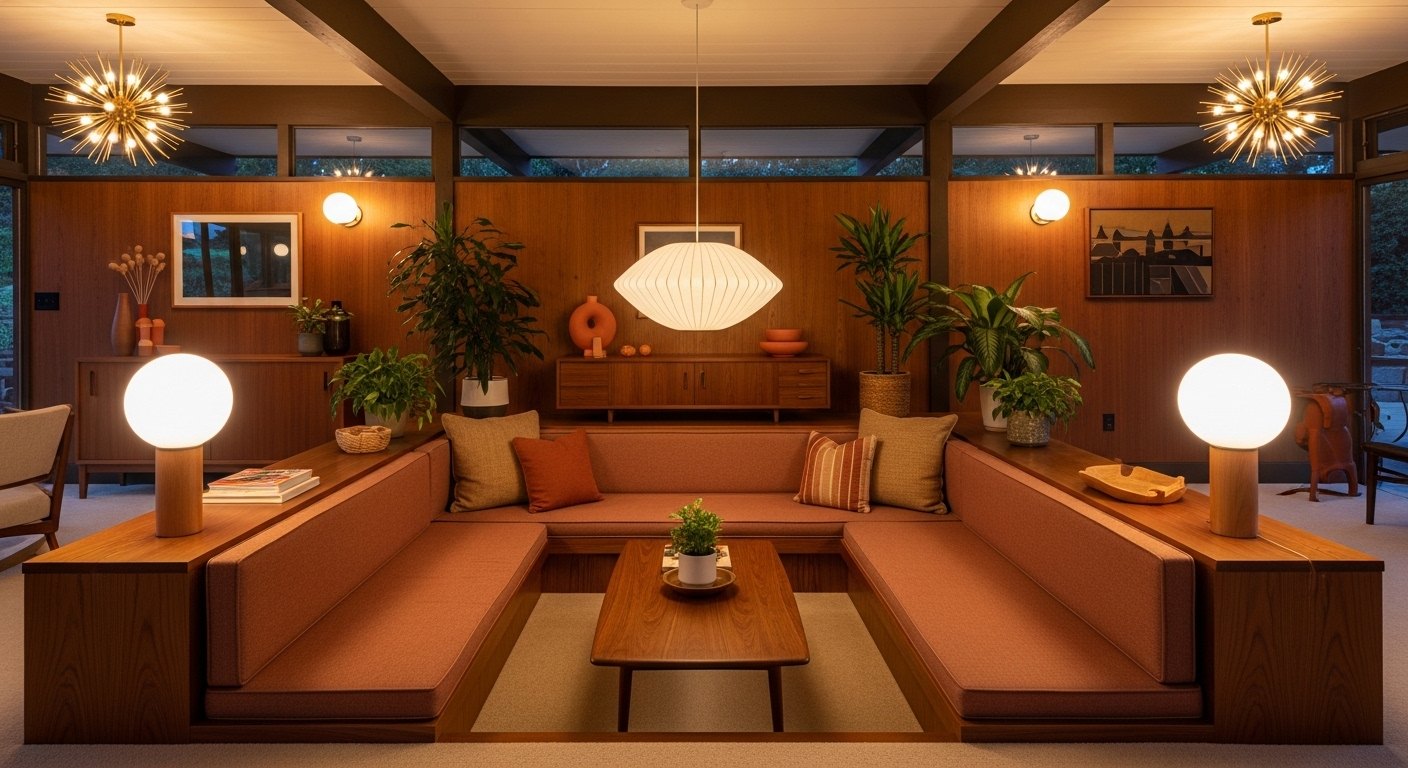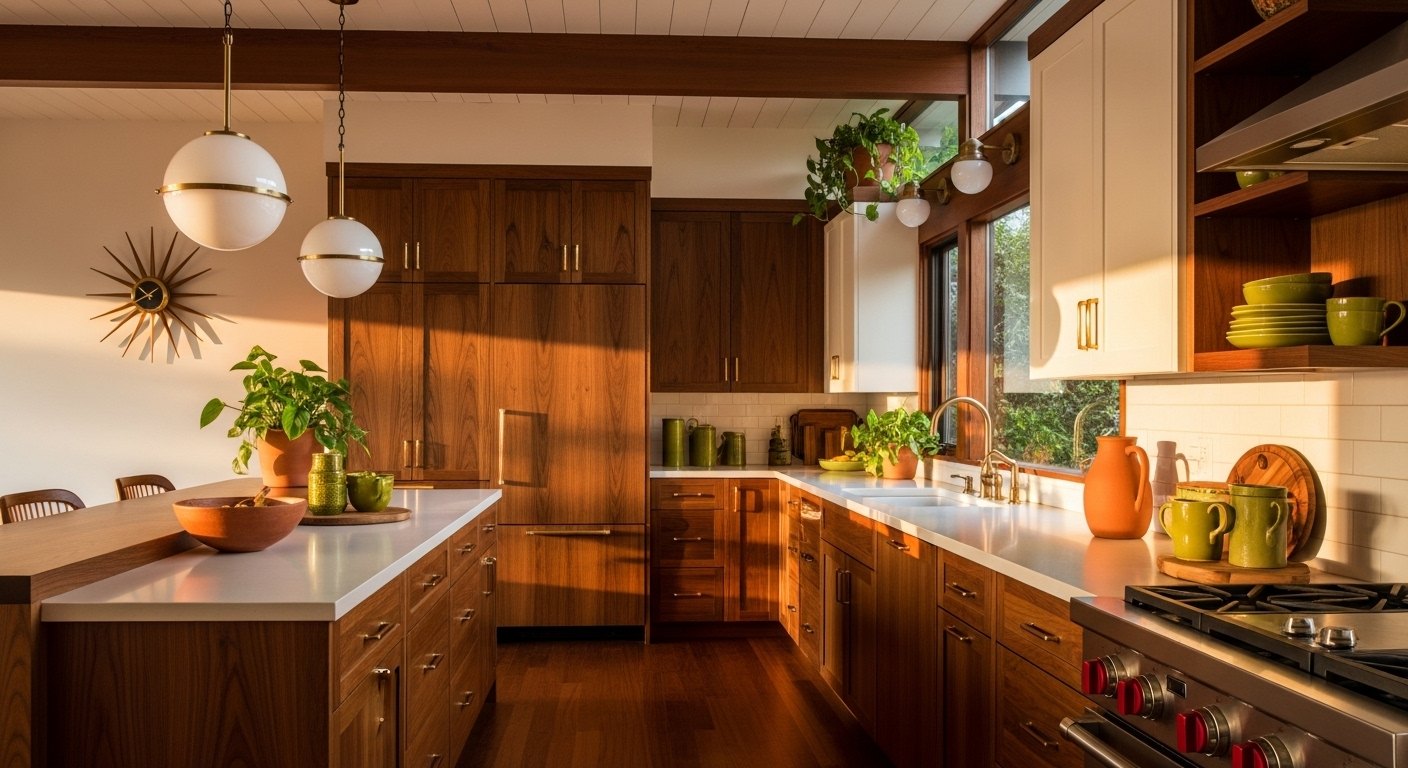
The walnut kitchen was the first room we touched, and a mid-century kitchen really does set the tone for the whole house. It's where the warm wood, the clean lines, and the soft globe lighting all get introduced. Ours opens onto the living room in classic post-and-beam fashion, so it had to feel like part of the same warm, golden-lit world, not a separate utilitarian box.
Flat-Front Walnut Cabinets
We chose flat-front cabinets in warm walnut for the lower run and a soft warm white above, which keeps the kitchen from feeling heavy while still anchoring it in mid-century warmth. Flat fronts are essential to the era, no raised panels, no ornament, just clean horizontal grain. The wood does the decorating.
Globe Pendants Over the Peninsula
Two soft kitchen pendants hang over the peninsula, round, glowing, and unmistakably mid-century. I used the Arvidur ball pendant for its clean spherical shape, which echoes the globe in the living room and ties the open plan together. Two pendants flanking the center of the peninsula read more balanced than trying to squeeze in a third over our six-foot run.
Getting the Height Right
I hung the bottom of each pendant 32 inches above the counter after living with 34 for a week and finding it a touch high. High enough to see across the peninsula comfortably, low enough that the light pools warmly where we actually work. If anyone in your house is tall, have them stand at the counter before you commit. You want to see faces across the peninsula, not glowing globes at eye level.
Task Light Does the Real Work
Beautiful pendants are mood lighting; a working kitchen needs real task light. Warm-white LED strips under every upper cabinet light the counters evenly for prep, plugged into an outlet hidden inside a cabinet so there's not a single visible fixture. The pendants set the scene; the hidden strips do the chopping. The Illuminating Engineering Society makes the same point about layering task light in any workspace.
Brass Hardware and Warm Metals
Slim brass pulls on the walnut fronts add the warm metallic note mid-century kitchens love. We went unlacquered so the brass develops a living patina over time rather than staying artificially shiny. It ages into the room. Brass, walnut, and warm light are a combination that simply looks expensive without being fussy.
Keeping the Palette Warm
Every bulb over the peninsula and under the cabinets is 2700K warm white at a high CRI, so the wood reads warm and food looks true. A single cool bulb in a wood kitchen makes everything look grey and clinical, consistency in bulb color is one of those small details you feel before you can name it.
Open to the Living Room
Because the kitchen opens onto the living space, we kept the pendant style and bulb temperature consistent across both rooms. The eye reads the open plan as one warm, golden-lit whole rather than two rooms bolted together. That continuity is the quiet luxury of a well-planned mid-century home.
What I'd Do Differently
I'd have run the under-cabinet strips before falling in love with the pendants, for the first month the really nice globes left the counters dim and I was chopping in my own shadow. Mood light first is a tempting mistake; task light first is the right order. Everything else about the walnut kitchen I'd do exactly the same.
What the Pendants Cost vs. a Renovation
Swapping a flush mount for two globe pendants is the cheapest way to make a kitchen look renovated without touching cabinets. Two pendants, a roll of under-cabinet LED strip, and a dimmer cost a fraction of any cabinet work and change how the room reads more than a backsplash would. If a small kitchen budget has to go somewhere, lighting buys the most visible improvement per dollar.
Common Island-Lighting Mistakes
The usual errors: pendants hung too high so the light weakens; pendants too small for the run; and skipping task light so the pretty globes leave the counters dim. Solve all three by measuring to 30–36 inches, sizing one pendant per two feet of peninsula, and backing the mood light with hidden under-cabinet strips.
Pairing Pendants With Walnut
Warm walnut cabinets want a light that adds glow without competing, an opal globe reads clean and warm against the wood, where a busy or dark fixture fights it. Let the walnut and the warm bulb do the work, and keep the pendant simple. The interplay of warm wood and soft warm light is what makes the whole kitchen feel rich.
Shop this post: kitchen pendant lighting and the Arvidur ball pendant