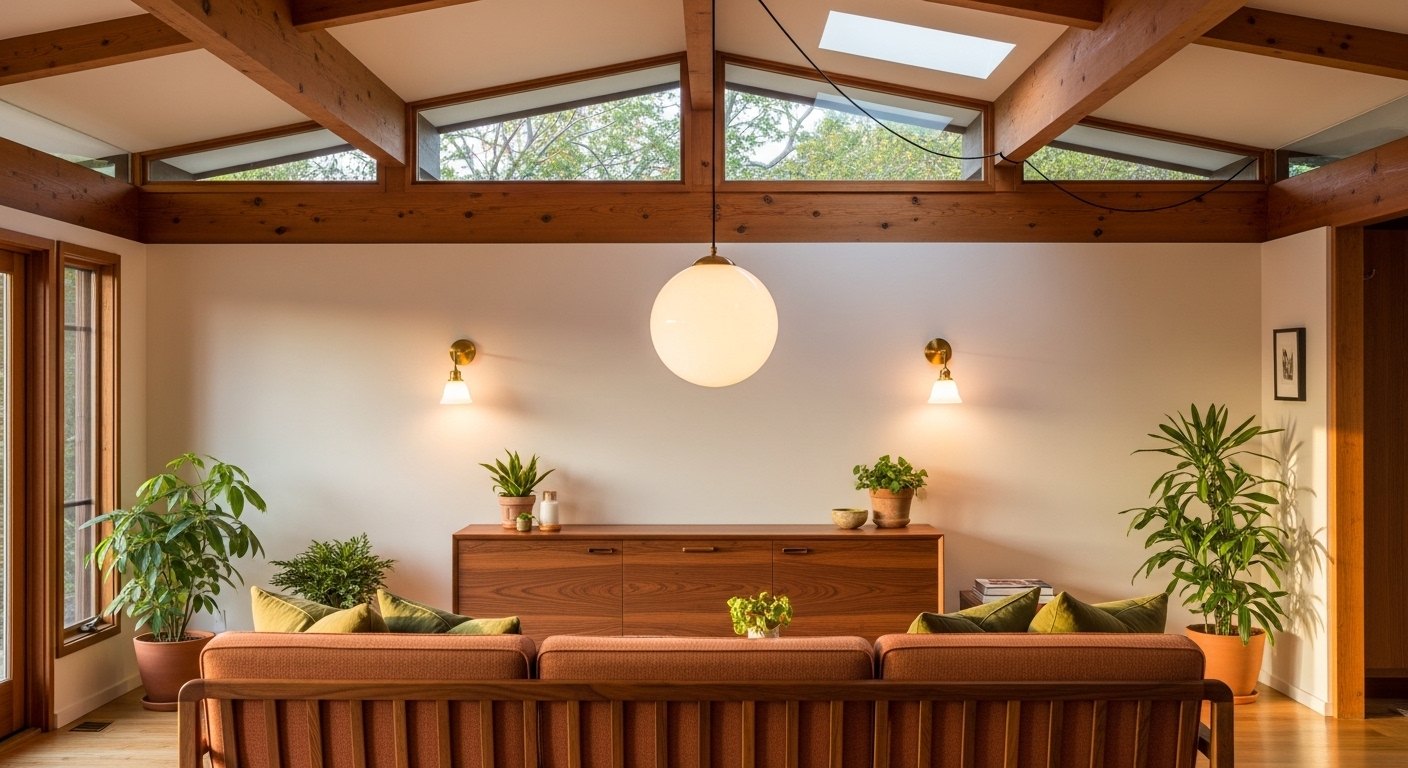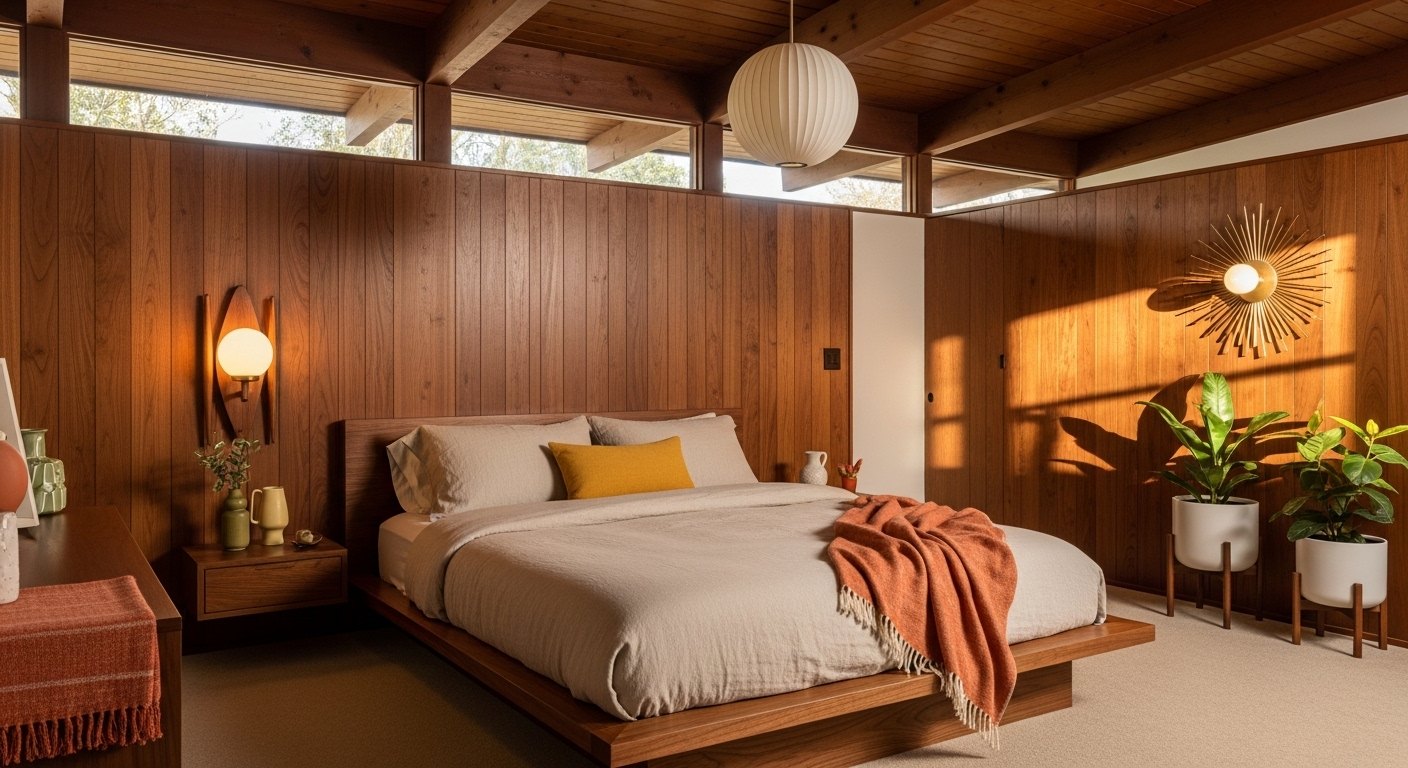
A mid-century bedroom should feel as warm and unhurried as a California afternoon, and the lighting is what gets you there. Ours faces east, so it wakes up beautifully and then flattens by evening. The whole design was about holding that soft, golden quality all day, with warm walnut, oat linen, and bedside light that glows like five o'clock.
A Low Walnut Platform Bed
The bed sits low and clean, a walnut platform that hugs the floor the way mid-century beds do. Low furniture suits the horizontal lines of the architecture and makes even a modest room feel calmer and more expansive. The warm walnut is the anchor; everything else is soft and quiet around it.
Oat Linen and Soft Texture
Washed linen bedding in a warm oat tone brings the softness. Linen has a relaxed, slightly rumpled ease that keeps a mid-century room from feeling stiff or showroom-like, and it only gets softer with washing. Against the walnut, it reads warm and lived-in.
Bedside Sconces Over Lamps
I swapped both nightstand lamps for bedside wall sconces, which instantly cleared the nightstands and moved the light to exactly where I read. I chose the Tormod walnut wall light. The natural walnut arm picks up the bed frame and adds warmth, and the soft LED glow is gentle at the bedside. Mounted at about 60 inches, the light falls on the page, not in my eyes.
Warm Light for Rest
Both sconces carry warm 2700K bulbs, with an amber bulb for the last hour before sleep. Cooler light at the bedside works against winding down, which the Sleep Foundation notes in its guidance on the bedroom environment. The bedside should be the warmest, softest light in the whole house.
Don't Skip the Ambient Layer
Bedside sconces handle reading, but the room still needs a soft ambient layer for getting dressed. Rather than a harsh central fixture, I rely on a dimmable overhead kept low and a small lamp on the walnut dresser. A bedroom should never be lit only by a bright ceiling light, flat, top-down glare is the enemy of rest.
Let the Surfaces Breathe
With the lamps gone, the nightstands hold almost nothing, a small ceramic dish, a book, a glass of water. That emptiness is the point. A calm mid-century bedroom feels like a held breath, and clutter is the opposite of a breath. The clean surfaces also let the walnut grain and the warm light be the things you notice.
A Single Saturated Note
One mustard pillow, or an olive throw folded at the foot of the bed. That's the whole dose of mid-century color in here. Against the warm neutrals and walnut, a single saturated accent does more than a whole palette of them. Restraint is what keeps the room restful.
What I'd Do Differently
I'd have put the sconces on their own wall switch from the start so I could turn them off without reaching across the bed. And I'd have committed to the amber evening bulb sooner. The night the room first glowed amber instead of white, it finally felt like the restful retreat I'd been chasing.
A Simple Bedroom Lighting Plan
The whole room runs on three warm, dimmable layers: a soft overhead kept low, a small dresser lamp, and the two bedside sconces. None is bright on its own. The room never has a single harsh source, just warm pools you mix for reading, dressing, or winding down. If you build only one layer, make it the bedside sconces.
What It Cost to Redo
This was a low-budget room. The biggest line was the linen bedding, which sets the mood; the walnut wall sconces were modest, and switching every bulb to warm 2700K cost a few dollars. No furniture was replaced beyond the bed. Most of the transformation was light, linen, and editing rather than buying.
Keeping It Calm Over Time
Calm is a habit as much as a setup. I reset the nightstands to near-empty each morning, keep only what's in use on the surfaces, and let the linen stay softly rumpled. A single saturated accent and a plant are the only decoration. The restraint is what keeps the room feeling like a held breath month after month.
Shop this post: bedside wall sconces and the Tormod walnut wall light
My friend Clara over at The Elmwood Home writes beautifully about bedside sconces from a coastal angle, different palette, same belief that the bedside should be the warmest light in the house.