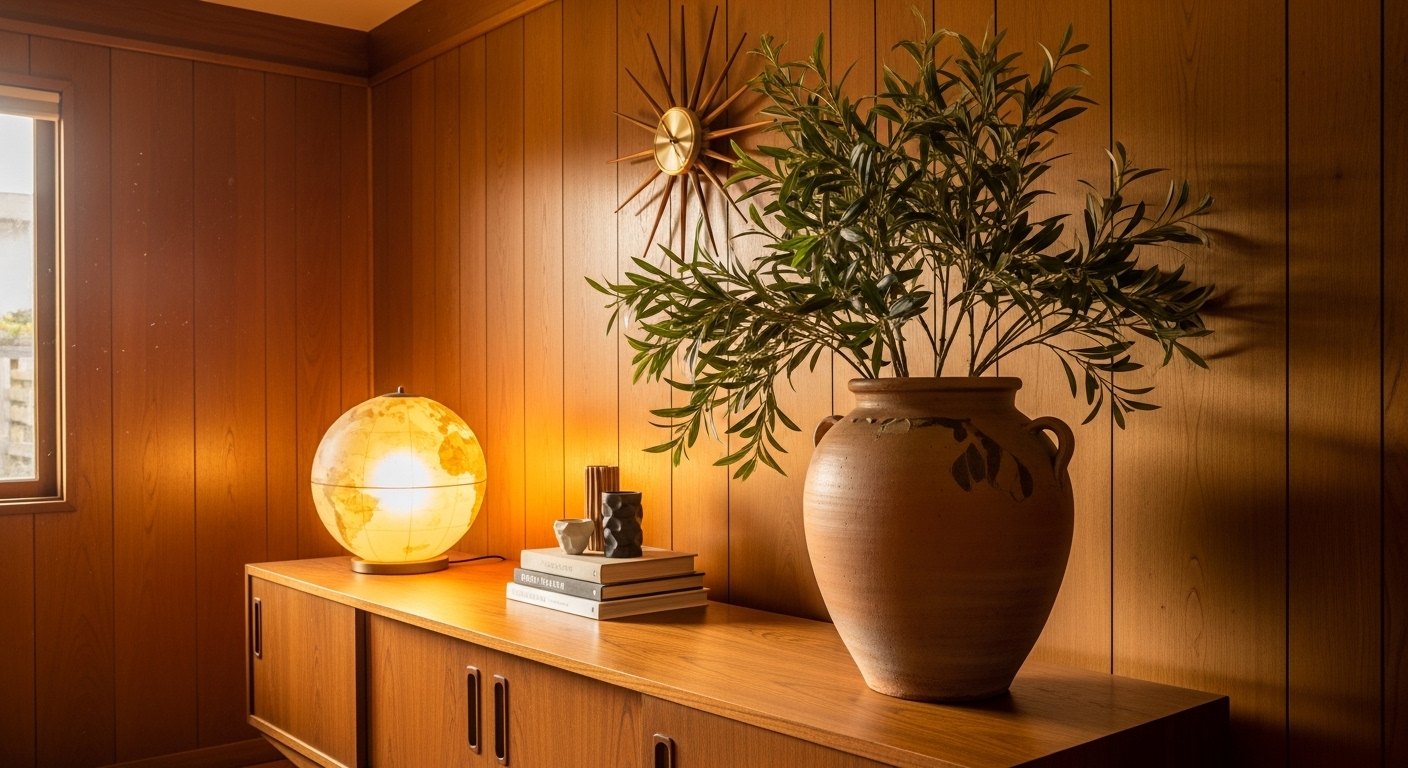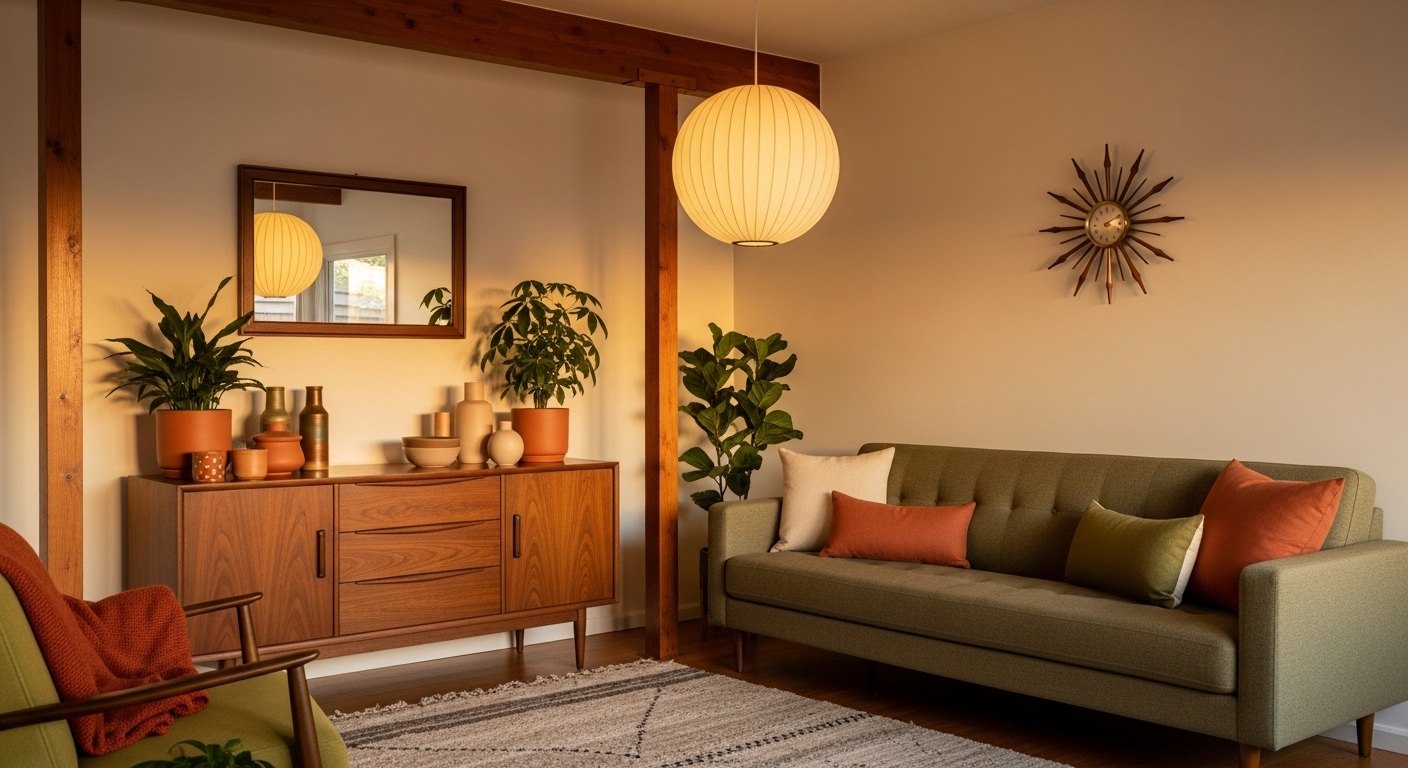
The walnut credenza is the hardest-working piece in a mid-century home, storage, surface, and statement all in one long, low line. It's also the piece people most often over-style into clutter. Ours anchors the living room, and here's how I keep it looking composed rather than crowded.
Why the Credenza Is Essential
A credenza, a long, low storage cabinet in warm wood, is a mid-century staple because it does so much: it hides clutter behind sliding doors, offers a generous display surface. And draws the clean horizontal line the architecture loves. Ours holds records, board games, and the inevitable overflow, while the top becomes a styled vignette. Function and beauty in one piece.
The Lamp Is the Anchor
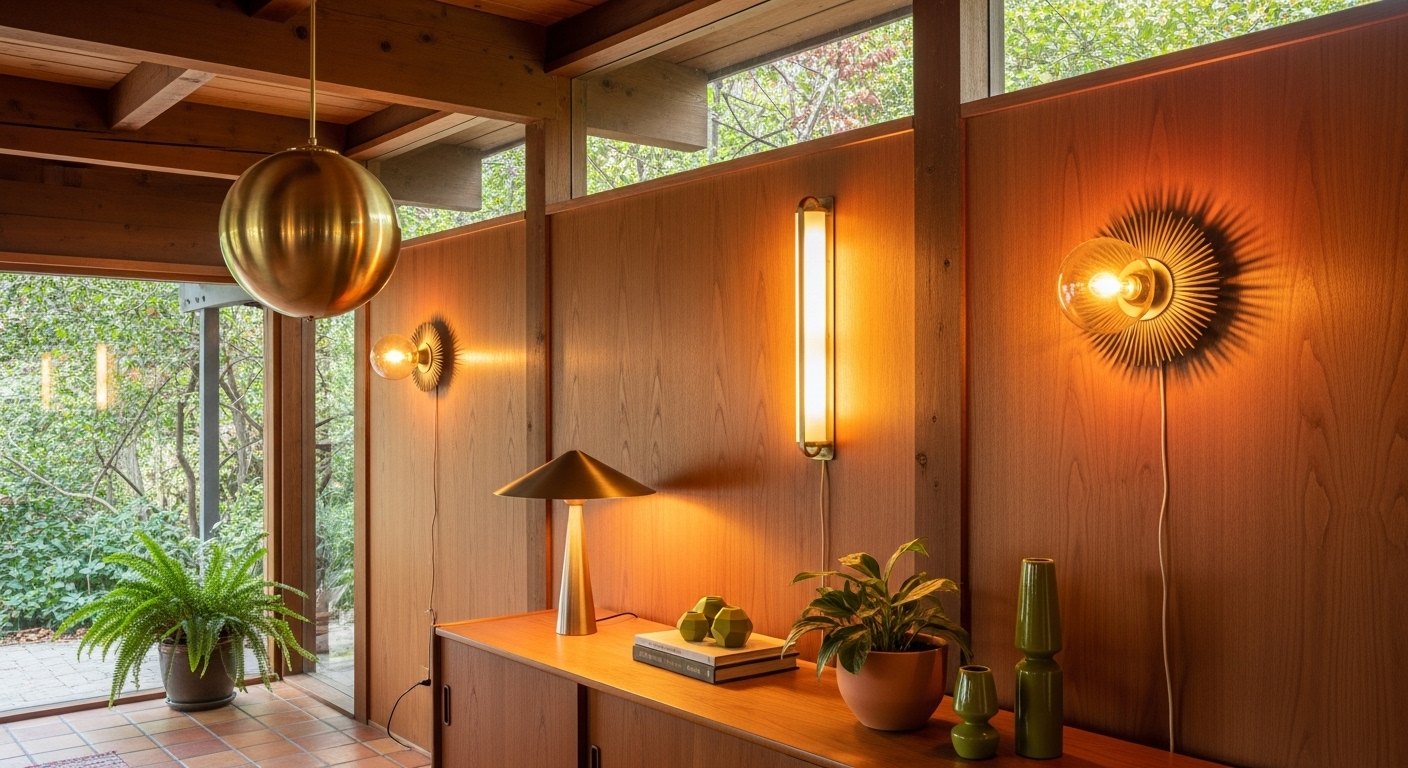
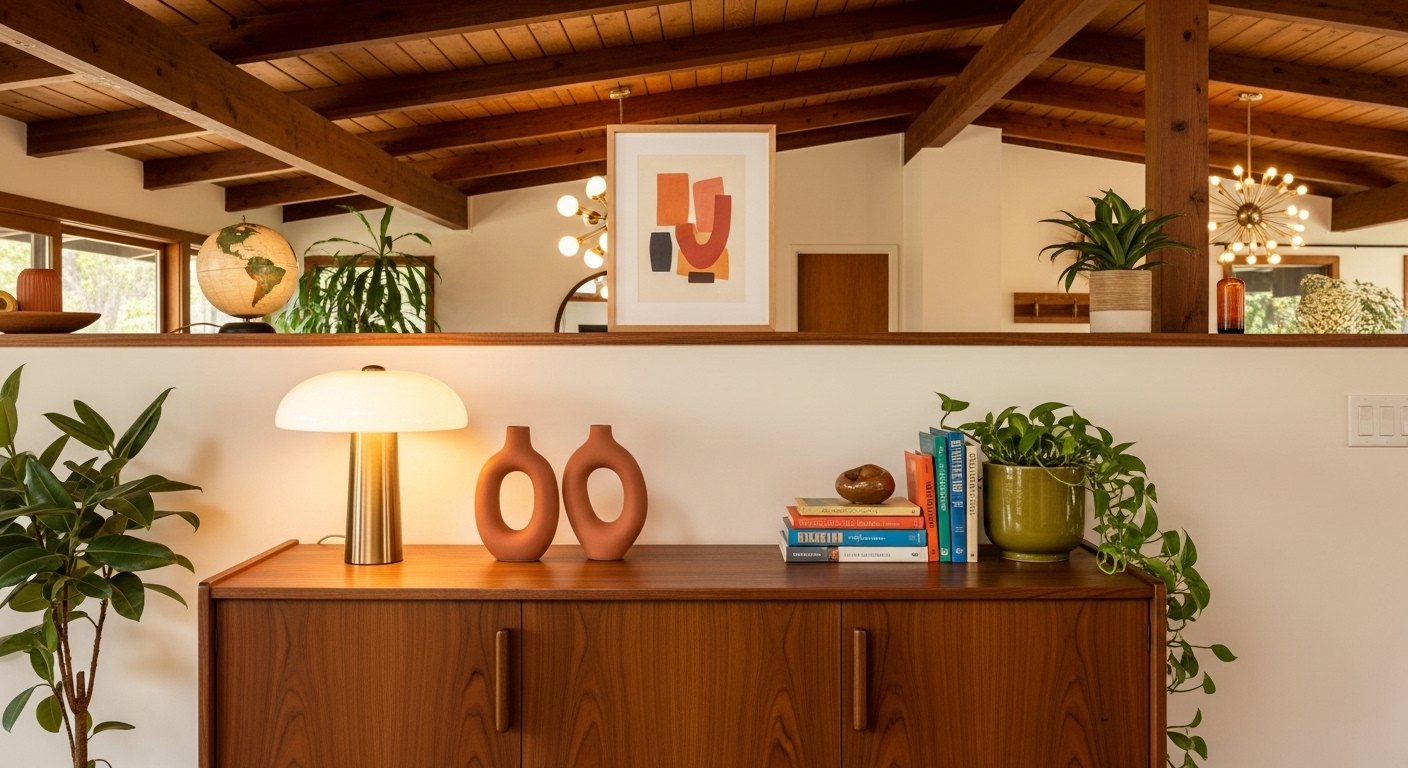
I start styling with a table lamp on one end. It adds warm light at a useful height and gives the whole composition an anchor to balance around. A warm 2700K bulb, ideally on a dimmer, makes the lamp the evening glow of the room as well as the cornerstone of the styling. Everything else arranges itself in relation to the lamp.
Work in Groupings and Heights
The trick to styling any surface is groupings of varying heights, balanced across the length. A lamp on one side, a sculptural object and a stack of books in the middle, a vase of clippings to balance. Tall, medium, low. The variation in height is what makes a vignette feel composed rather than lined up like a shelf in a store.
Art or a Mirror Above
The wall above the credenza wants something, a piece of art roughly two-thirds the credenza's width, hung 6 to 10 inches above it, or a mirror that does the same job while bouncing light. Center it, or offset it deliberately and balance with a tall lamp or object on the opposite end. The art-and-credenza pairing reads as one composed vignette.
Leave Negative Space
The most important rule, and the hardest to follow: leave open stretches of bare walnut. Negative space is what lets the objects and the wood grain breathe, and it's the difference between styled and cluttered. Resist filling every inch, a few strong groupings against open wood always looks better than a surface packed edge to edge.
Edit Ruthlessly
Style the credenza, then remove a third of what you put on it. Clutter comes from too many competing objects, and a credenza needs breathing room as much as it needs beautiful things. The pieces that survive the edit, a sculptural object, a plant, a lamp, a small stack of books, are the ones that earn their place and let the credenza shine.
Let the Walnut Lead
Ultimately the star is the credenza itself. That warm, low, clean line of walnut. Everything you place on it should flatter the wood, not bury it. Style with restraint, light it warmly, leave it room to breathe, and the credenza does exactly what it was designed to do: anchor the room with quiet, warm mid-century confidence.
The Lamp Is the Anchor
Start styling with a table lamp on one end. It adds warm light at a useful height and gives the composition an anchor. A warm 2700K bulb on a dimmer makes the lamp the room's evening glow as well as the cornerstone of the vignette. Everything else arranges in relation to it.
Common Styling Mistakes
Credenzas go wrong when they're packed edge to edge, when everything is the same height, and when there's no anchor or negative space. Work in groupings of varying heights, leave open stretches of bare walnut, and edit hard, remove a third of what you put down.
Art Above, Space Around
Hang art or a mirror roughly two-thirds the credenza's width, 6–10 inches above it, to make one composed vignette, a mirror also bounces light. Then leave negative space. The open wood is what lets the objects and the grain breathe, and it's the difference between styled and cluttered.
Shop this post: table lamps for the living room and wall vases and pots