When people visit and say the house feels so mid-century, they often assume we renovated. We didn't change a wall. The shift came from a string of small, cheap swaps. The kind anyone can make in a weekend. Here are the ones that mattered most, in the order I'd do them again.
Warm Bulbs First
I'll say it in every post because it's that important: swap every cool bulb for warm 2700K. It's a few dollars per bulb and it changes the entire mood of a house from clinical to golden, making walnut, brass, and earthy colors glow. Start here, before you buy a single piece of furniture. It's the highest-impact, lowest-cost change there is.
Add One Sculptural Light
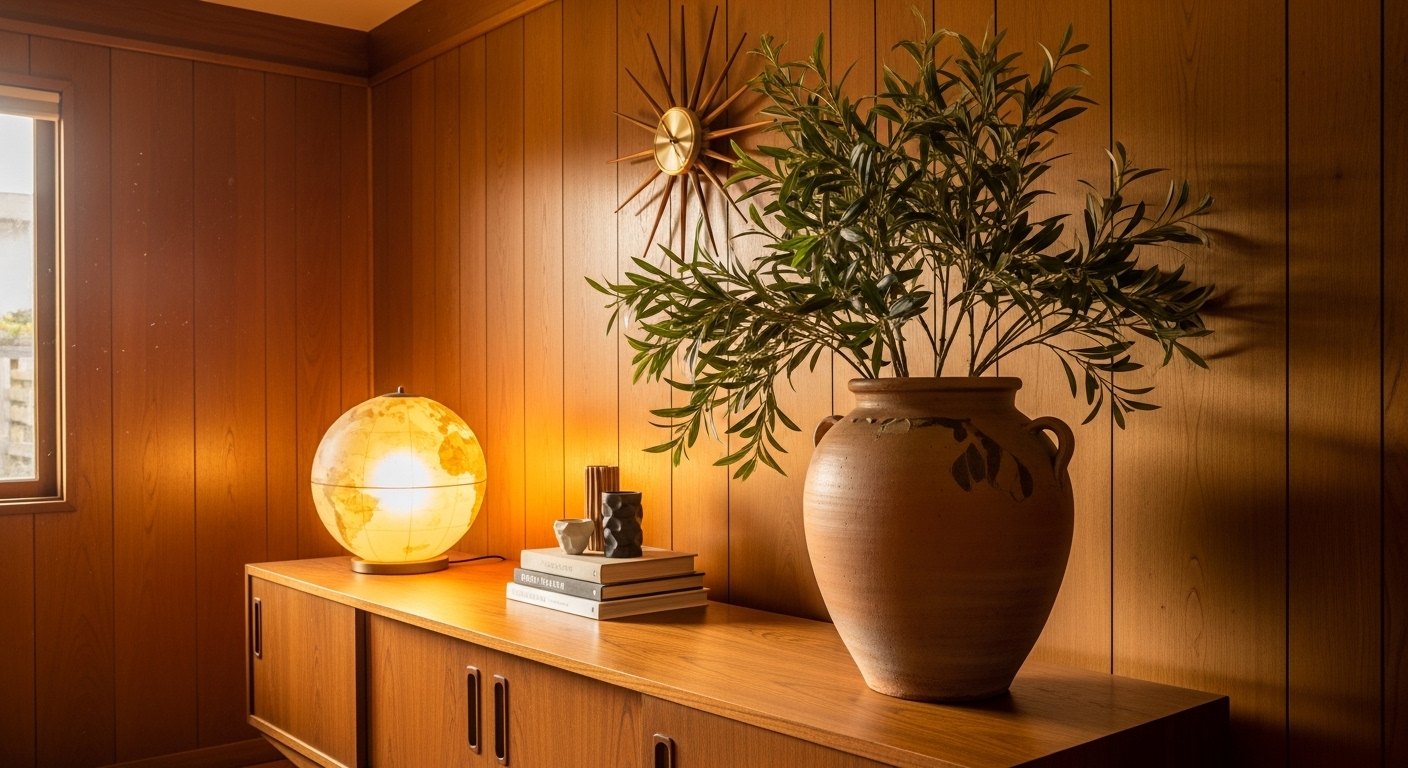
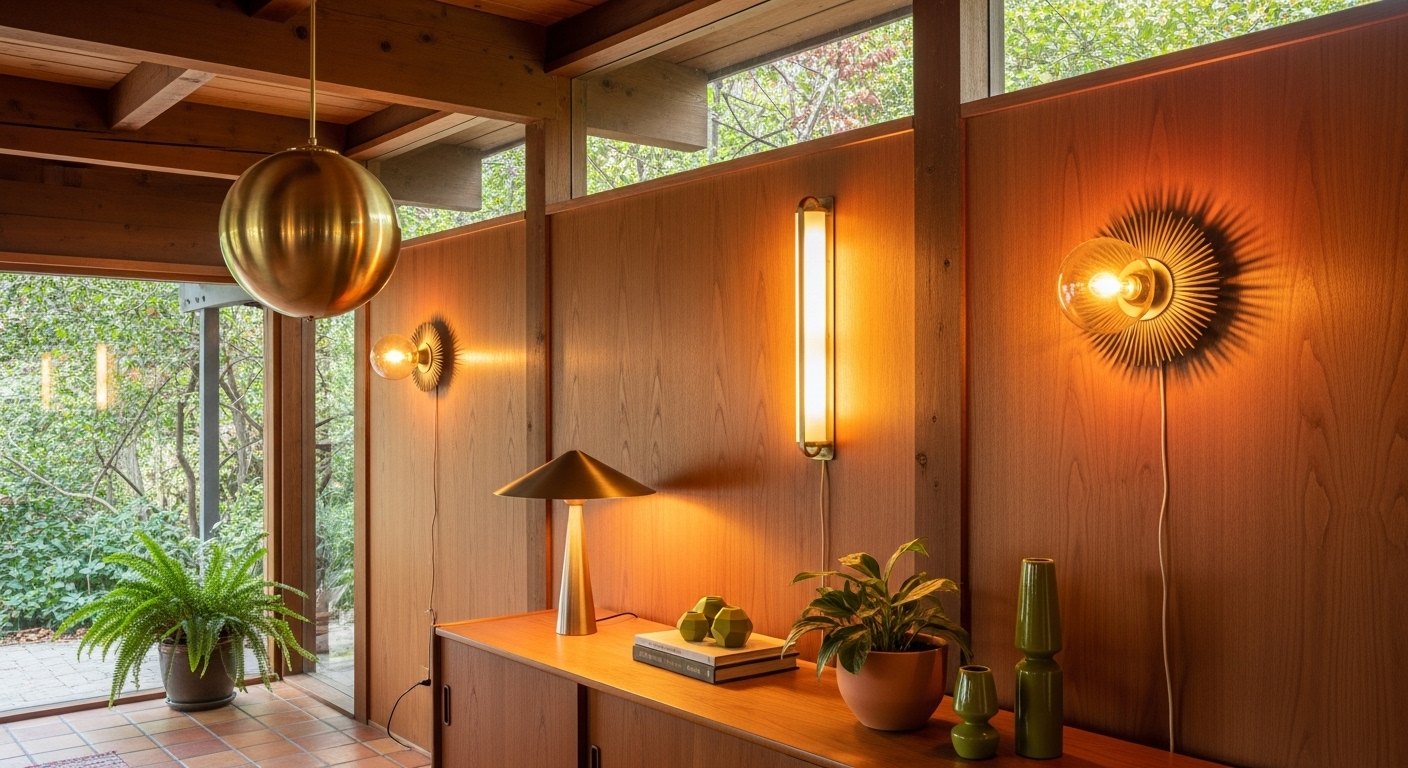
The fastest way to announce the style is a single sculptural fixture, a globe pendant over the table, a sunburst on a feature wall. One well-chosen period fixture does more to say 'mid-century' than a roomful of furniture. It becomes the focal point everything else arranges around.
Bring in Warm Wood
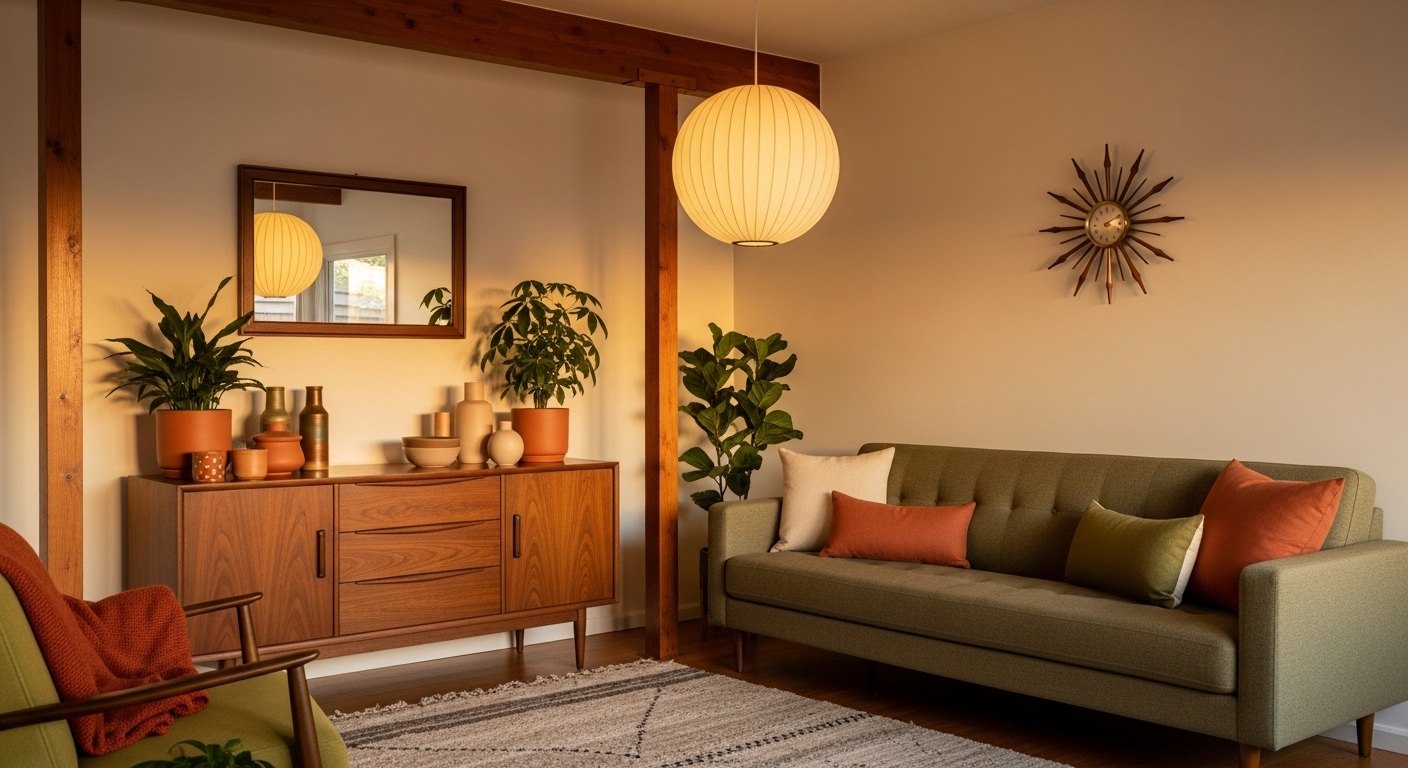
A single warm wood piece, a walnut credenza, a teak side table, anchors a room in mid-century warmth. You don't need a full suite; one strong wood piece against your existing furniture shifts the whole feeling. Thrift it if you can, for character and value both.
Light at Eye Level
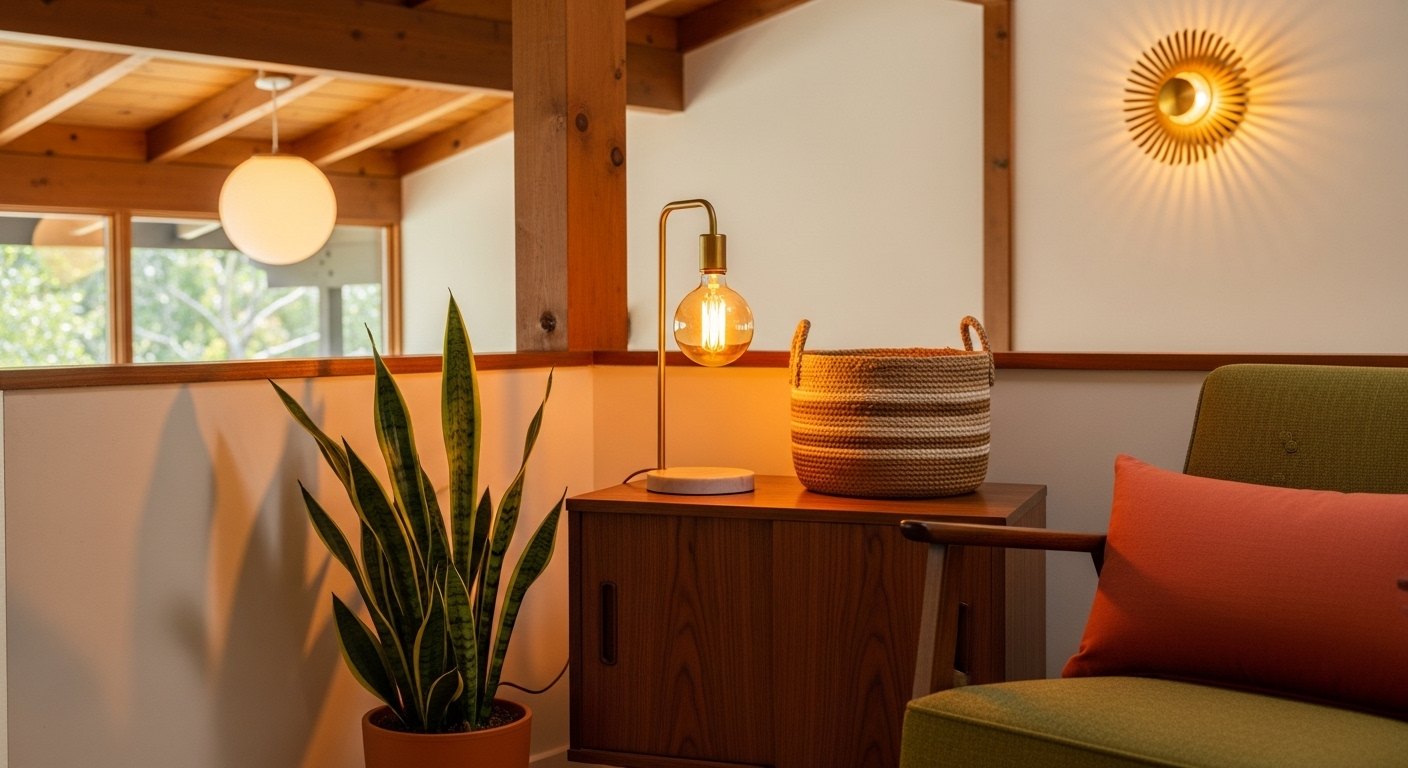
Where a room had only a harsh overhead, I added a sconce or a lamp at eye level. Layered, warm, lower light is the difference between a builder box and a home that glows. Eye-level warm light is flattering and cozy in a way no ceiling fixture can match, and a plug-in sconce adds it with no rewiring.
A Few Earthy Accents
A terracotta cushion, an olive throw, a mustard ceramic, a plant in a simple pot. A handful of earthy accents against warm neutrals reads instantly mid-century. You don't need many, a few, repeated, against a quiet base. Restraint is what keeps it collected rather than costume.
Declutter and Let It Breathe
Mid-century calm is partly about what you remove. Clearing surfaces down to a few intentional objects costs nothing and does as much as any purchase. Negative space lets the warm wood, the sculptural light, and the earthy accents actually register. A clear, glowing room feels considered; a cluttered one never does.
The Order That Works
Bulbs first, then declutter, then a sculptural light and warm wood, then earthy accents and plants. Working in that order means the house feels better at every step, and you may find you never need a renovation at all. None of these swaps was expensive. Together, they made the whole house feel warm, golden, and unmistakably mid-century.
The Order That Works
Bulbs first, cheap, instant, transformative. Then declutter and clear surfaces. Then add a sculptural light and one warm wood piece. Then earthy accents and plants. Address paint and big furniture only if needed. Working in that order means the house feels better at every step, and you may never need the big changes.
What the Swaps Cost
The whole point is that these changes are cheap, a box of warm bulbs, a woven basket, a throw, a plant, and decluttering is free. Even adding a plug-in sconce per room is modest. The transformation comes from warmth, texture, and restraint, none of which is expensive.
Swaps That Backfire
A few shortcuts misfire: literal retro motifs that read as costume, cool-white bulbs that make everything grey, and over-styling that trades one kind of clutter for another. Skip the kitsch, keep bulbs warm, and remember that subtraction is a swap too, often the most mid-century change is taking things away.
Shop this post: wall sconces and pendant lights
My friend Karen at The Holloway Home is the queen of high-impact, low-cost swaps in a modern living room, if you want more quick wins, her place is the one to visit.