Mid-century design grew up alongside indoor-outdoor California living, walls of glass, deep eaves, a deliberate blurring of inside and out. A big statement plant like a fiddle-leaf fig runs $40 to $150. Plants aren't decoration in a mid-century home; they're part of the architecture's intent. The trick is choosing the right ones: sculptural, structural plants that suit the clean lines rather than a busy jungle. Here's what belongs.
Go Sculptural
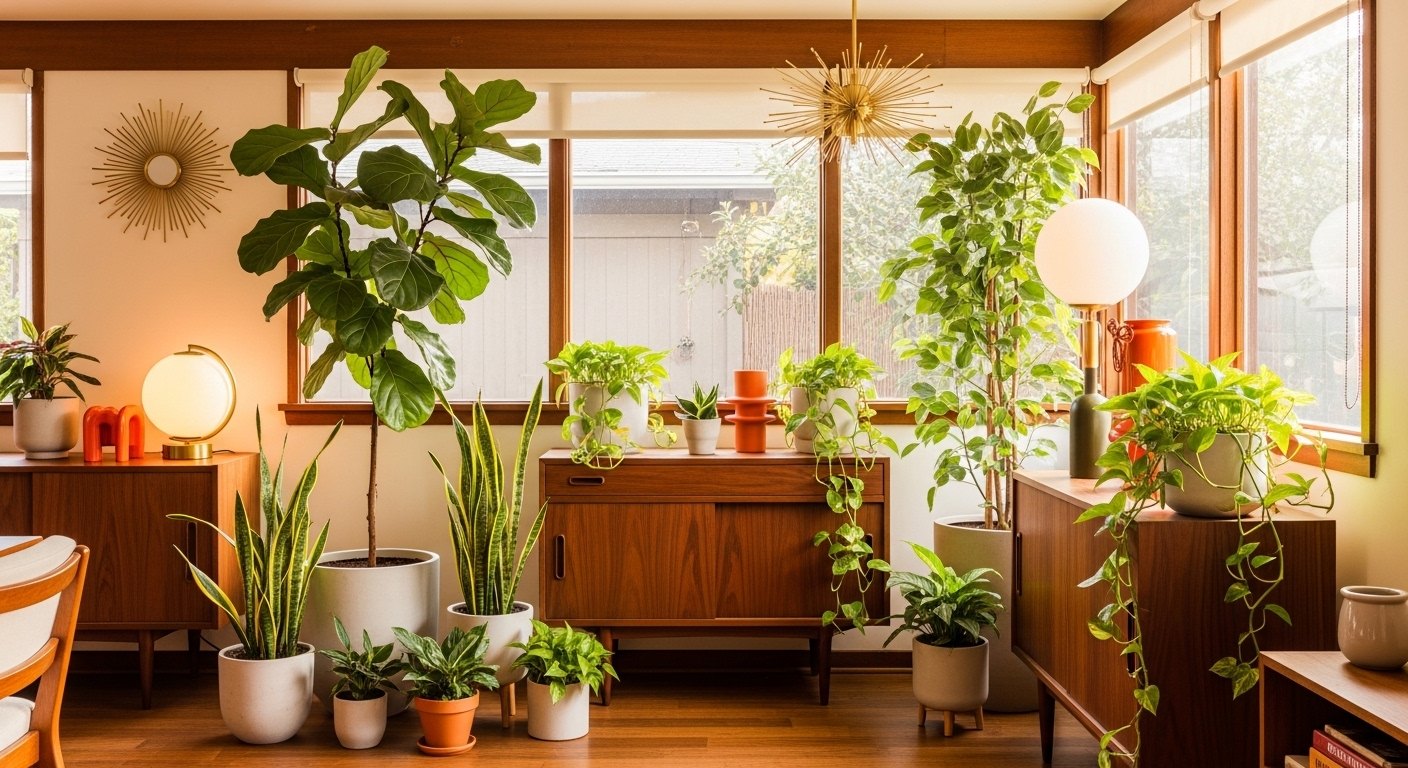
The era loved bold, simple natural forms, so reach for plants with strong architectural shapes, a fiddle-leaf fig, a rubber plant, a monstera, a snake plant, a potted citrus. A few strong structural plants read far more mid-century than a crowd of small ones. Choose shapes that complement the architecture and let each plant be a sculptural statement.
Pot Them Simply
The planter matters as much as the plant. Use simple, warm-toned pots, terracotta, concrete, earthy-glazed ceramic. That are as clean-lined as the furniture. A classic mid-century plant stand lifts greenery to different heights and adds period charm. Keep the planters in a consistent material family and the room's greenery reads cohesive rather than scattered.
The Planter Light
My favorite way to merge plants and lighting is a planter light, a fixture that holds a living plant and casts a warm glow at once. It's the perfect mid-century object: natural and modern in one piece, a glowing pocket of greenery that doubles as a light. Ours lives in a corner with a trailing plant spilling out of it.
Greenery as Architecture
Because mid-century homes were designed around a connection to nature, plants reinforce the architecture rather than just decorating it. A monstera by a wall of glass, a snake plant in a bright corner, a trailing pothos off a shelf. They soften the clean lines and bring living warmth. The biophilic design collection is built around exactly this idea of bringing nature in.
Choose for Your Light
The key to happy plants is matching them to each spot's actual light. Snake plants, ZZ plants, rubber plants, pothos, and many philodendrons are forgiving and tolerate a range of conditions while still reading sculptural. A fiddle-leaf wants real brightness; a snake plant tolerates a dim corner. Choose for the light you have and the plants stay healthy.
A Few, Done Well
Resist the urge to fill every corner. A few strong, healthy, well-potted plants suit the clean mid-century aesthetic far better than a crowded collection. Group a few for impact, give them simple planters, light them warmly. And they'll do what plants in a mid-century home are meant to do, soften the architecture and bring the canyon inside.
Choosing for Your Light
The key to happy plants is matching them to each spot's light. Snake plants, ZZ plants, rubber plants, and many philodendrons are forgiving and still read sculptural; a fiddle-leaf wants real brightness. Choose for the light you have, group a few for impact, and the biophilic look takes care of itself.
Pot Them Simply
The planter matters as much as the plant, simple terracotta, concrete, or earthy ceramic, as clean-lined as the furniture. A classic plant stand lifts greenery to different heights. Keep the pots in a consistent material family and the room's greenery reads cohesive rather than scattered.
A Planter Light
My favorite plant-and-light object is a planter light, greenery and a warm glow in one fixture, the perfect mid-century merge of natural and modern. It earns its corner by doing two jobs at once, and it's the detail guests always notice.
Shop this post: planter lights and the biophilic design collection
My friend Naomi at Nest by Naomi is the plant whisperer of our little blog circle, if you want a deep dive on keeping greenery happy in less light, send yourself over to her.