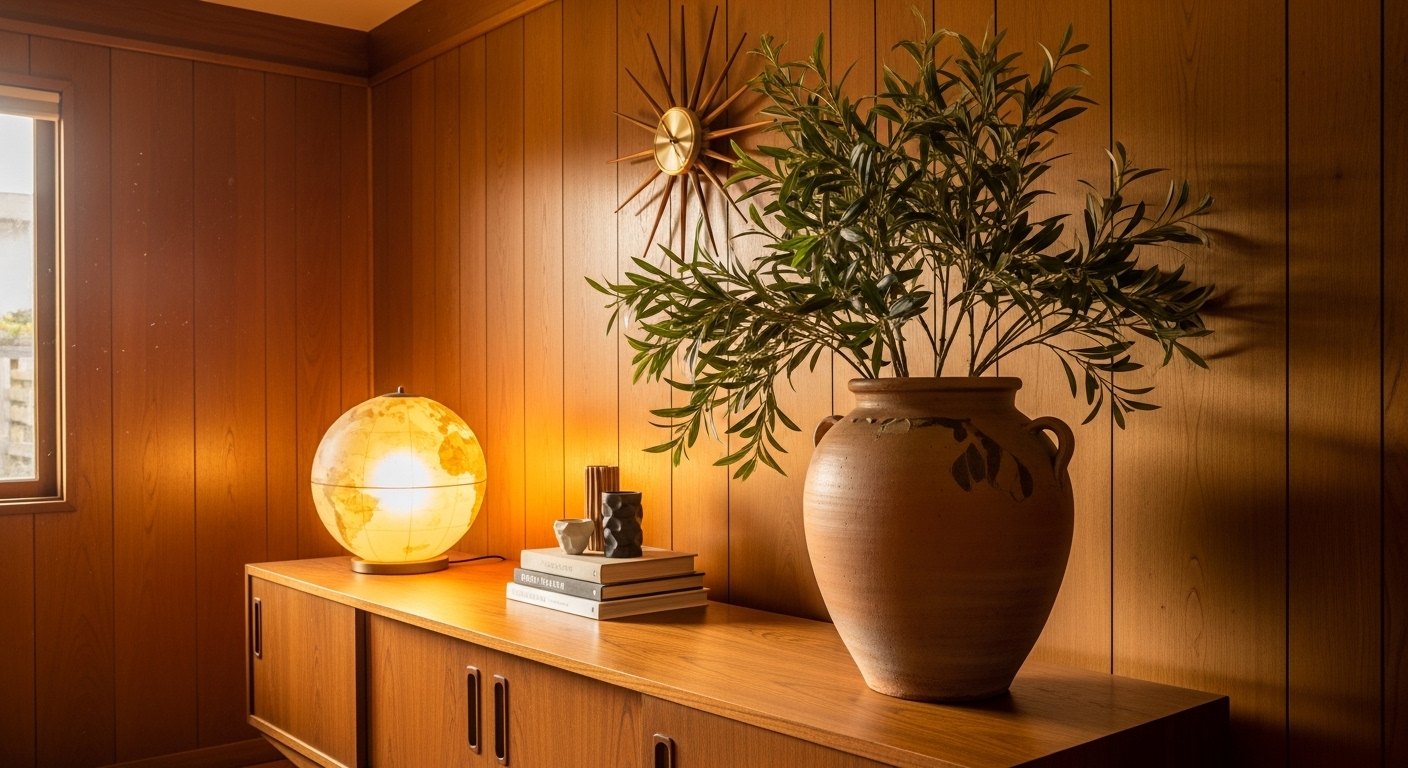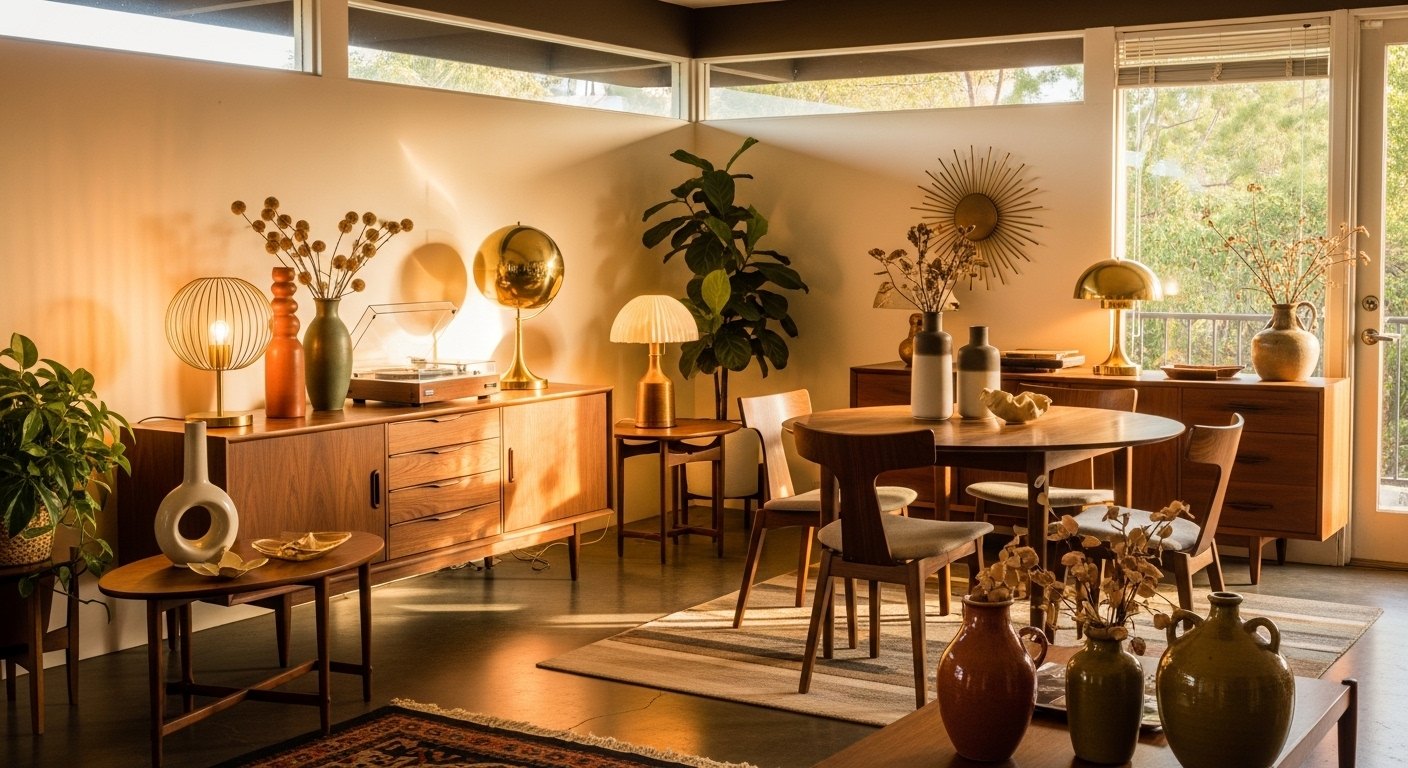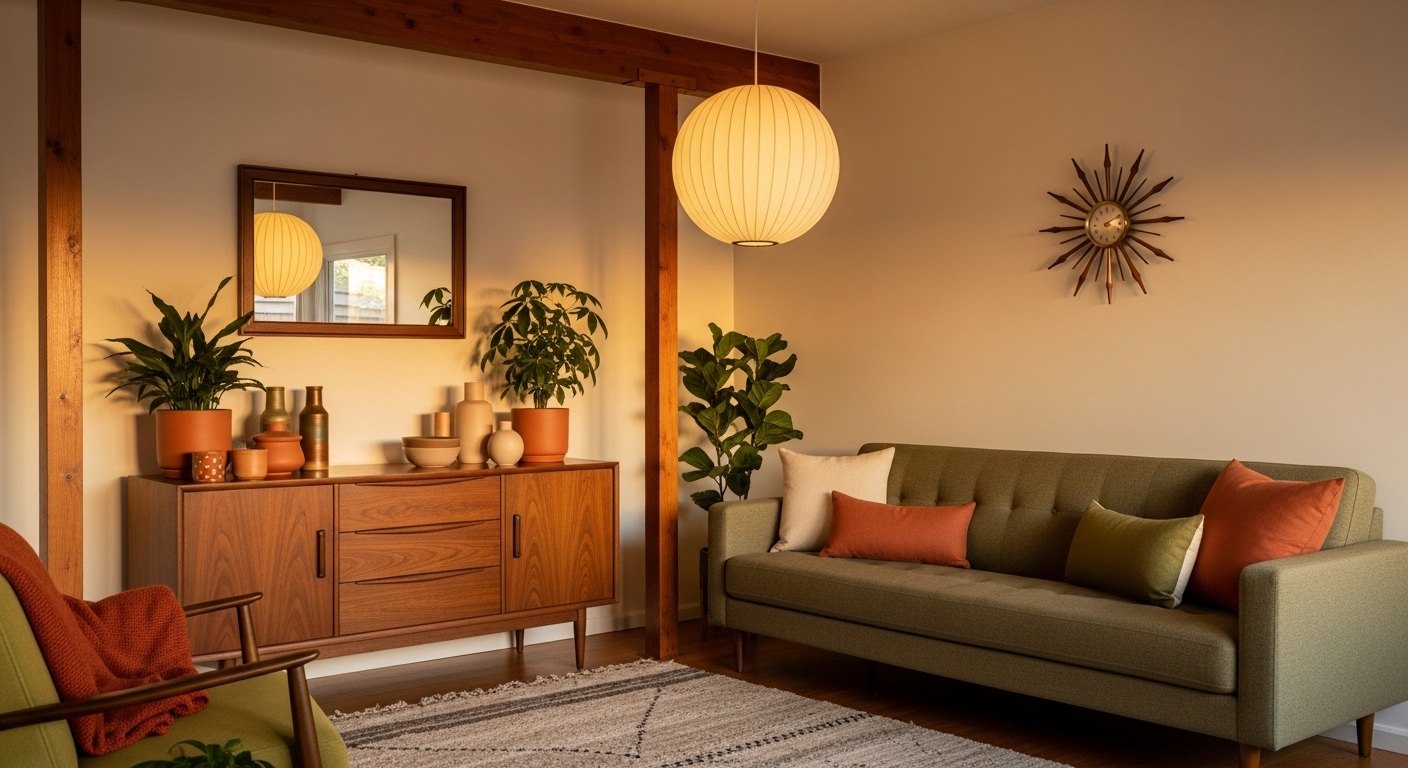
A room of all-new mid-century reproductions looks staged, perfect, matched, and somehow lifeless, like a furniture showroom or a film set. I aim for roughly 2 vintage pieces for every new one in a room. The warmth of a real mid-century home comes from mixing genuine vintage with new, so the space reads collected and lived-in rather than ordered in one click. Here are the rules that actually make the mix work.
Anchor With a Consistent Palette
The single most important rule: a consistent, restrained palette lets old and new sit together as one scheme. If everything lives in warm neutrals, walnut tones, and a few earthy accents, a thrifted brass lamp sits happily beside a new sofa. The shared color and material story is the thread that turns variety into cohesion rather than clash.
Let Vintage Bring the Soul
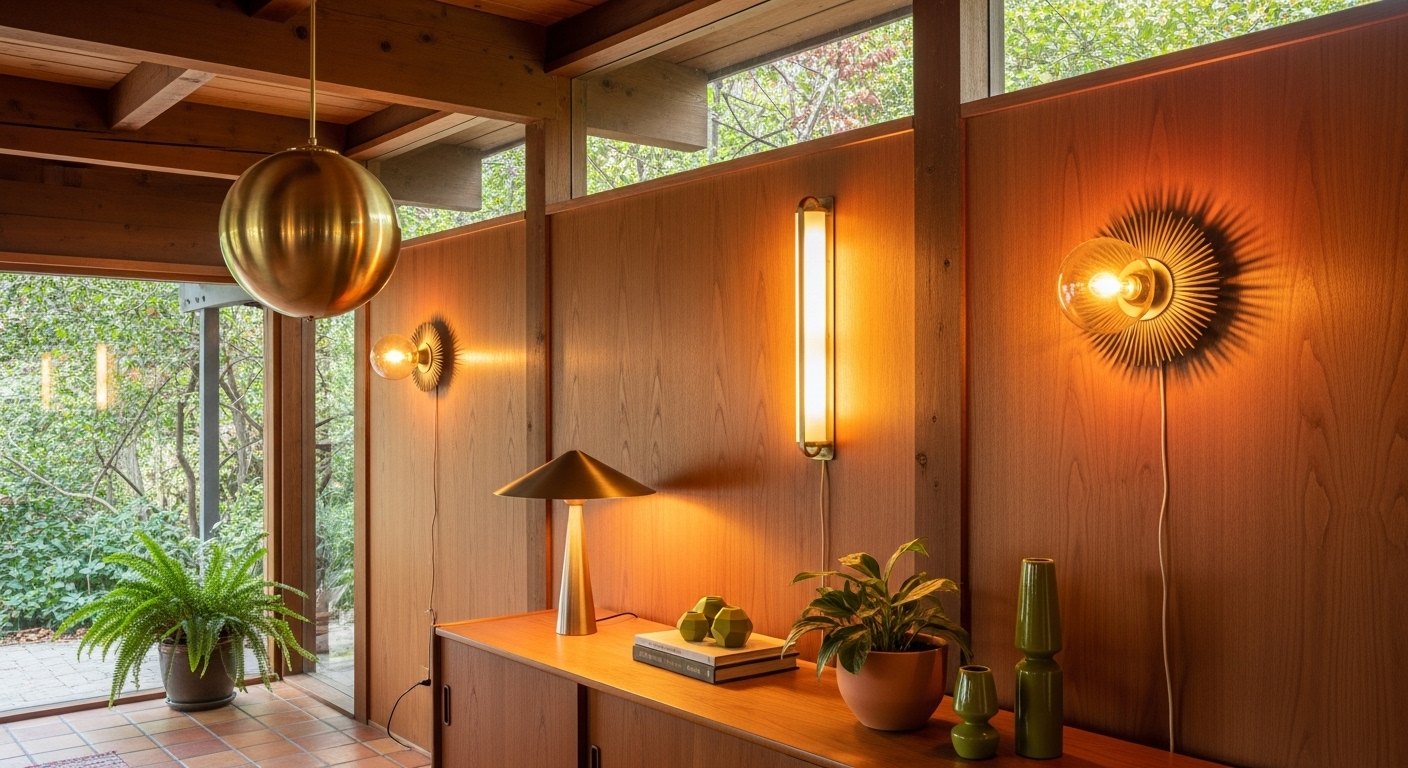
Genuine vintage pieces carry age and slight imperfection that new reproductions simply can't fake. The patina on old brass, the wear on a walnut edge, the character of a piece that's lived a life. These are what make a room feel real. Even one or two soulful vintage anchors, a credenza, a lamp, a vintage glass wall lamp, can carry an otherwise-new room.
Buy New for Comfort and Function
Use new pieces for the things that need to be comfortable, functional, and unworn. The sofa, the mattress, primary seating, and often the lighting, where modern wiring and warm LED compatibility matter. This split gives you authenticity where it counts and reliability where you need it, without rewiring every fixture or living with a lumpy vintage sofa.
Repeat a Finish
Tie old and new together by repeating a finish across both, a warm wood tone, a recurring brass note. When the new lamp and the vintage credenza share a metal or wood tone, the eye reads them as a family. Repetition is the quiet trick that makes a mixed room feel intentional rather than random.
Edit Ruthlessly
The fastest way to make a mixed room look cluttered is to keep too much. A coherent palette lets varied pieces coexist, but only if you give them room to breathe. Edit hard, remove anything that doesn't earn its place, and let the strong pieces stand out against negative space. Restraint is what separates collected from chaotic.
Avoid the Matched Set
Resist the temptation to buy a whole matched mid-century set. A perfectly coordinated suite reads as a showroom and undoes all the gathered-over-time warmth you're after. Mix eras within the mid-century vocabulary, vary the wood tones slightly, let a few things not quite match. That gentle variation is exactly what makes a room feel like a real home.
Gathered Over Time
The goal of all of this is a room that looks like it came together over years, because the best ones did. Buy slowly, mix genuine vintage with considered new, keep the palette tight, and edit as you go. A mixed mid-century room done this way has a soul that no showroom set or all-reproduction scheme can match.
The Palette Does the Work
The single rule that makes mixing work is a consistent palette. If everything lives in warm neutrals, walnut tones, and a few earthy accents, a thrifted brass lamp sits happily beside a new sofa. The shared color and material story turns variety into cohesion rather than clash.
Buy Vintage Here, New There
Buy vintage for soulful pieces that benefit from patina, credenzas, lamps, art, accent chairs. And new for things that must be comfortable and unworn, like a sofa, a mattress, or the lighting where modern wiring matters. This split gives authenticity where it counts and reliability where you need it.
Avoid the Matched Set
Resist buying a whole matched mid-century suite. It reads as a showroom and undoes the gathered-over-time warmth. Mix eras within the vocabulary, vary the wood tones slightly, let a few things not quite match. That gentle variation is exactly what makes a room feel like a real, lived-in home.
Shop this post: the Saga vintage glass wall lamp and modern pendant lighting