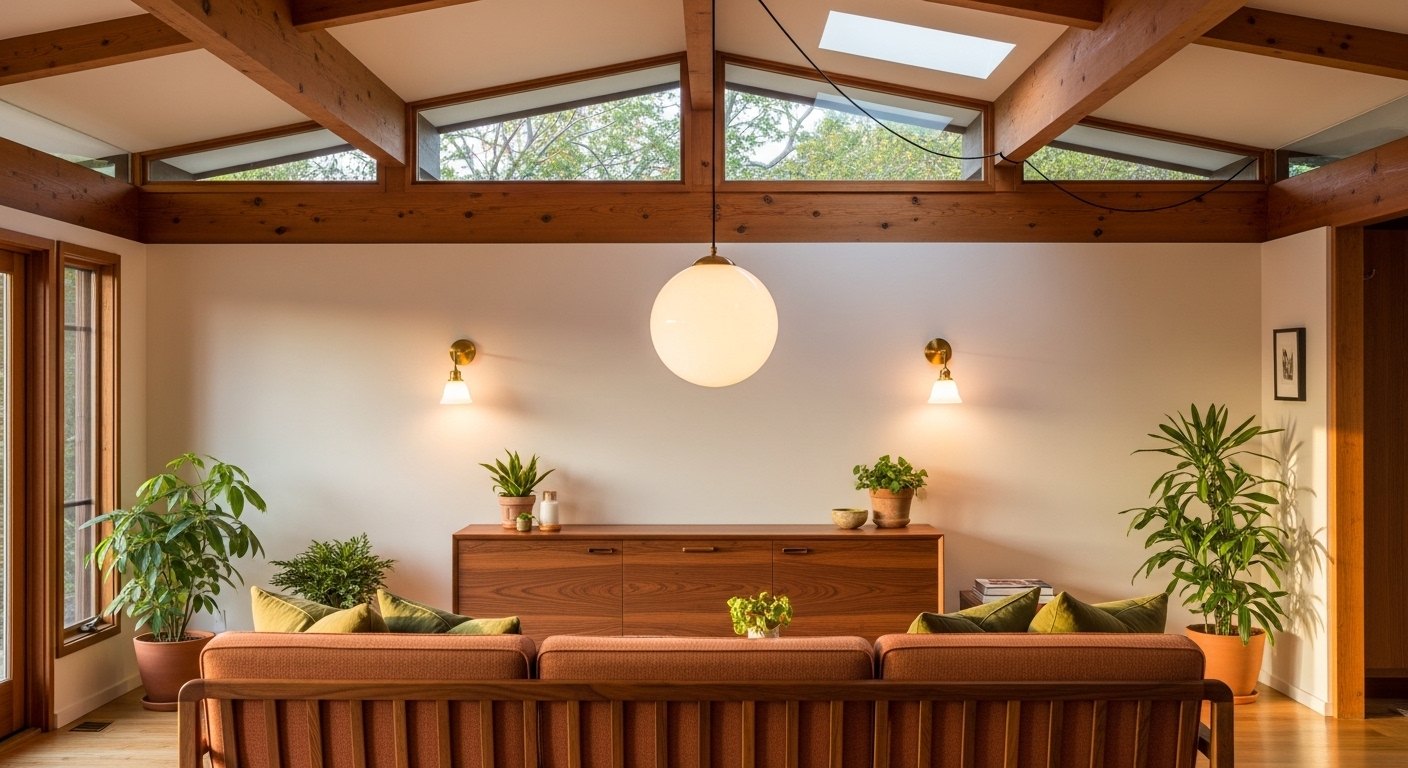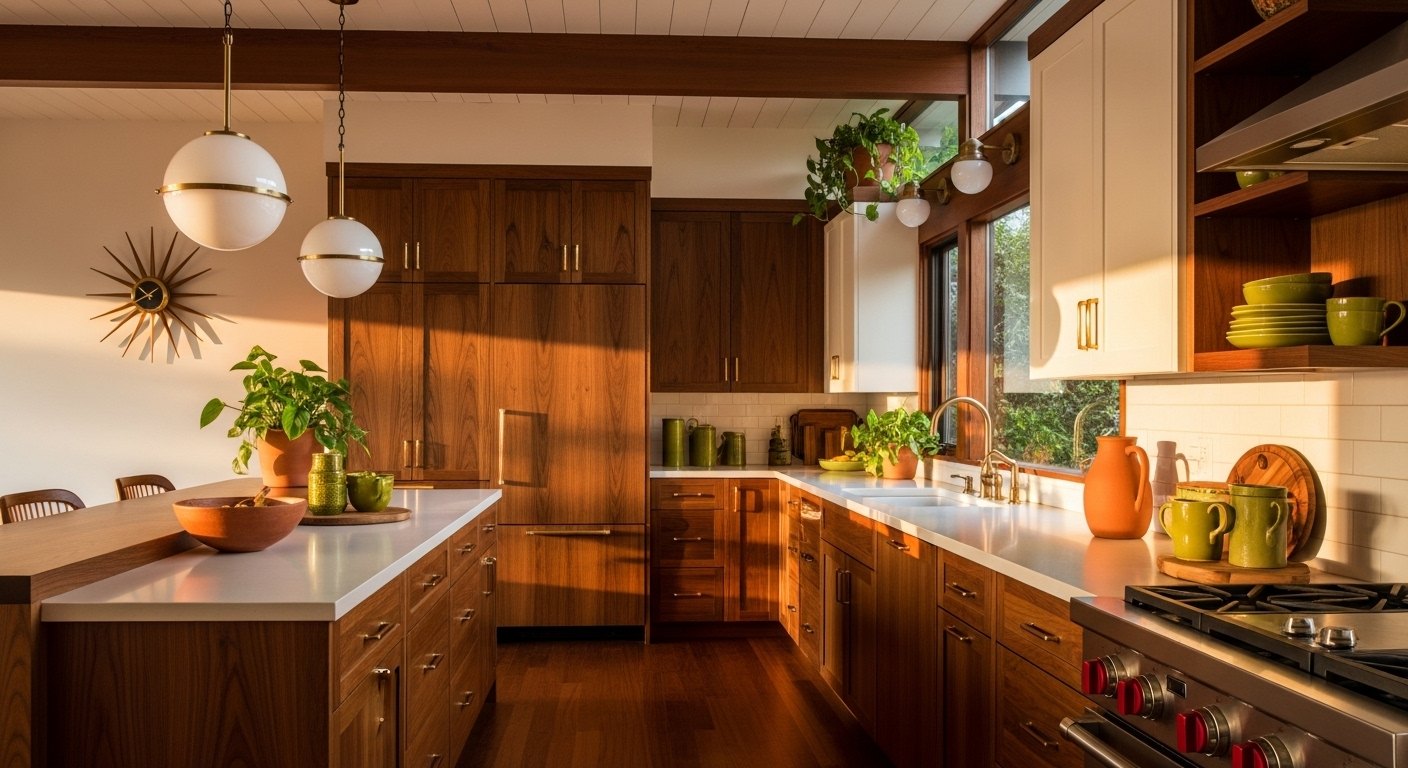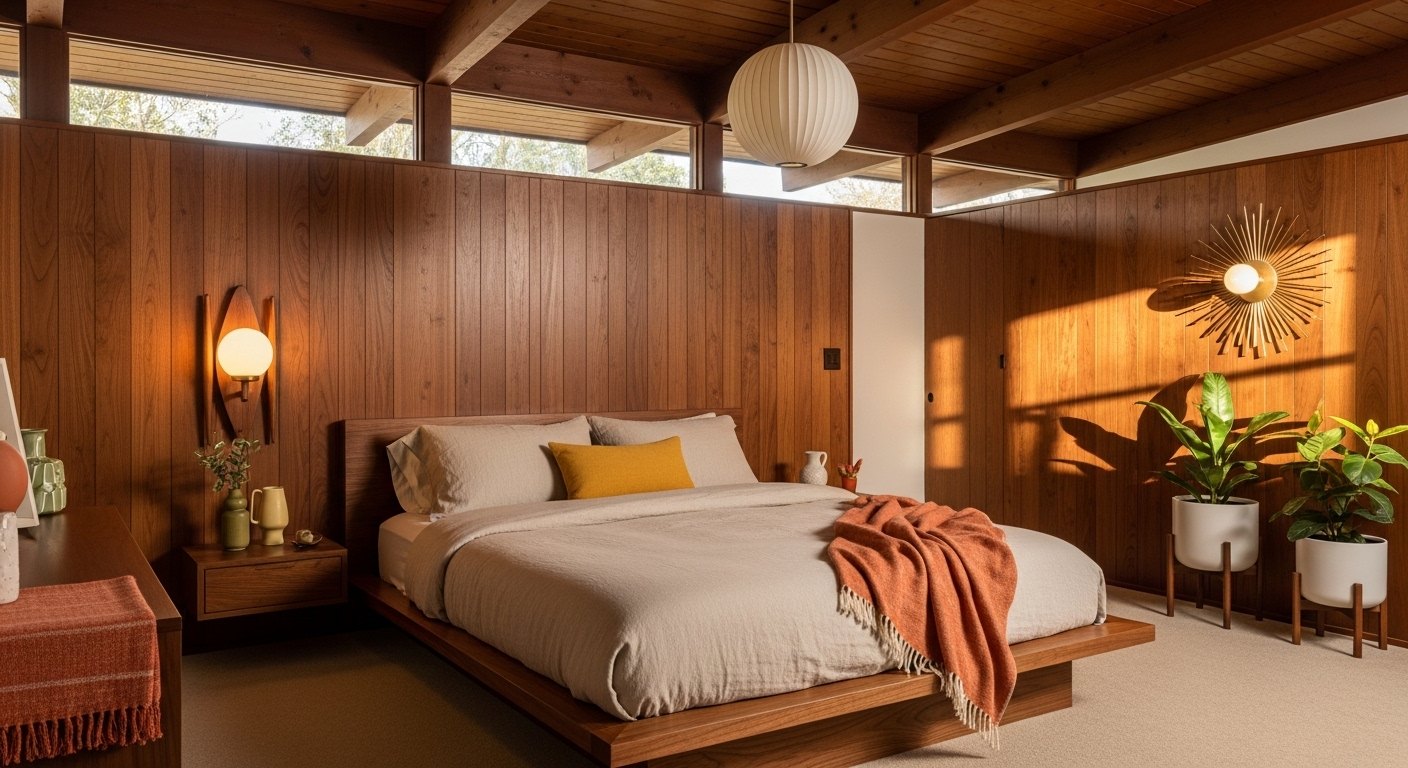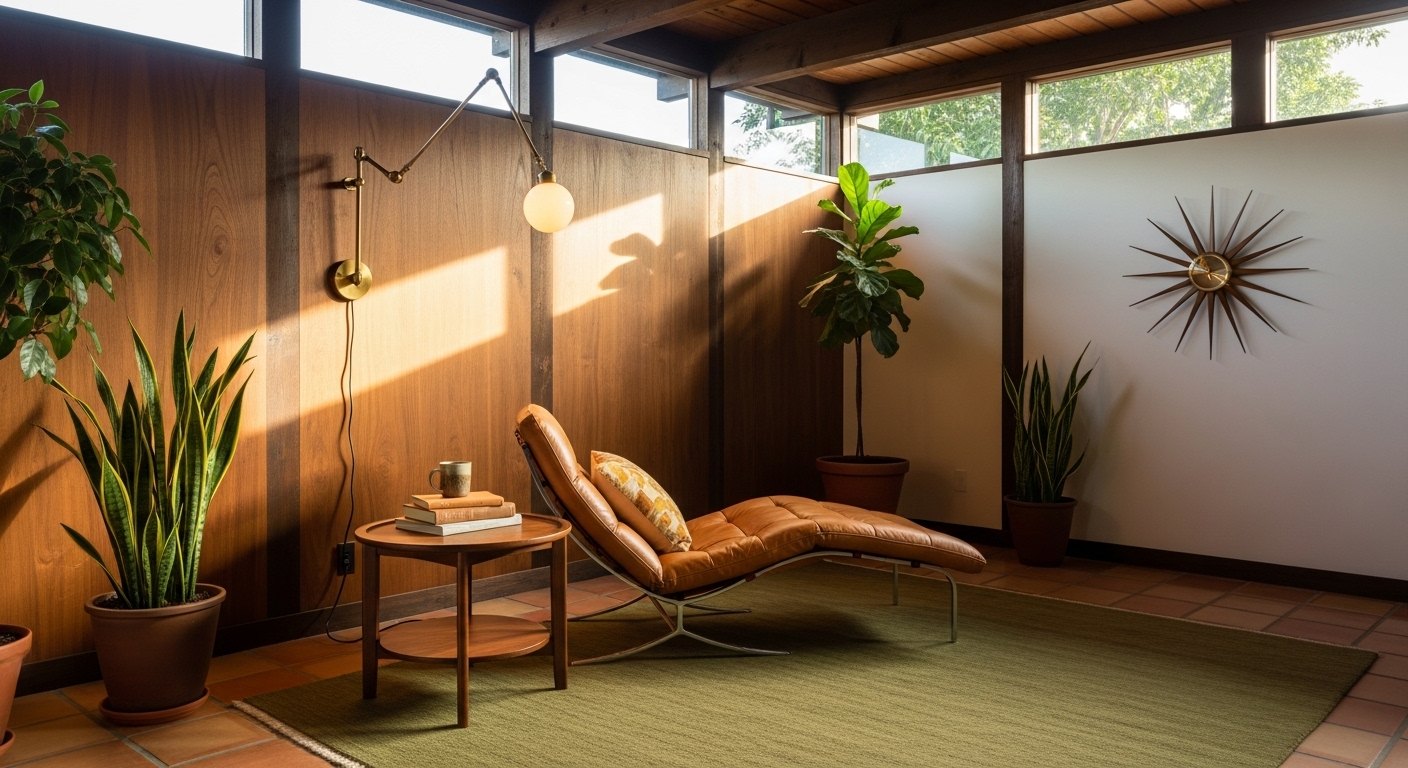
Every house deserves one chair, by one window, with perfect light. Ours sits under the clerestory windows in the corner of the living room where the canyon sun lands in long afternoon bars. And it has quietly become my favorite few square feet in the whole house. A good mid-century reading corner is mostly about the chair and the light.
The Clerestory Light
The reason the corner exists is the clerestory windows. That row of high windows near the roofline that floods the space with daylight while keeping the wall below private. By day, the reading light is free and lovely. The whole design was about keeping the corner usable after the sun drops, which is where the artificial light comes in.
A Low Lounge Chair
The chair is a low leather lounge chair angled toward the window, with a matching ottoman. Low, clean-lined, and deeply comfortable, it's the kind of chair you sink into for an afternoon. Mid-century seating sits low and reads light, which suits a quiet corner that shouldn't dominate the room.
The Adjustable Sconce
For evenings, I mounted an adjustable wall sconce just behind the chair at shoulder height. The arm swings out over the page so the light falls exactly where I need it, with no glare and no cord across the rug. Wall-mounted reading light is one of those small upgrades that feels disproportionately luxurious once you live with it. And it keeps the floor clear.
Why a Sconce Beats a Floor Lamp Here
I considered a slim floor lamp, but the corner is tight and a sconce keeps the floor open and the side table free for a cup. In a small reading nook, wall-mounted light is almost always the better call. It does the same job without eating the floor.
A Walnut Side Table
A small walnut side table within arm's reach holds a cup, a book, and a tiny brass dish. That's all the corner needs. The warm wood ties it to the rest of the house, and the single brass object catches the sconce light beautifully in the evening.
Warm Light for Long Reads
The sconce carries a warm 2700K bulb, which is easy on the eyes over a long evening read and won't fight my wind-down before bed. Warm light is the right call for any room meant for unwinding, and a reading corner is exactly that.
What I'd Do Differently
I'd have chosen the adjustable-arm sconce from the start instead of the fixed one I first hung. The ability to aim the light is what makes a reading nook actually work for reading rather than just looking the part. And I'd have angled the chair a few degrees more toward the clerestory light; a small turn made a surprising difference to the afternoon read.
What a Nook Costs
A reading corner is almost free if you have the chair. The adjustable sconce was the only real purchase; a thrifted walnut side table and a throw finished it. There's no need for new furniture. The point is to claim an existing corner by a window and give it good light. The whole project is an afternoon.
Mistakes That Ruin a Nook
A nook fails when the light glares on the page or in your eyes, when a floor lamp eats the floor and tangles a cord. And when the chair faces away from the window. Aim a sconce from behind the shoulder, keep the floor clear, and angle the chair toward the light.
Nooks for Small Homes
You don't need a dedicated room, a nook is a corner with intention. The end of a hallway, a wide landing, a bay window, the quiet corner of a living room all work. A wall-mounted sconce is what makes these tight spots viable, adding reading light without surrendering the floor.
Shop this post: wall sconces and floor lamps for the living room