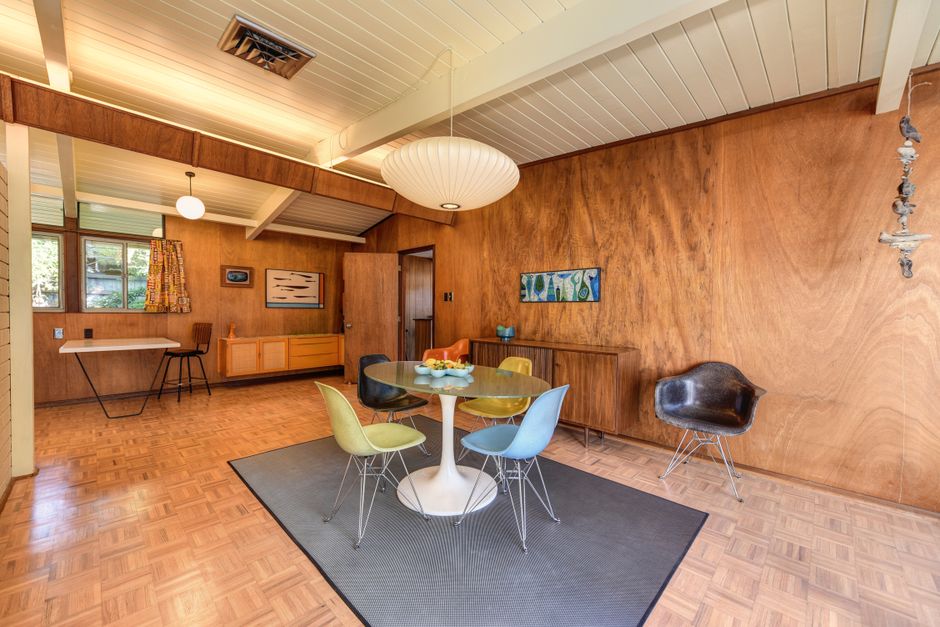
The dining room pendant is the one fixture in a mid-century house that everyone sees. It hangs over the table where people actually sit. It's the last thing you look at before you leave for dinner and the first thing guests notice when they walk in. And it took me three tries to get it right.
The first pendant I ordered looked perfect on the website. A globe shape, matte black exterior, brass interior that would catch the 2700K bulb I always run. It arrived in a very large box. I hung it. The shade was 22 inches in diameter and our dining table is 36 inches wide. The fixture made the table look small. Not the effect I was going for.
Second attempt: I overcompensated and went too small. A 12-inch drum shade. Fine in concept but it disappeared over a walnut table that runs 84 inches long. The light pool was too tight. Wrong again.
The Rule I Wish I'd Known First
After the second return, I called Marcus, who does most of our lighting work on the house. His rule: for a pendant over a dining table, the shade diameter should be roughly half the table width, and the bottom of the shade should hang 30 to 34 inches above the tabletop. Our table is 36 inches wide, which points to an 18-inch shade. I'd gone 22 (too wide) and 12 (too narrow) before landing on 18.
The 18-inch saucer pendant I ended up with is from BO-HA, a low-profile brass dome with a flat diffuser that throws light down and outward at the same time. It doesn't block sightlines across the table, which matters when four people are trying to have a conversation. And at $279 it's the kind of fixture that looks like it cost twice that, which I always appreciate.
Mid Century Modern Pendant Light Shapes That Actually Work
After three fixtures and one patient phone call to Marcus, here's what I've landed on for mid-century dining rooms specifically.
Saucer and dome shapes work best. They have the low horizontal line that suits the architecture, they distribute light evenly, and they don't read as fussy. Globe shapes can work if the room is taller and the table is wider, but they're unforgiving if the scale is off. Cone shades are period-correct but direct all the light downward, which can make the table feel like an interrogation room unless you have fill light from elsewhere.
The material matters too. Brass is the obvious choice for a warm canyon house and it ages well against walnut and teak. Black steel reads more industrial than mid-century to me. Woven shades are having a moment but they'll date. I'd stay away from anything with visible Edison bulbs unless you're going for a specific retro register that the rest of your house supports.
The Hanging Height Question
Marcus's 30-to-34-inch rule is a starting point. In our room, with 9-foot ceilings, I ended up at 32 inches from table to shade bottom. That keeps it below eye level when seated but high enough that no one gets a faceful of brass when they lean across to reach the salt.
The canopy is on an adjustable cord so I can move it. I actually raised it by two inches after the first dinner party because our friend Elena, who is 5'11", sat at the head of the table and looked vaguely like she was waiting for someone to crown her. Small adjustment. It matters.
What the Canyon Light Does to a Pendant
One thing I didn't anticipate: the way the late afternoon light comes through the clerestory windows in this house changes how the pendant reads throughout the day. At 4 p.m. in summer, the brass dome glows gold even before you've switched it on, catching the horizontal California light. By 7 p.m. when you actually need it, the whole table is in warm brass light from above.
That's the thing about choosing a mid-century pendant for a room like this. You're not just choosing a light source. You're choosing something that will interact with the natural light all day and become part of it. That's worth getting right, even if it takes three tries.
See also: why I put every light in this house on a dimmer. The pendant is no exception. Dimmed low over a dinner table, the brass goes from functional to genuinely atmospheric. That's the goal.