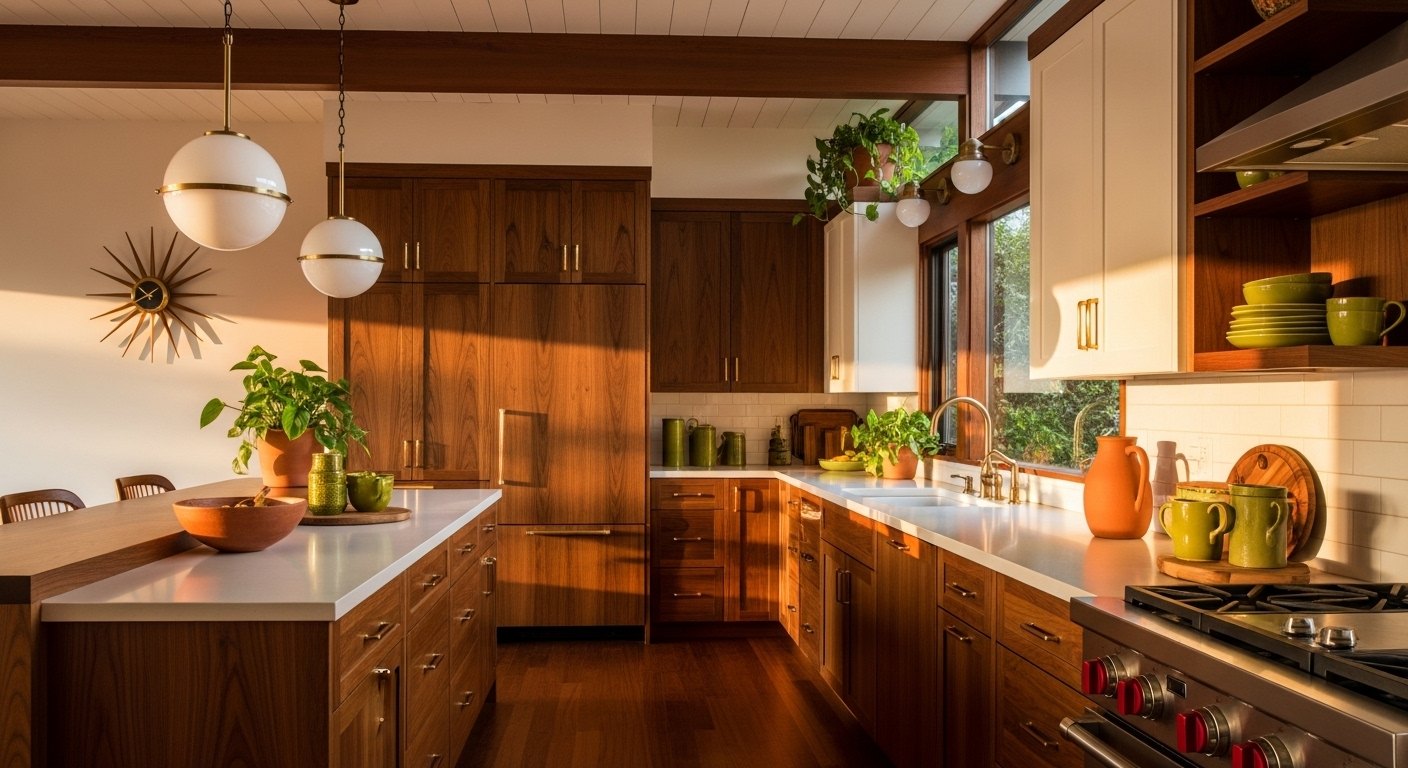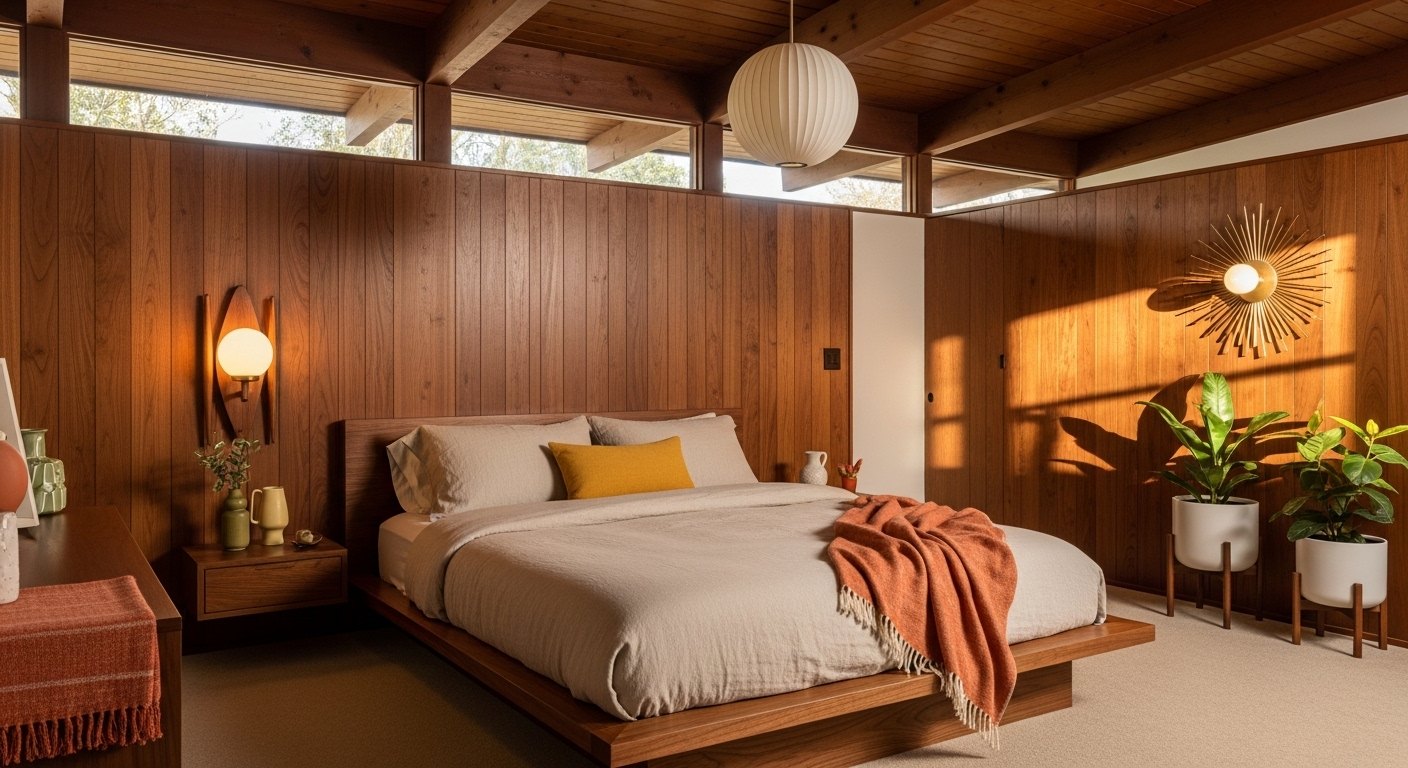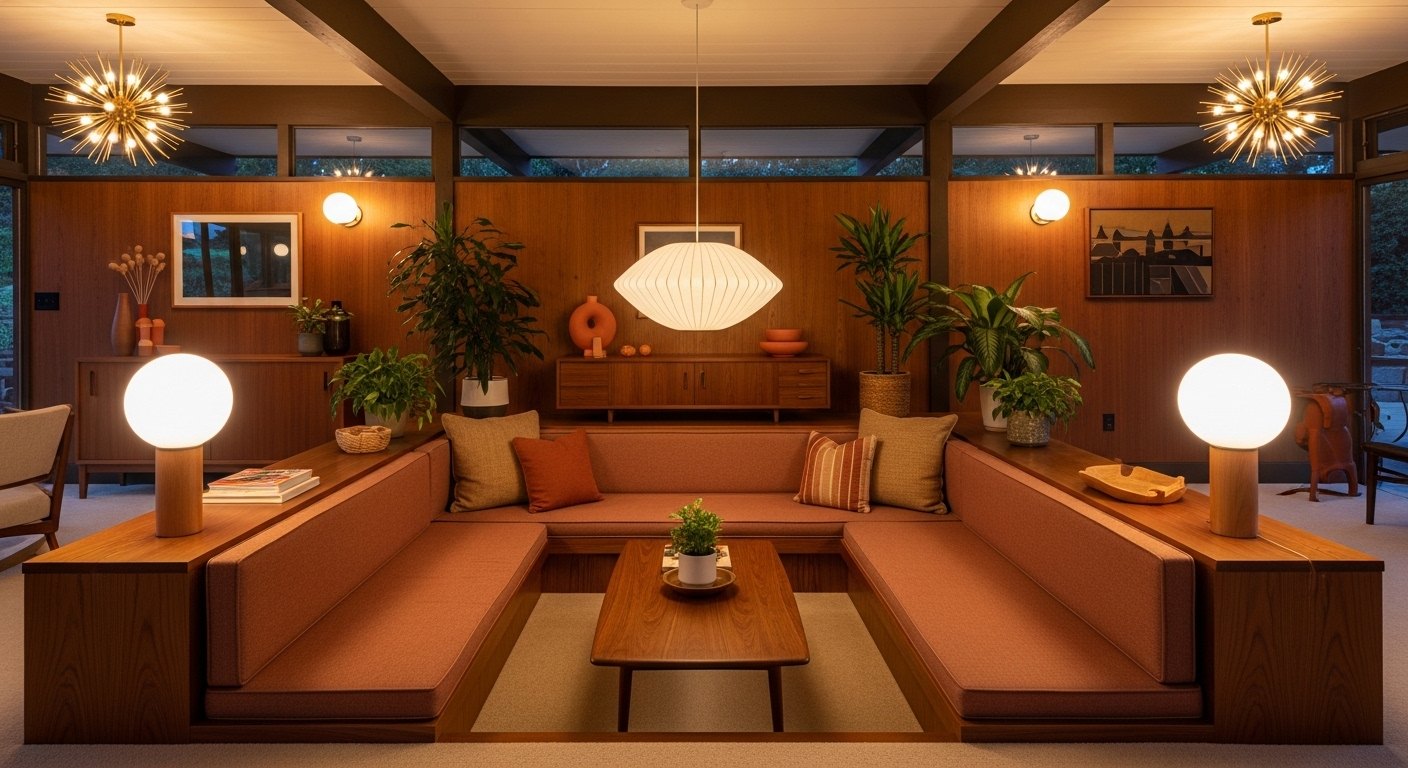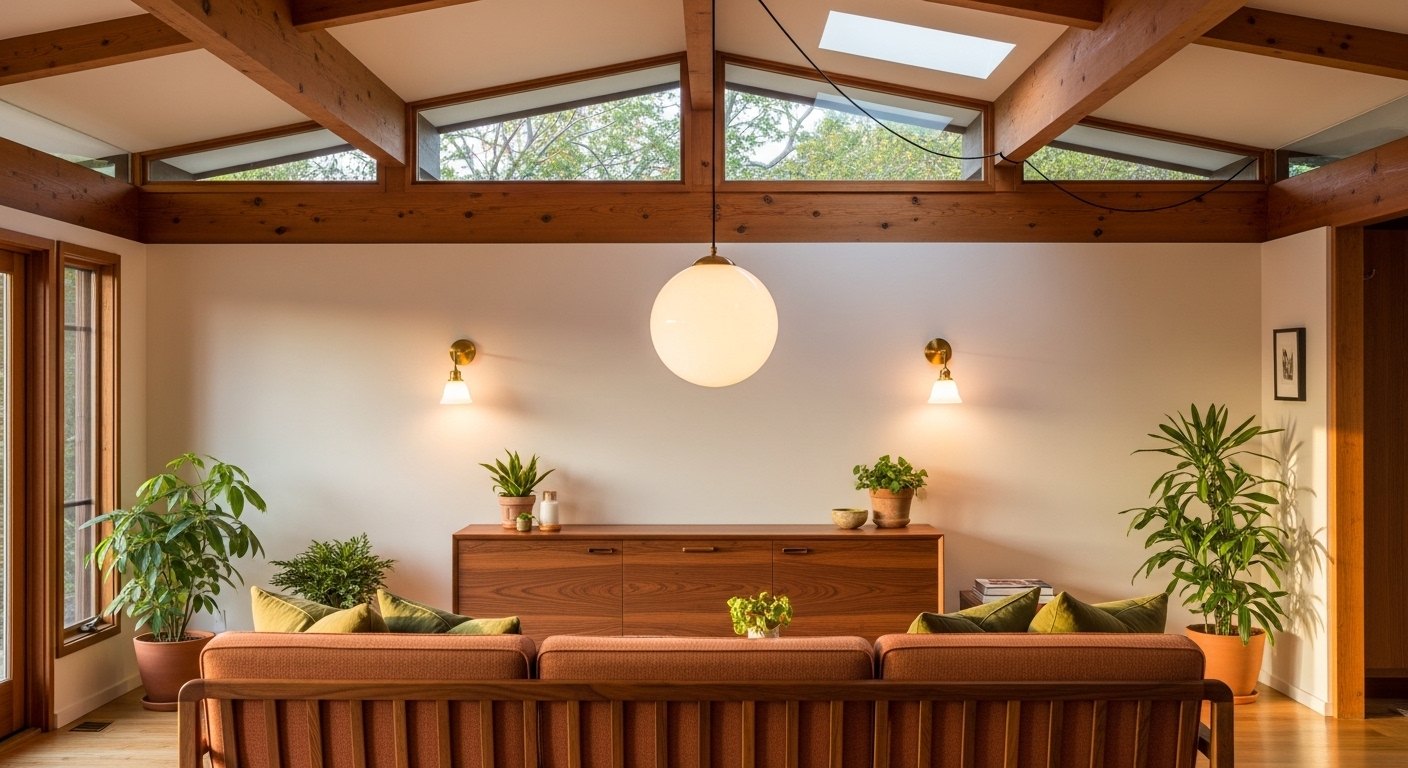
A mid-century living room lives or dies on two things: warmth and light. Get those right and the walnut, the low sofa, and the clean lines all fall into place. Our living room sits at the front of a 1961 post-and-beam in Laurel Canyon, with clerestory windows that pour long afternoon sun across the back wall. And the whole design started from how to keep that golden quality going after the sun drops behind the hill.
Here's how we built it, layer by layer.
Start With the Walnut
Everything in the room is anchored by warm walnut, a vintage credenza along the back wall, the frame of the sofa, a low coffee table with tapered legs. Walnut is the backbone of mid-century style because it's warm without being heavy, and it reads beautifully against a soft, warm-white wall. We resisted the urge to go all-teak or all-oak; a single dominant wood tone keeps the room calm and intentional rather than busy.
The Low, Clean-Lined Sofa
Mid-century seating sits low and reads light, with legs you can see under it. We chose a long, low sofa in a warm oatmeal bouclé that lets the walnut and the lighting be the stars. Low furniture also suits the post-and-beam ceilings. It keeps the eye moving along the horizontal lines the architecture already wants to draw.
The Globe Pendant Overhead
The single most mid-century move in the room is the lighting. We hung a soft opal globe pendant roughly over the seating area, a clean sphere that glows evenly and references the era without being a costume. Globe lights are to mid-century rooms what a chandelier is to a formal one: the piece that announces the style. Ours diffuses light softly rather than throwing it, so the ceiling never feels like a spotlight.
Eye-Level Light Changes Everything
Here's the part most people skip. A pair of wall sconces flanking the credenza, mounted at about 60 inches, completely changed the evening mood of the room. Overhead light alone is functional and a little flat; light at eye level is warm and flattering, the lamplight glow that makes a room feel lived-in. The sconces are what make the room feel lit by the warm canyon evening even after dark.
The Lamp Layer
A low table lamp on the credenza and a slim floor lamp in the reading corner round out the scheme. That's four or five separate light sources in one room, which sounds like a lot until you realize they're almost never all on at once. Morning is mostly daylight; evening is the sconces and lamps with the globe dimmed low. Layering isn't about more light, it's about more choices.
Warm Bulbs and a Dimmer
Every bulb in the room is a warm 2700K, and the globe is on a dimmer. Warm light is the difference between a mid-century room that glows and one that feels like a furniture showroom. If you want to understand the numbers on the box before you buy, the U.S. Department of Energy's ENERGY STAR bulb guide is a clear primer on lumens and color temperature.
A Few Saturated Accents
Against all that warm neutral, the room earns its mid-century edge from a few saturated touches, a terracotta cushion, an olive throw, a mustard ceramic on the credenza. The rule is restraint: a handful of accents against the warm base, never a rainbow. That discipline is what keeps the look collected rather than themed.
Bring the Canyon In
Finally, plants. A fiddle-leaf in the bright corner, a trailing pothos on the shelf, a fern by the clerestory windows. Mid-century design grew up alongside indoor-outdoor California living, so greenery isn't decoration here. It's part of the architecture's intent. The plants soften the hard lines and tie the room to the canyon outside.
What I'd Do Differently
If I were starting again, I'd put the sconces on a smart switch from day one so they greet us at dusk automatically. And I'd buy the globe pendant a size up from my first instinct. The one I almost ordered would have been lost against the post-and-beam ceiling. When in doubt in a mid-century room, warm the bulb down and size the light up.
What This Room Cost
A layered, designed-looking mid-century living room costs far less than people assume. The globe pendant was the splurge at a little over a hundred dollars; the pair of sconces came in under that together, and the credenza and lamps were thrifted. Add a dimmer and a box of warm high-CRI bulbs and the whole scheme, five sources, several moods, came together for less than a single statement chandelier. The expensive-looking part is the layering and the warm light, not the price tags.
The Mistakes I See Most
Three things turn a mid-century living room cold: relying on one overhead fixture, which flattens the room; a pendant that's too small and floats near the ceiling; and the wrong bulb, a cool-white that makes walnut read grey. Fix those three and the room is most of the way there before you buy anything new.
Adapting It to Your Room
The exact fixtures matter less than the structure: one soft overhead, two sconces at eye level, and a lamp or two in the dark corners. A darker room leans harder on lamps; a sun-flooded one is really designed for the evening. Keep the bulbs warm and consistent, put the main fixture on a dimmer, and the formula travels to any space.
Shop this post: globe pendant lights and mid-century wall sconces
My friend Karen over at The Holloway Home takes a cooler, more contemporary path through the living room, if your taste runs more modern than mid-century, her room is worth a long look.