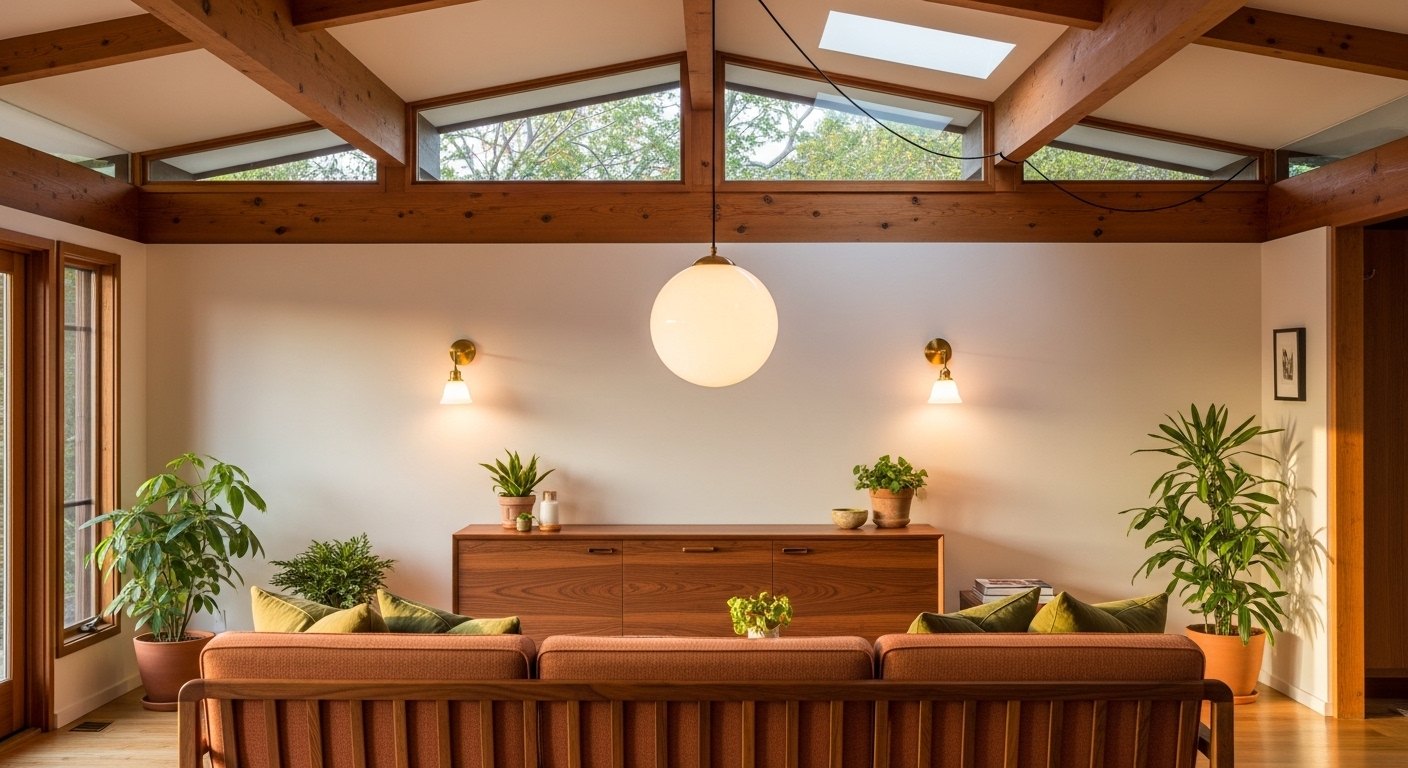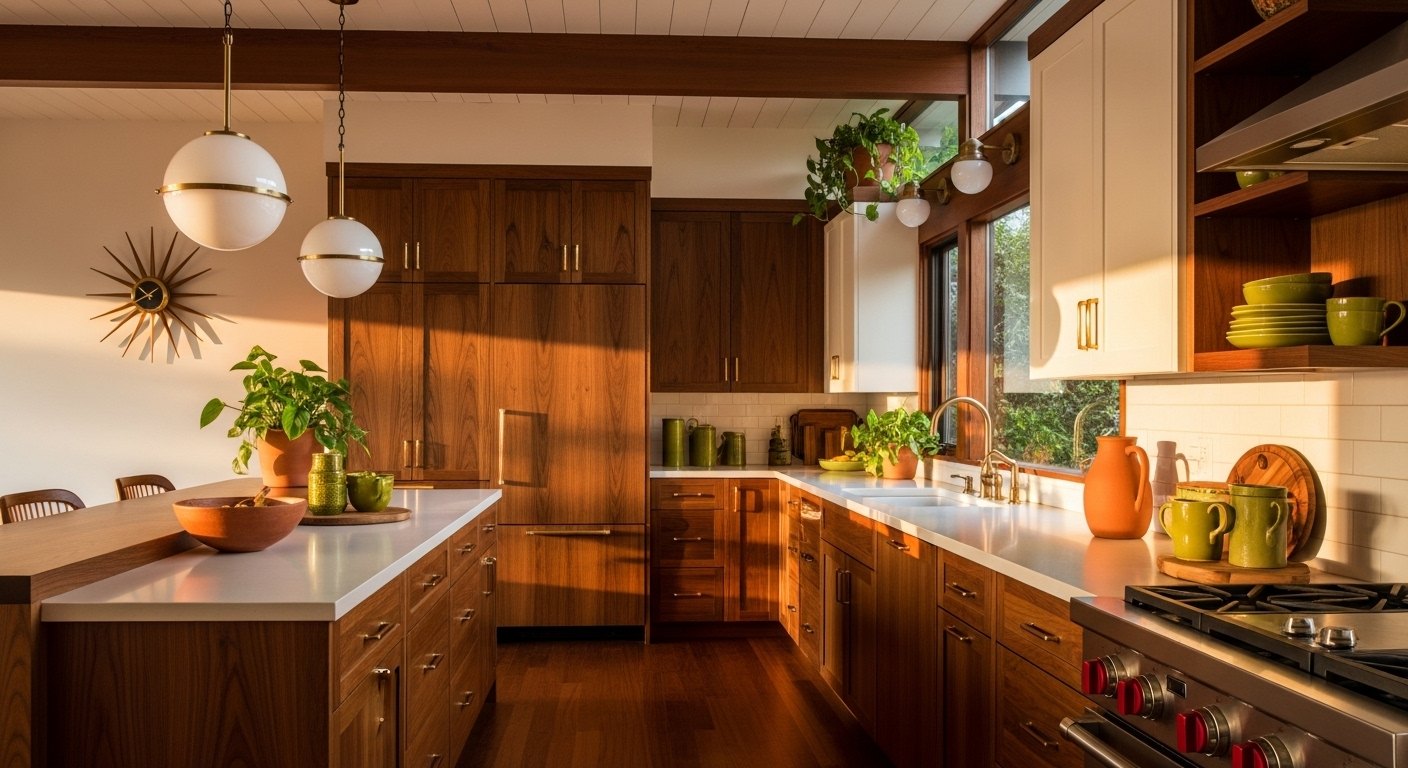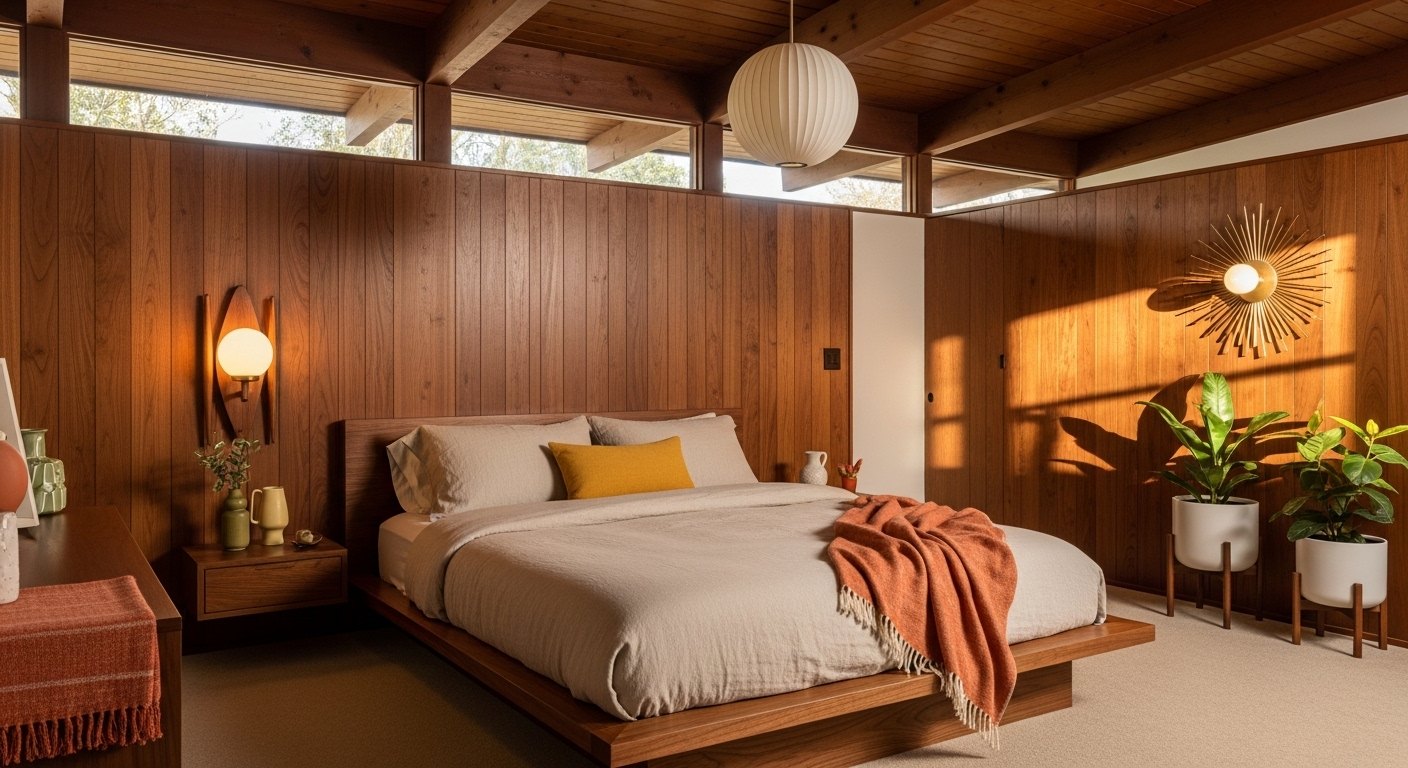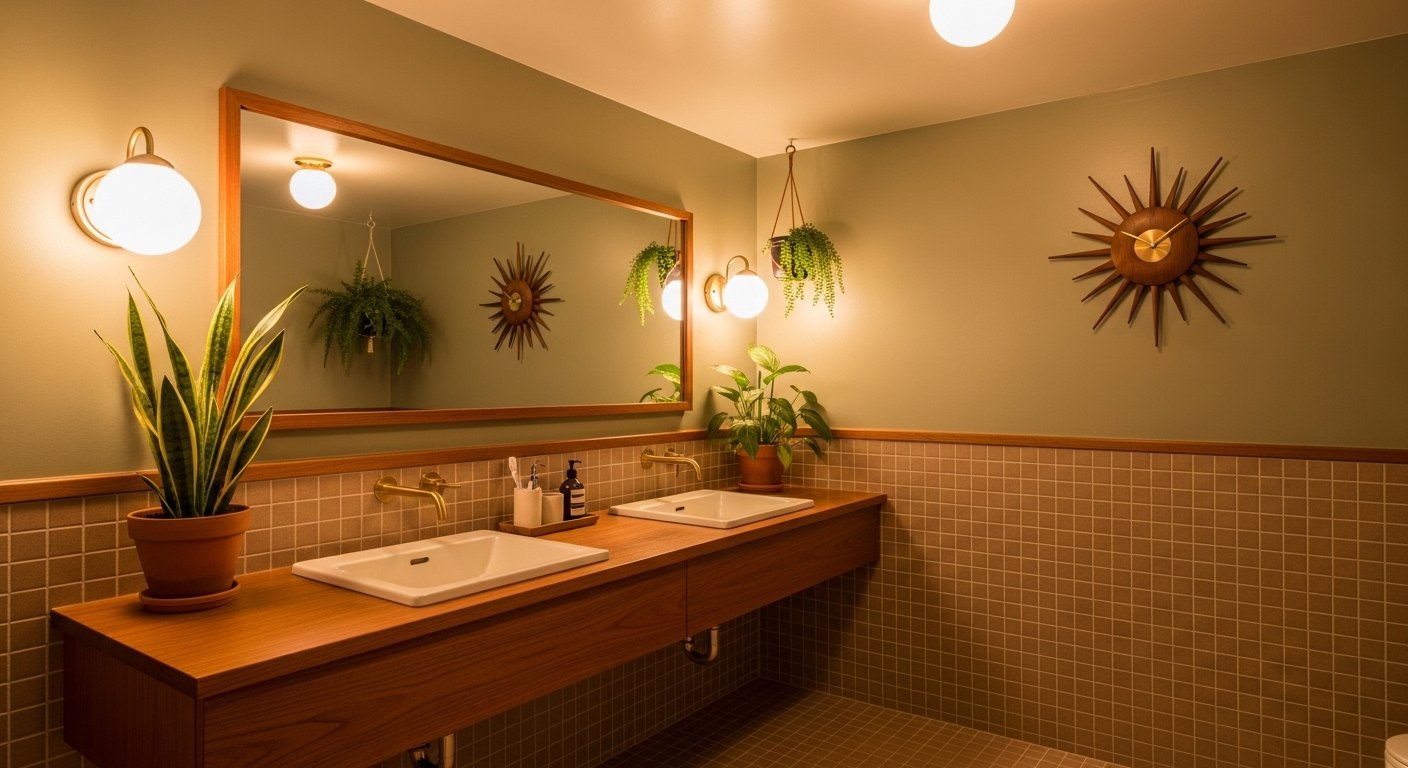
A mid-century bathroom is all about warm materials and flattering light, and you can get most of the way there without touching the plumbing. Ours was a cold, builder-white box with a chrome vanity bar that made everyone look slightly unwell. A weekend of warm materials and side-mounted light transformed it into the most inviting small room in the house.
Terracotta and Teak
The two materials that define the room are terracotta tile and warm teak. A run of small terracotta tile behind the vanity brings the earthy, sun-baked color mid-century bathrooms love, and a floating teak vanity warms up the whole space. Warm wood and warm clay are the antidote to the cold white box. They make a bathroom feel like part of a real, warm home.
Sconces at the Mirror
The single biggest change was replacing the overhead bar with two bathroom sconces, one on each side of the mirror at 64 inches. Side light is flattering light. It fills in the shadows the overhead bar used to carve under everyone's eyes. Damp-rated and well clear of the shower spray, they give the room a designed, intentional look the builder bar never had.
Frame the Mirror
The frameless builder mirror came down and a warm teak-framed mirror went up, centered between the sconces. The wood frame ties the mirror to the vanity and the rest of the house's warm materials, and turns the vanity wall into something composed rather than defaulted. It's a sub-$100 change that punches far above its cost.
Warm Light Makes the Room
Both sconces carry warm 2700K bulbs at a high CRI. Cool bathroom light is clinical; warm light feels like a small spa, and a high CRI means skin and color read true in the mirror. Same fixtures, completely different room, just from the color of the light. For more on choosing bulbs, the side-light principle is the same one I lean on everywhere in the house.
Brass and Warm Metals
We swapped the chrome faucet and hardware for warm brass, which sits beautifully against the teak and terracotta. Warm metals are a small detail that pulls the whole mid-century palette together, chrome reads cold and contemporary, brass reads warm and of-the-era.
Natural Finishing Touches
A woven basket for towels, a small ceramic dish for soap, a trailing plant on the windowsill. Tiny natural touches that cost almost nothing and make the bathroom feel like part of the house rather than a utilitarian box. Greenery especially loves a bright bathroom and softens all the hard surfaces.
What I'd Do Differently
Running the two new wires from the old single junction box took a patient afternoon of YouTube-taught wiring; if you're not comfortable with that, a pair of plug-in sconces on a switched outlet gets you most of the way with no electrical work. I'd also have framed the mirror first, even before the sconces, that one change made the room look considered.
What the Refresh Cost
The whole bathroom changed for well under a few hundred dollars and zero plumbing. The two sconces were the main spend, the teak-framed mirror was modest, and warm brass hardware and a run of terracotta tile finished it. Compared with a tile-and-vanity renovation, it's a rounding error. And it's the change everyone notices.
Mistakes to Avoid at the Vanity
The classics: keeping the unflattering overhead bar; choosing a cool bulb that makes skin look unwell; and using a fixture not rated for damp locations near water. Side-mounted sconces at eye level, a warm high-CRI bulb, and a damp-rated fixture clear of the spray solve all three.
A Renter-Friendly Version
If you can't rewire, a pair of plug-in sconces on a switched outlet beside the mirror, an adhesive teak-framed mirror over the existing one. And warm bulbs transform a rental bathroom with nothing permanent. The framed mirror and warm side light do the heavy lifting whether the sconces are hardwired or not.
Shop this post: bathroom sconces and glass wall sconces
My friend Michelle over at The Wharton House tackles historic bathrooms with the same side-light-at-the-mirror logic, a totally different era, the same rule for flattering light.